Craps
Craps is a dice game in which players bet on the outcomes of the roll of a pair of dice. Players can wager money against each other in informal "street craps" or against a bank in "casino craps". The game's core revolves around a shooter rolling dice on a specialized table, with a wide array of betting options. In Canada, craps is available at major land-based casinos such as Caesars Windsor and Fallsview Casino Resort, and is a popular offering at regulated online casinos for adults. Its appeal lies in the combination of simple foundational bets, the potential for low house edges, and the communal excitement generated around the table.
History and Evolution
The game of craps evolved from the older Western European dice game Hazard, which dates back to at least the 13th century. The name "craps" is derived from the term "crabs," an epithet for the losing rolls of two and three in Hazard. The game was brought to North America in the early 19th century, with popular accounts crediting Bernard Xavier Philippe de Marigny de Mandeville for introducing it to New Orleans. While its exact simplification is debated, the modern game's foundation was solidified by making seven the central number. A significant innovation came around 1907 when Philadelphia dicemaker John H. Winn introduced a layout featuring a "Don't Pass" bet, which incentivized casinos to use fair dice and became standard. Craps saw a massive surge in popularity during World War II among service members, which carried over to make it a dominant game in postwar Las Vegas and eventually in casinos worldwide.
The game's mechanics were streamlined over time, moving from the complex rules of Hazard to the more accessible "Pass" game. The core numbers of 2, 3, and 12 are retained from Hazard as the losing "craps" numbers on the initial roll. The cultural exchange on railroad Pullman cars helped spread the game across the United States, and by the 1910s, it was described as the country's leading gambling game. After 1960, craps expanded to casinos in Europe, Australia, and Macau, and the advent of online casinos after 2004 globalized its reach further, making it accessible to Canadian players through both digital and live dealer formats.
Gameplay and Basic Rules
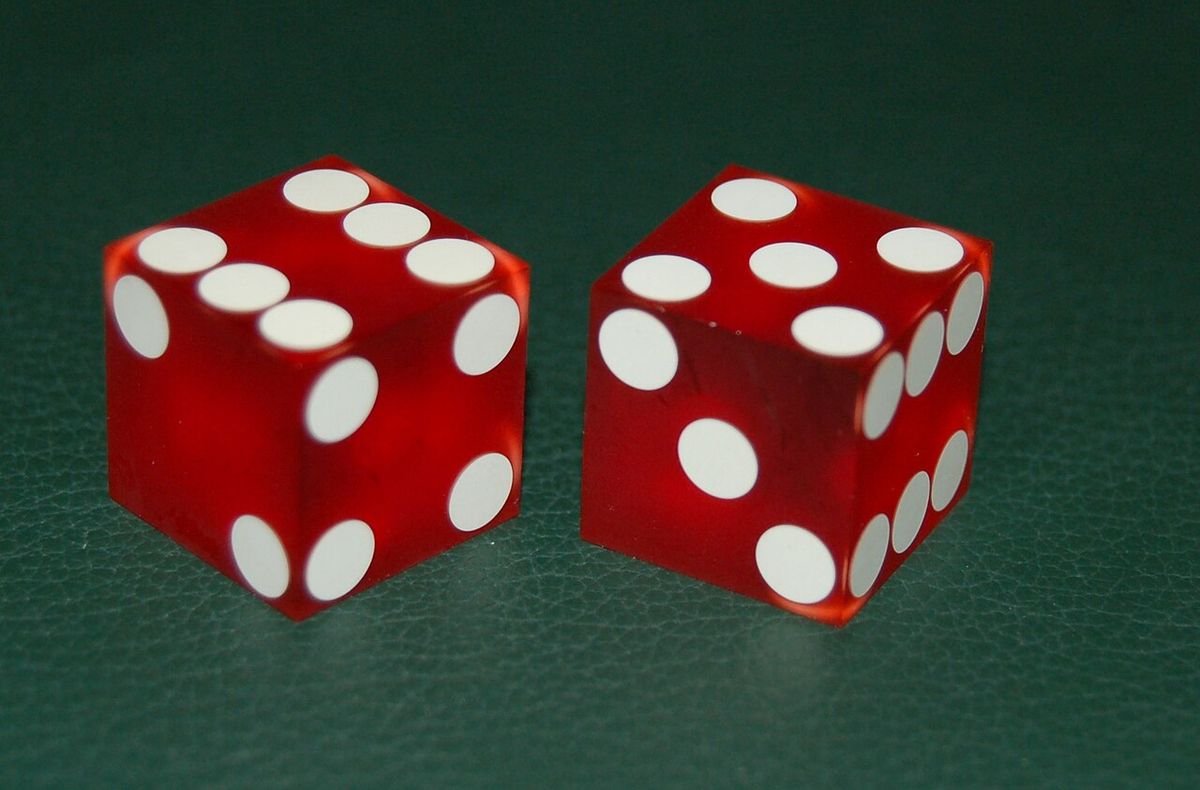
A standard round of casino craps involves one player acting as the shooter, who rolls two dice while other players place bets on the outcome. The game proceeds in distinct phases, beginning with the come-out roll. If this initial roll is a 7 or 11, it is a "natural" and Pass Line bets win immediately. If it is a 2, 3, or 12, it is "craps" and Pass Line bets lose. Any other number rolled 4, 5, 6, 8, 9, or 10 establishes that value as the "point." Once a point is set, the game enters the point phase. The shooter continues rolling until they either roll the point number again, which is a win for Pass Line bets, or roll a 7, which is a "seven-out" and a loss for Pass Line bets. After a seven-out, the dice pass clockwise to the next shooter.
Players are not required to be the shooter to bet, and the core wagers are on the Pass Line (betting with the shooter) and the Don't Pass Line (betting against the shooter). The Don't Pass bet wins on a come-out roll of 2 or 3, loses on 7 or 11, and typically results in a push tie on a roll of 12. All betting occurs before the dice are thrown, and the stickman announces the results, often using colourful slang for different rolls. Dealers manage the flow of the game, paying winning bets and collecting losing ones between rolls. The pace is fast, and the table can accommodate many players simultaneously, contributing to its lively reputation.
The Craps Table and Personnel
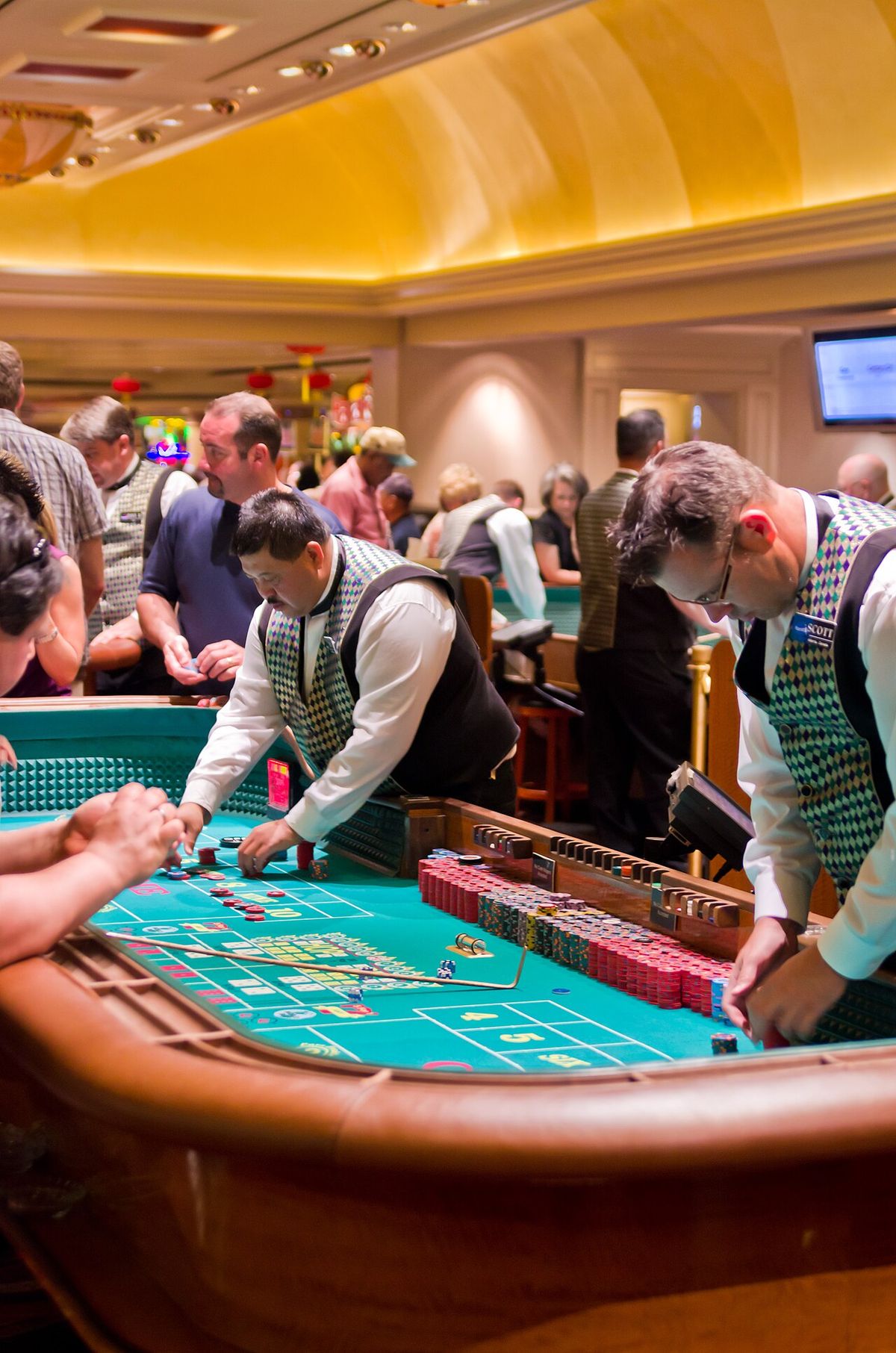
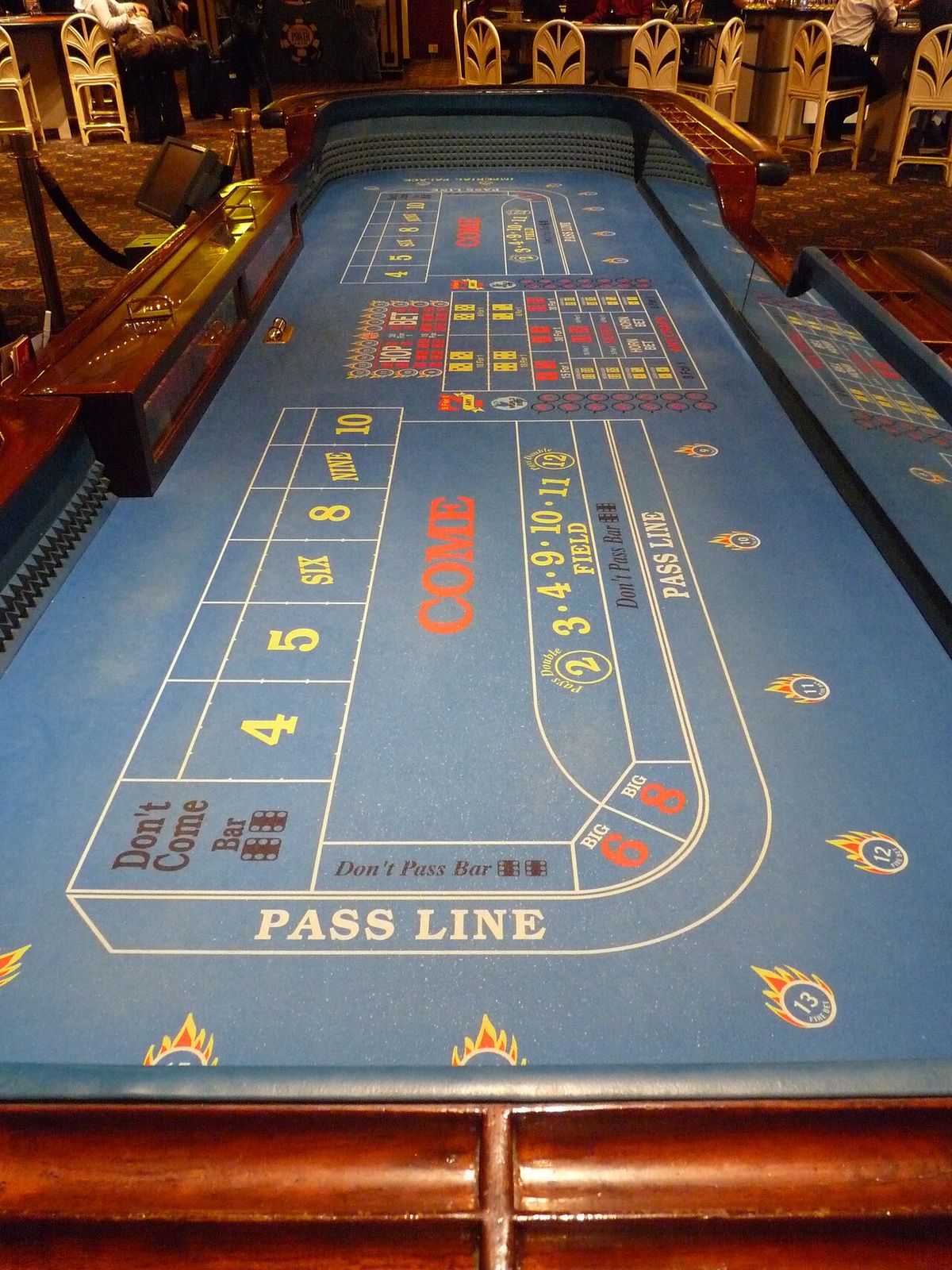
A casino craps table is a large, rectangular felt-covered layout marked with numerous betting areas. The table features a mirrored back wall and rubberized end walls with pyramid shapes to randomize dice rolls. The layout is duplicated on each U-shaped end to accommodate approximately eight players per side. Chips, not cash, are used for all wagers. The game is managed by a team of up to four casino employees who ensure fairness and handle transactions. The boxman is the seated supervisor who manages the casino's bank of chips, supervises dealers, and oversees chip exchanges. Two base dealers stand on either side of the boxman, collecting and paying bets for players in their half of the table. The stickman stands opposite the boxman and has a distinct role, using a long, curved stick to move the dice, call out results with traditional patter, and manage the proposition bets located in the centre of the table.
Common Bets and Their Odds
Craps offers a wide spectrum of bets, ranging from simple, low-house-edge wagers to complex, high-payout propositions. The most fundamental bets are the Pass Line and Don't Pass Line, which have house edges of approximately 1.41% and 1.36% respectively. After a point is established, players can make an additional Odds bet behind their original Pass or Don't Pass bet. This Odds bet is paid at true odds, carrying a 0% house edge, and is a key reason for the game's favourable odds for players. The Come and Don't Come bets function identically to Pass and Don't Pass but can be placed after a point is already established, effectively allowing a player to bet on a new, independent point number. Other common multi-roll bets include Place bets, where a player wagers that a specific number 4, 5, 6, 8, 9, or 10 will be rolled before a 7.
Single-roll proposition bets are located in the centre of the table layout. These bets offer high payouts but carry a significantly higher house edge. Players should understand the odds associated with each bet type. These single roll bets are always affected by the outcome of any roll.
- Field Bet: Wins on 2, 3, 4, 9, 10, 11, or 12. Pays even money, double on 2 and 12.
- Any Craps: Wins on 2, 3, or 12. Pays 7 to 1.
- Any Seven: Wins on a 7. Pays 4 to 1.
- Hardways (6 or 8): Wins if the number is rolled as a pair. Pays 9 to 1.
- Hardways (4 or 10): Wins if the number is rolled as a pair. Pays 7 to 1.
- Eleven: Wins on a roll of 11. Pays 15 to 1.
Buy and Lay bets are similar to Place bets. They typically involve paying a 5 percent commission for true odds payouts. Savvy players often stick to the low-edge line bets to maximize their bankroll over time. The maximum bet for Place, Buy, and Lay bets are generally equal to the table maximum. Lay bet maximums are equal to the table maximum win.
Craps in Canada: Land-Based and Online Play
Craps is a staple at major Canadian land-based casinos, with notable tables in provinces where casino gambling is legal. Caesars Windsor in Ontario operates at least one standard live table and one crapless craps table on weekends. Fallsview Casino Resort in Niagara Falls also features a live craps table and an electronic version, with up to 20 seats available at its main table. In Alberta, the Deerfoot Inn & Casino in Calgary promotes itself as having the province's only single-dealer craps table. The legal gambling age is 19 in most of Canada, though it is 18 in Alberta, Manitoba, and Quebec. The game's fast pace and social nature make it a popular draw in these venues.
The rise of online gambling has significantly expanded access to craps for Canadian adults. Licensed online casinos offer both Random Number Generator RNG craps games and live dealer craps streamed from studios. Top-rated Canadian online casinos for craps include Jackpot City Casino, Lucky Ones, and JustCasino, which are noted for their game variety, licensing, and payout reliability. These platforms often provide free-to-play versions, allowing players to learn the rules and practice strategies without financial risk. Live dealer craps replicates the land-based experience with a human stickman and real dice, while RNG versions offer faster, solo play. This dual availability ensures that Canadian players can enjoy the game in a format that suits their preference, whether at a physical table or from home.
| Online Casino | Key Feature for Craps | Noted Provider |
|---|---|---|
| Jackpot City Casino | Stable mobile app, quality RNG and live games | Microgaming, Evolution |
| Lucky Ones | Large game library, high RTP average | Multiple providers |
| JustCasino | Fast payouts, extensive game catalogue | Multiple providers |
| LuckyWins | Four distinct craps tables, live casino focus | Pragmatic Play, Playtech |
Variants and Modern Adaptations
While standard bank craps is the most common form, several variants have emerged, some designed to simplify the game and others to comply with regional regulations. Crapless craps, sometimes called never ever craps, eliminates the instant loss on the come-out roll for Pass Line bettors by making all numbers except 7 a point. This variant increases the house edge on the Pass bet but removes the risk of immediate crapping out. New York craps uses a double-end dealer table layout and typically does not offer Come and Don't Come bets, resulting in an overall higher house edge around 5%. Other adaptations include card craps, which uses decks of cards instead of dice to simulate rolls in jurisdictions where dice games are restricted.
Single-die craps simplifies the game but nearly doubles the house edge. Online and electronic versions have also led to innovations like Evolution's First Person Craps, which blends 3D RNG gameplay with player-controlled pacing. These variants cater to different player preferences and regional legal frameworks, ensuring the core game of craps continues to evolve while maintaining its fundamental excitement. The rules and available bets can differ significantly between these versions, so players should review them before wagering.
Strategy and Responsible Play
While craps is fundamentally a game of chance, understanding bet probabilities can inform a player's strategy. The most recommended approach for beginners is to focus on the low-house-edge bets: the Pass Line or Don't Pass Line, combined with taking or laying the maximum allowed Odds bet. This strategy minimizes the casino's mathematical advantage. Conversely, the proposition bets in the centre of the table, such as Any Seven or Hardways, carry a high house edge often above 9% and are considered risky long-term wagers. Players should also be aware of table minimums and maximums, and set a strict budget for their session to manage their bankroll effectively. Responsible gambling is paramount, and players should only gamble with discretionary funds and set both loss limits and win goals before starting.
It is a common mistake to chase losses by increasing bets after a losing streak, but since dice rolls are independent events, this tactic is ineffective and can lead to significant losses. In Canada, players can access provincial responsible gambling resources for support. When playing online, it is essential to choose casinos licensed by reputable authorities like the Alcohol and Gaming Commission of Ontario AGCO to ensure fair play and secure transactions. By combining knowledge of the game's odds with disciplined bankroll management, players can enjoy the social and thrilling aspects of craps as a form of entertainment. The following steps outline a prudent approach for new players joining a craps game.
- Set a session budget and a win goal before approaching the table.
- Select a table with betting limits that fit your budget.
- Exchange cash for chips by placing money on the table, not handing it directly to a dealer.
- Start with simple Pass Line or Don't Pass Line bets.
- Consider adding an Odds bet after a point is established.
- Avoid high-house-edge proposition bets in the centre of the layout.
- Stick to your pre-set limits and leave when you reach your loss limit or win goal.
Popularity and Cultural Presence
Craps holds a unique position in casino culture, often celebrated as the most exciting and fastest-paced table game. Its popularity stems from the communal experience it creates, with players often cheering collectively for the shooter's success. The game's rich history, from its origins in Hazard to its central role in postwar Las Vegas, adds to its allure. In popular media, craps tables are frequently depicted in films and television shows as hubs of high energy and tension. The distinctive slang used by stickmen, such as "snake eyes" for a roll of two or "little Joe" for a hard four, contributes to the game's colourful atmosphere and tradition.
In Canada, the game's presence is solidified through permanent tables in major resort casinos and a substantial online offering. The introduction of live dealer craps online has further bridged the gap between the digital and physical experience, allowing players to engage with a real table from anywhere. The game's enduring appeal lies in its perfect blend of simple entry points for newcomers through basic line bets and deep, strategic layers for experienced players exploring odds and complex wagers. This combination ensures that craps remains a fundamental part of casino gaming, both in Canada and internationally.
Questions about Craps
What are the basic rules of craps?
The basic rules involve a shooter rolling two dice. The first roll is the come-out roll. A roll of 7 or 11 is an immediate win for Pass Line bets. A roll of 2, 3, or 12 is an immediate loss craps. If a point 4, 5, 6, 8, 9, or 10 is rolled, the shooter continues rolling until they either roll the point again to win or roll a 7 to lose seven out. Players can bet on the shooter to win Pass Line or lose Don't Pass Line. The game is managed by casino personnel including a boxman, stickman, and base dealers.
What is the best bet in craps for a beginner?
The best bets for beginners are the Pass Line or Don't Pass Line wagers. These bets have the lowest house edge at approximately 1.41 percent and 1.36 percent respectively. After a point is established, taking the maximum allowed Odds bet behind a Pass Line bet is also highly recommended. This additional wager carries a 0 percent house edge and is paid at true odds, which vary based on the point number.
Where can I play craps in Canada?
You can play craps at land-based casinos in provinces where it is legal, such as Caesars Windsor in Ontario and Deerfoot Inn & Casino in Alberta. For online play, numerous licensed Canadian casinos offer RNG and live dealer craps games. The legal gambling age is 19 in most provinces, and 18 in Alberta, Manitoba, and Quebec. Online platforms often provide free-to-play versions for practice.
Can I play craps online for free?
Yes, many online casinos offer free-to-play or demo versions of RNG craps games. These allow you to learn the rules, familiarize yourself with the table layout, and practice different betting strategies without risking real money. However, free play with a live dealer is typically not available, as live games are funded by real wagers. This free play is an excellent tool for beginners before transitioning to real-money play.
What is the house edge in craps?
The house edge varies significantly depending on the bet. The Pass Line bet has a house edge of about 1.41%, and the Don't Pass bet is about 1.36%. Accompanying Odds bets have a 0% house edge. In contrast, single-roll proposition bets like Any Seven have a house edge of 16.67%, and Hardways bets can be over 9%. Sticking to the line bets and their odds offers the best mathematical chance for players over time.
What is the difference between Pass Line and Don't Pass bets?
A Pass Line bet wins if the shooter rolls a natural 7 or 11 on the come-out roll or makes the established point before rolling a seven. It loses if the come-out roll is craps 2, 3, or 12 or if the shooter sevens out after a point is set. A Don't Pass bet is essentially the opposite, wagering against the shooter. It wins on a come-out roll of 2 or 3, loses on a come-out natural 7 or 11, and typically pushes ties on a roll of 12. After a point is set, the Don't Pass bet wins if a seven is rolled before the point and loses if the point is rolled first.
Sources and further reading
- Craps (Wikipedia)
- How to Play Craps | Seneca Niagara Resort & Casino (senecaniagaracasino.com)
- Free Online Craps Games 2026 - No Download or Registration (casino.org)
- Top Online Craps Casinos in Canada for 2026 ᐉ Play Craps Online (casinocanada.com)
- How to Play Craps | Craps Rules | The Venetian Resort Las Vegas (venetianlasvegas.com)
- Best online craps casinos in Canada 2026 (casino.ca)
- How To Play Craps (playsmart.ca)
Checked by the Nosy Mag desk. Last updated 2026-11-10.