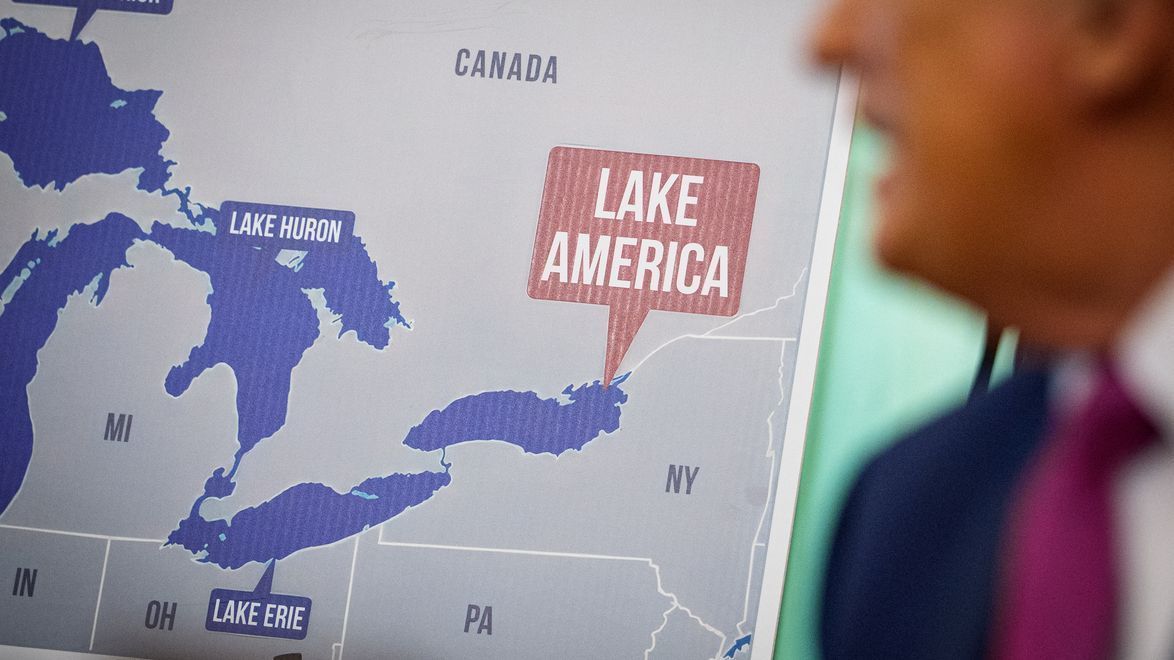
MapQuest's Stand on Lake Ontario Sparks Debate Over Canada's Tech Dependence on U.S.
MapQuest's refusal to rename Lake Ontario amid Google's controversial change has reignited discussions about Canada's reliance on American tech giants and the challenges of achieving digital sovereignty.
The recent controversy surrounding Google Maps' decision to rename Lake Ontario to "Lake America" has triggered a national conversation about Canada's technological sovereignty and economic dependencies. This move, perceived as aligning with U.S. political agendas, prompted MapQuest to take a public stand that resonated deeply with Canadian users. The American mapping service's defiance resulted in unprecedented engagement, with CEO Doug Berger reporting a 5,000% surge in searches and hundreds of thousands of new downloads. This incident has exposed underlying tensions about Canada's digital infrastructure reliance on foreign corporations and the limited domestic alternatives available to consumers.
The Mapping Controversy That Went Viral
When Google Maps altered Lake Ontario's designation, it wasn't just a cartographic change but a symbolic gesture that touched on national identity. MapQuest's response - a simple social media post declaring "We're not changing it" accompanied by a screenshot of their correctly labeled map - became a rallying point for Canadians concerned about foreign influence over domestic geography. The post went viral, propelling the previously overlooked app to become the third most downloaded free application in North America, trailing only behind industry giants ChatGPT and Meta AI. Berger noted the particular significance for Canadian users, who comprise a substantial portion of their customer base and responded enthusiastically to this display of geographic accuracy. The company followed up with another statement affirming "We are aware that Lake Ontario is being correctly labeled on our map," further cementing their position as defenders of Canadian cartographic integrity.
Canada's Technological Dependencies Exposed
Emily Osborne from the Canadian Shield Institute, a think tank focused on digital sovereignty that includes former Blackberry co-CEO Jim Balsillie on its board, warns that this mapping incident reveals deeper vulnerabilities in Canada's tech ecosystem. "Our dependence on American tech firms creates potential choke points across multiple sectors," she explains, citing cloud computing infrastructure as particularly concerning. "There's a lot of areas, because of how dependent we are on American firms, where they can throttle our access to essential services." Rotman School professor David Soberman contextualizes this issue, noting that American companies dominate Canada's digital marketplace. This concentration creates systemic risks, from data privacy concerns to potential service disruptions during geopolitical tensions. The debate extends beyond technology into broader economic dependencies, with some commentators noting Canada's reliance on U.S. trade and even seasonal agricultural imports due to climate limitations.
The Limited Landscape of Canadian Tech Alternatives
While some domestic alternatives exist, they often operate in niche markets without challenging U.S. dominance. Canadian e-commerce platforms like Shopify demonstrate local companies can achieve global scale, yet most sectors lack equivalent competitors. Food delivery services show modest success with SkipTheDishes capturing market share from UberEats, while retail sees Canadian Tire competing against Amazon and Walmart. However, as Osborne notes, "Social media platforms like Gander or productivity tools like cDox simply can't match the network effects and integrated ecosystems of their American counterparts." She points out the difficulty in convincing social networks to switch platforms when existing networks remain on dominant services like Facebook. Some satirical commentators have highlighted the absurdity of certain proposed alternatives, joking about "Buttbook" as a Facebook replacement or paper maps substituting for digital navigation.
Structural and Economic Barriers
The challenges extend beyond consumer preferences to fundamental economic realities. American tech giants benefit from economies of scale that allow bundled services at unbeatable prices. Payment systems illustrate this perfectly - while Interac serves domestic transactions, Visa and Mastercard control global credit card processing. Recent acquisitions like Moneris by U.S. private equity firm Francisco Partners for $2 billion demonstrate how even successful Canadian fintech firms eventually get absorbed into foreign ownership structures. Osborne points to Avenza Maps as another casualty, with the Canadian mapping software company sold to Boston investors. These patterns of acquisition raise questions about Canada's ability to maintain domestic control over critical digital infrastructure. The proposed 2055 satellite mapping initiative, currently awaiting approval, highlights both the ambition and delayed timelines plaguing domestic tech development.
Policy Considerations and Future Directions
Experts suggest Canada could learn from the European Union's approach to digital sovereignty. Osborne advocates for stronger data localization laws and investment in domestic cloud infrastructure, noting that "it might end up being less cost effective with big U.S. firms offering bundles, packages and suites of software." Soberman emphasizes market solutions, arguing that sustained "Buy Canadian" sentiment could stimulate local innovation if paired with venture capital access and tax incentives. Both agree that without strategic intervention, Canada risks permanent secondary status in the global digital economy. As the Lake Ontario incident shows, symbolic victories matter in raising awareness, but building substantive technological capacity requires coordinated long-term strategy across government and private sectors. The debate continues as Canadians grapple with the practical realities of reducing dependence on American technology while maintaining access to essential services in an interconnected digital world.
Broader Implications for Canadian Sovereignty
This controversy transcends mapping applications to touch on fundamental questions of national autonomy in the digital age. Every time Canadians use American platforms, they surrender economic data and cultural influence. The Moneris acquisition highlights how even successful Canadian tech firms often end up in foreign hands, while proposals like Canada's 2055 satellite mapping initiative underscore the challenges of domestic tech development. Political commentators have noted the irony in some advocating for closer ties with the U.S. under potential future Trump administration while others push for greater independence. As Berger's experience with MapQuest demonstrates, moments of national pride can drive temporary engagement, but lasting change requires systemic solutions to reduce dependency on foreign technology infrastructure while acknowledging the complex realities of global tech ecosystems.