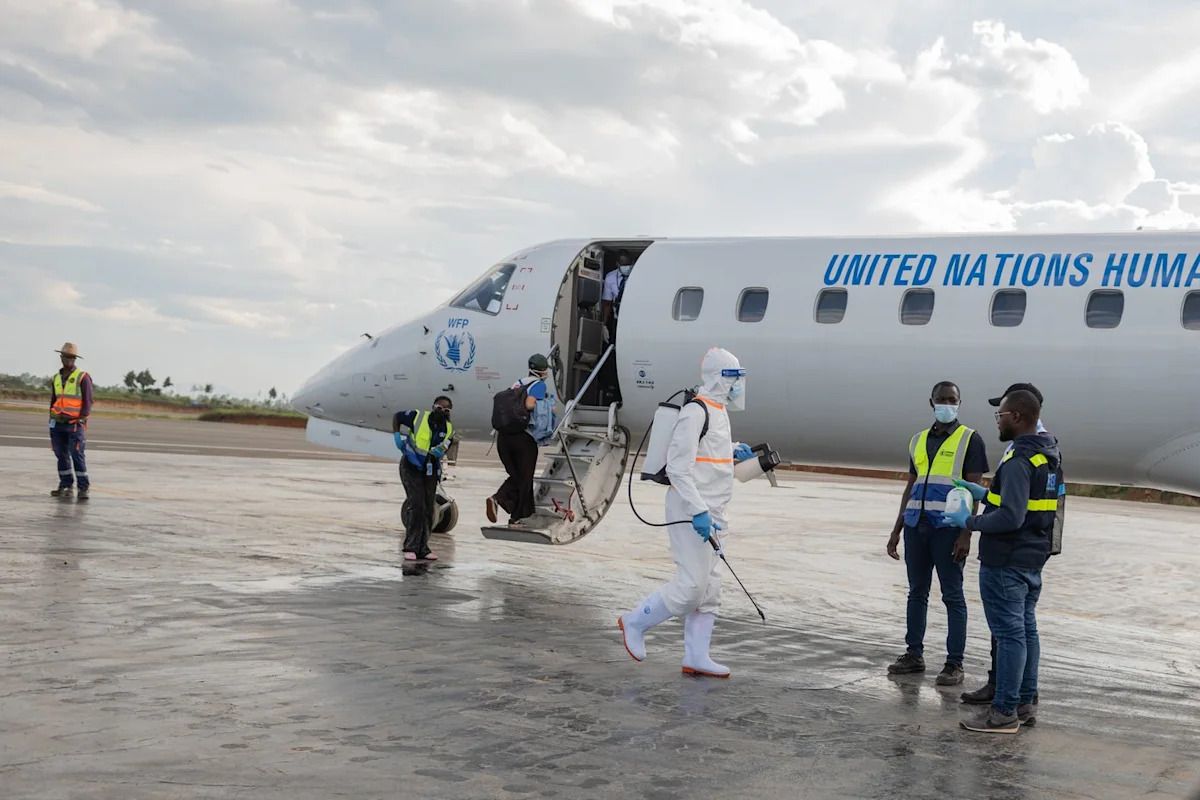
Canada extends Ebola travel restrictions despite Uganda being declared outbreak-free
Canada prolongs immigration suspensions for Uganda and South Sudan despite WHO declaring Uganda Ebola-free, sparking criticism from health experts and affected families. The policy continues to separate families and disrupt humanitarian efforts while drawing scrutiny over its scientific justification.
Canada has extended its Ebola-related travel restrictions for Uganda and South Sudan for another 30 days, maintaining a policy that continues to separate families and disrupt humanitarian efforts despite the World Health Organization declaring Uganda's outbreak over. The decision keeps tens of thousands of immigration applications suspended while banning entry for visa holders from these countries, even as public health experts question the scientific basis for these ongoing measures.
The extended restrictions and their scope
Government officials confirmed the extension means immigration and visa applications from residents of the Democratic Republic of Congo, Uganda and South Sudan will remain suspended until September 28. The policy affects not only new applicants but also foreign nationals who already hold valid visas from these countries, preventing their entry regardless of prior approval. The Public Health Agency of Canada maintains these are precautionary measures given Ebola's severity, even while acknowledging the overall risk to Canada remains low.
The restrictions include a continued 21-day quarantine requirement for Canadians returning from these regions, a measure that multiple aid organizations report has significantly hampered their ability to deploy humanitarian workers. This comes despite clear epidemiological data showing Uganda's outbreak declared over by both the Africa CDC and WHO, with South Sudan having reported zero cases throughout the entire crisis period. The situation contrasts sharply with neighboring DRC, where the outbreak has claimed 2,786 lives out of 5,794 confirmed cases, potentially becoming the deadliest Ebola outbreak on record.
Human impact and family separations
The restrictions have created profound personal hardships for binational families caught in bureaucratic limbo. Carolyn Nicol, a Canadian citizen living in Uganda, described how the initial May announcement forced her to make an agonizing choice between staying with her Ugandan husband or returning to Canada for planned weddings. Her husband's spousal sponsorship application remains suspended, along with his visitor visa that would have allowed him to attend family events. "Show me the science that says a Canadian can go to Canada and quarantine, but a Ugandan can't come at all," Nicol challenged, articulating what many see as an unjustifiable double standard in the policy's application.
Official immigration data reveals the scale of the suspension's impact: 31,693 permanent residency applications and 10,465 temporary residency applications from overseas were on hold as of August 12. Additionally, 1,534 approved permanent residents and 23,415 temporary residents currently outside Canada have had their documents suspended, creating legal uncertainty for individuals who had already cleared immigration hurdles.
Scientific and ethical questions
Public health experts have raised substantive concerns about the restrictions' scientific validity. Roojin Habibi, a global health law researcher, highlighted the policy's inconsistency in allowing Canadians to quarantine upon return while imposing outright bans on foreign nationals. "The public health argument is really weak," Habibi noted, emphasizing that Ebola transmission requires direct contact with bodily fluids from symptomatic individuals - factors that make airport screening and quarantine measures effective containment strategies.
Dr. Joanne Liu of McGill University, who led Doctors Without Borders during the 2014-2016 West Africa Ebola outbreak, characterized blanket travel restrictions as "much more a cosmetic thing" designed to create the appearance of decisive action rather than provide meaningful protection. This assessment aligns with repeated WHO statements that such measures contradict established public health guidance and appear motivated more by fear than evidence-based risk assessment.
Broader societal consequences
The restrictions' impact extends beyond separated families to affect cultural exchanges and humanitarian operations. Nakate Flavia Priscilla, leader of a Ugandan dance troupe, saw their planned Canadian performances canceled due to the travel ban, eliminating crucial fundraising for East African schools that rely on these international tours. "Everyone will be heartbroken," Priscilla said from Kampala, expressing concern for students who have returned to their villages without the educational support these performances typically fund.
Aid organizations report the quarantine requirements have created logistical and operational challenges that make sending humanitarian workers to the region prohibitively difficult. This unintended consequence potentially exacerbates health crises in vulnerable communities by limiting international support precisely when it's most needed.
Government rationale and response
Mark Johnson of the Public Health Agency of Canada defended the measures by citing Ebola's severity and the absence of licensed vaccines for the Bundibugyo strain involved in this outbreak. "Although the global public health risk remains low, the consequences for affected individuals are severe," Johnson stated, emphasizing the need for vigilance against delayed detection scenarios. This position maintains the government's original justification for the restrictions, implemented initially ahead of the FIFA World Cup and framed as aligning with U.S. and Mexican policies.
However, Habibi questioned whether Canada should maintain this alignment with U.S. policies given recent trade tensions, suggesting the country has opportunity to develop more independent public health approaches. The critique points to broader questions about whether immigration policies should be tied to shifting international relations rather than consistent public health principles.
LGBTQ refugee implications
The restrictions carry particular gravity for LGBTQ individuals fleeing persecution in these countries, for whom Canada often represents not just opportunity but survival. The policy's continuation despite Uganda's Ebola-free status and South Sudan's zero-case record raises difficult questions about whether public health measures are being applied proportionally or serving other policy objectives. As advocates note, for vulnerable populations facing immediate threats, these suspensions effectively cut off escape routes with potentially life-or-death consequences.
Policy crossroads
Canada's prolonged restrictions present a case study in balancing public health precautions with human rights considerations. With Uganda declared Ebola-free and South Sudan never having cases, the continued bans appear increasingly disconnected from actual risk assessments. The situation underscores how immigration systems often become collateral damage in disease outbreaks, with bureaucratic processes ill-equipped to adapt to changing epidemiological realities.
As global health experts emphasize, effective epidemic response requires measures that are both scientifically grounded and minimally disruptive to human lives. The current policy's continuation despite evolving facts on the ground suggests an opportunity for Canada to refine its approach to align more closely with these principles, ensuring public health protections don't inadvertently cause disproportionate harm to vulnerable populations.