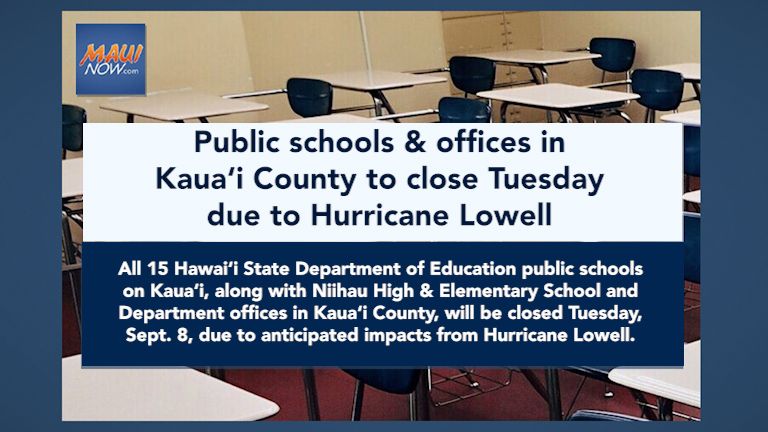
Hawaii braces for Hurricane Lowell as schools and offices close on Kauai and Niihau
Governor Josh Green ordered closures as the Category 2 hurricane threatens damaging winds, 16 inches of rain and dangerous rip currents.
Hawaii is preparing for significant impacts from Hurricane Lowell as the storm moves toward the westernmost islands of Kauai and Niihau, prompting widespread closures and emergency precautions. Governor Josh Green announced the shutdown of schools, community colleges and government offices in Kauai County on Tuesday as the National Hurricane Center issued a hurricane warning for the region.
Storm track and intensifying threats
As of Monday afternoon, Lowell maintained Category 2 strength with sustained winds powerful enough to cause structural damage. The National Hurricane Center projected the storm's core would pass over or just west of Niihau late Monday into early Tuesday. While forecasters expected the winds to gradually weaken, they confirmed Lowell would remain at hurricane strength during its closest approach to the islands.
The storm system presents multiple simultaneous hazards including sustained damaging winds capable of downing trees and power lines, mudslides from saturated soils, possible spin-up tornadoes, and dangerous rip currents along all shorelines. Meteorologists warned some isolated areas could see extreme rainfall totals reaching 16 inches (40 centimeters), creating life-threatening flash flood conditions across vulnerable terrain.
Comprehensive precautionary measures
Governor Green's emergency declaration affects all of Kauai County, which encompasses both the developed island of Kauai with its population of over 73,000 residents and the remote island of Niihau with fewer than 100 inhabitants. The sweeping closures extend beyond schools to include all state and county government offices as well as the University of Hawaii's Kauai Community College campus.
"Closing offices, schools and courts will help keep people off the roads during dangerous conditions and allow emergency crews to focus on protecting our communities," Green said in a news release.
The governor issued specific guidance urging residents to shelter indoors, cancel nonessential travel plans, and closely follow updates from civil defense authorities. His administration emphasized that these precautions would allow first responders to concentrate on critical infrastructure protection and emergency response operations without additional traffic hazards.
Island-wide rainfall projections
While Kauai and Niihau face the most direct hurricane conditions, the entire Hawaiian island chain is bracing for substantial rainfall that could trigger flooding. A tropical storm warning remains active for Oahu, where nearly 1 million residents live in urban areas particularly vulnerable to runoff. Weather models predict isolated totals reaching 10 inches (25 centimeters) on Oahu and Maui, with some windward areas of the Big Island potentially receiving 12 inches (30 centimeters) of precipitation.
This weather event follows closely after Tropical Storm Lala's damaging passage last month. Though that system stayed offshore, it generated severe impacts including destructive landslides, the destruction of approximately 100 homes from flooding, and extended power failures across multiple islands - demonstrating how even indirect tropical systems can severely affect Hawaii's infrastructure.
Emergency response coordination
Public safety officials have repeatedly warned residents to avoid all shoreline areas due to expected extremely dangerous surf conditions and strong rip currents. Emergency management personnel are advising households to prepare backup power sources and essential supplies in anticipation of potential extended electricity disruptions. Authorities specifically cautioned against any attempt to drive through flooded roadways, noting that most hurricane-related fatalities involve vehicles in floodwaters.
The hurricane warning includes portions of the ecologically sensitive Papahanaumokuakea Marine National Monument, raising concerns about potential damage to protected marine habitats. State and federal emergency teams are prepositioning resources across the island chain while maintaining constant communication with county emergency operations centers to coordinate response efforts as conditions develop.
Broader implications for Hawaii
The approach of Hurricane Lowell spotlights Hawaii's geographic vulnerability to tropical weather systems. As the most isolated population center in the world, the islands face distinct logistical challenges in emergency preparedness, response coordination, and infrastructure hardening against storm impacts. The concentration of development along narrow coastal plains leaves communities exposed to both wind damage and inundation from heavy rainfall or storm surge.
This storm marks the second significant tropical weather threat in recent weeks, following Tropical Storm Lala's damaging effects last month. The back-to-back events are testing the capacity of emergency systems and stretching available resources while forcing residents to endure repeated disruptions. The extensive precautionary measures reflect officials' recognition of the substantial risks these systems pose to public safety and critical infrastructure across the island chain.
Climate context and future preparedness
The consecutive tropical systems affecting Hawaii this season align with broader patterns of increasing storm intensity and frequency in the Pacific basin. Climate researchers note that warming ocean temperatures may be contributing to more rapid storm intensification and greater rainfall production from tropical systems. These trends present long-term challenges for island communities that must balance development needs with climate resilience.
State officials continue to emphasize that individual preparedness remains crucial, encouraging residents to maintain emergency kits, develop family communication plans, and stay informed through official weather alerts. The coordinated response to Hurricane Lowell will provide valuable lessons for improving future disaster planning as Hawaii faces the growing threats posed by a changing climate and active tropical weather patterns.