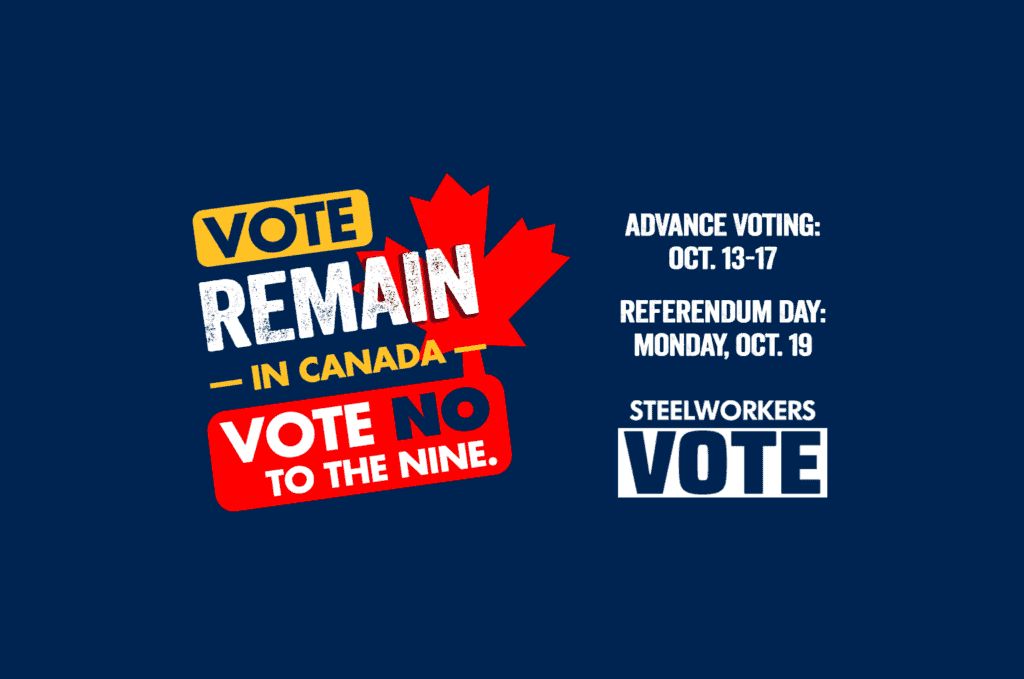
Alberta referendum includes nine questions beyond separation, could reshape immigration and voting
The Oct. 19 ballot includes proposals on provincial control of immigration, social program access and proof of citizenship for voters.
Albertans face 10 referendum questions next Monday, with nine proposals on topics from immigration to the Senate that could lead to major changes in the province.
The last question, on whether to trigger a future vote on leaving Canada, has dominated debate, but Premier Danielle Smith has spent $4-million on government advertising focused mostly on the other nine.
She says she needs direct input from the electorate to implement her political agenda, while her detractors argue the referendum stokes anti-immigration rhetoric and feeds separatist sentiment.
READ MORE: Albertans vote on separation referendum question Oct. 19
READ MORE: Carney says Canada 'worth fighting for' as Alberta separation vote nears
One question asks if Alberta should have exclusive control over the selection of incoming economic migrants, similar to a 1991 agreement Quebec has with the federal government.
"We have to make sure that we’re involved at the very beginning stages of determining what the market need is," Smith said.
Her government has not said what "sustainable" immigration levels would be, nor who would qualify as an "Albertan."
While the question proposes decreasing immigration levels, Smith has recently suggested she wants to admit more people under the provincial nominee program.
Between 2022 and 2025, provincial nominees comprised roughly 58 per cent of economic migrants to Alberta, according to figures from Immigration, Refugees and Citizenship Canada.
Another proposal would narrow which newcomers are eligible for social services, allowing Alberta to "distinguish between the temporary residents it has approved and those it has not."
Unapproved temporary residents would be ineligible for certain provincial benefits, according to a government website, though Smith has not set criteria for how people with "Alberta-approved immigration status" would be selected.
In February, when Smith unveiled a projected $9.4-billion deficit, she blamed low oil prices and immigration, arguing non-permanent residents are a drag on provincial finances.
The proposal would exclude all non-permanent residents from benefits such as child care subsidies, student aid and income supports, but not health care and education, with the province estimating an annual cost of roughly $100-million.
Smith frequently points to a statistic that says non-permanent residents cost the public system roughly $1-billion for health care and education, while delivering $150-million in taxes.
Experts dispute this number.
"That’s just not the right way to do the fiscal impact analysis," said Mikal Skuterud, an economist at the University of Waterloo who has advised Prime Minister Mark Carney and Justin Trudeau on immigration policy.
He said many Canadian citizens cost the public system more than they pay in taxes, and experts note immigrants often arrive in better health and use fewer health services.
Smith has mused about a $1,900 premium for health care for non-permanent residents, suggesting businesses could shoulder the cost, but her government has not said what it would charge.
The Calgary Chamber of Commerce found in a poll that only one-third of its membership supports increasing provincial control over immigration, though 41 per cent support limiting eligibility for provincially funded programs.
Alberta Finance Minister Jason Nixon has suggested the immigration proposals wouldn’t be implemented until after the next provincial election, scheduled for October 2027.
Another question would require voters to produce proof of citizenship at the polls, a measure the province says would help ensure only Canadian citizens living in Alberta can vote.
Earlier this year, Smith’s government added citizenship markers to provincial identification and drivers’ licences.
It is unclear what problem this proposal would solve, as Elections Alberta currently requires voters to prove their address and verifies citizenship when they are added to the provincial list of electors.
The agency has reported only four instances of ineligible voters casting ballots since 2015.
"You’re not going to be on that list if you’re not a Canadian citizen," said Shaun Fluker, a law professor at the University of Calgary.
Other questions on the ballot concern judicial appointments, the future of the Senate and additional areas of provincial jurisdiction.
Nosy Mag reported earlier this month that the ballot includes a question on whether to hold a future, binding vote on the province leaving Canada.
Voters will declare whether they support the proposals by checking yes or no on Oct. 19.
With files from The Globe and Mail