Spread betting
Spread betting is a form of gambling on the outcome of an event where the payout is based on the accuracy of the wager, not simply whether a team wins or loses. In its most common North American form, known as point spread betting, a bookmaker assigns a predicted margin of victory to a favoured team, creating a handicap that levels the betting field. This method is fundamental to modern sports betting, particularly for major leagues like the NFL, NBA, and NHL, and is a core offering at all licensed Canadian sportsbooks. For Canadian adults in provinces where single-event sports betting is legal, understanding the spread is essential for engaging with one of the most popular and analytically driven forms of wagering.
Mechanics of Point Spread Betting
The core function of a point spread is to act as a handicap imposed on the favoured team in a sporting contest. A bookmaker sets a line, such as Team A -6.5, meaning Team A is favoured to win by 6.5 points. A bet on Team A, known as 'laying the points', only wins if Team A's final score minus 6.5 points is greater than the underdog's score. Conversely, a bet on the underdog, Team B, known as 'taking the points', wins if Team B's final score plus 6.5 points is greater than Team A's score. This structure encourages betting on both sides by making the outcome less about who wins and more about the margin of victory. The spread is designed to theoretically split public betting interest evenly, ideally giving each side a 50% probability of covering. To avoid ties, or pushes, spreads are almost always set with half-point increments, such as 3.5 or 7.5, ensuring a definitive win or loss for every wager. If a push does occur, such as a favourite winning by exactly the spread number, all bets are typically refunded.
Bookmakers profit not by picking winners but by charging a commission on losing bets, known as vigorish or 'the vig'. The standard vig in North America is -110, meaning a bettor must wager $110 to win $100. If equal money is wagered on both sides of a spread, the bookmaker collects $110 from the losing side and pays $100 to the winning side, keeping the $10 difference as profit regardless of the game's outcome. This model makes balanced action the primary goal for the bookmaker. The point spread itself is not a static prediction but a dynamic line that can move in response to betting patterns, injury news, and other market factors. This movement is intended to attract money to the less popular side and maintain that crucial balance. The invention of this system is credited to Charles K. McNeil, a mathematics teacher turned bookmaker in Chicago during the 1940s.
Spread Betting vs. UK Sports Spread Betting
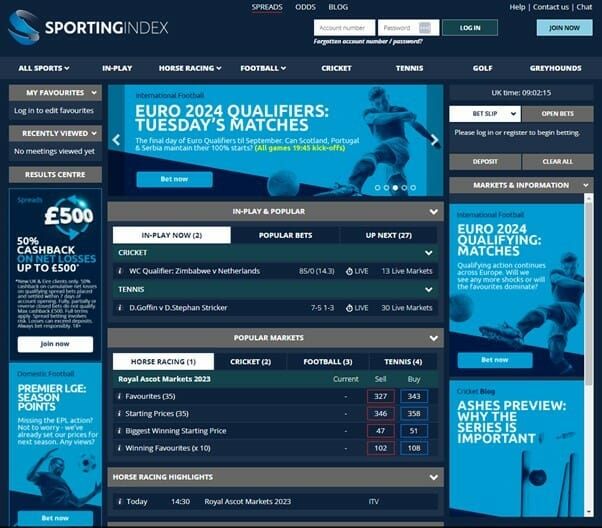
It is crucial to distinguish between North American point spread betting and the 'spread betting' offered in the United Kingdom, as they are fundamentally different products. North American spread betting is a fixed-risk wager where the potential profit or loss is known at the time the bet is placed, limited to the stake and the odds. In contrast, UK sports spread betting involves betting on whether a specified outcome will finish above or below a quoted range, with profits or losses multiplying based on how far the result is from the spread. For example, a firm may set a spread of 340 to 350 for a cricket team's total runs. This creates uncapped potential for both gain and loss, which is a key difference from the fixed-risk model.
This form of betting is regulated differently within the UK. While sports spread betting falls under the Gambling Commission, financial spread betting, a much larger market where the same variable-return principle is applied to instruments like shares and indices, is regulated by the Financial Conduct Authority. A significant attraction of financial spread betting in the UK is its tax treatment, as profits are free from capital gains tax and stamp duty. This tax advantage has contributed to its popularity, though it also means losses cannot be offset against other taxable income. In most other countries, including Australia, profits from financial spread betting are considered taxable income.
Common Related Wagers: Totals and Teasers
Alongside the point spread, the total or over/under bet is one of the most popular wagers in sports betting. This is a bet on the combined score of both teams in a game. A bookmaker sets a line, such as 44.5 points, and bettors wager on whether the final total will be over or under that number. Like point spreads, totals are usually set with half-points to avoid pushes. This bet allows gamblers to focus on the overall nature of a game, such as expecting a high-scoring offensive duel or a defensive struggle, without needing to pick a winner. In North American sportsbooks, totals are handled similarly to point spreads, with a standard -110 vig applied, and they can often be included in parlay bets alongside team spreads.
Another derivative bet is the teaser, which allows a bettor to adjust the point spread in their favour across multiple games. In American football, a common teaser adjusts the spread by six points. For instance, a team that is -3.5 on the standard spread could be teased to +2.5, making it easier to cover. The trade-off is that the bettor must combine two or more teased selections into a single wager, and all must win for the bet to pay out. The payout for a teaser is less than even money, reflecting the increased probability of winning with the adjusted lines. A less common variant is the 'reverse teaser', which moves the spread against the bettor for a higher potential payout.

Spread Betting in the Canadian Market
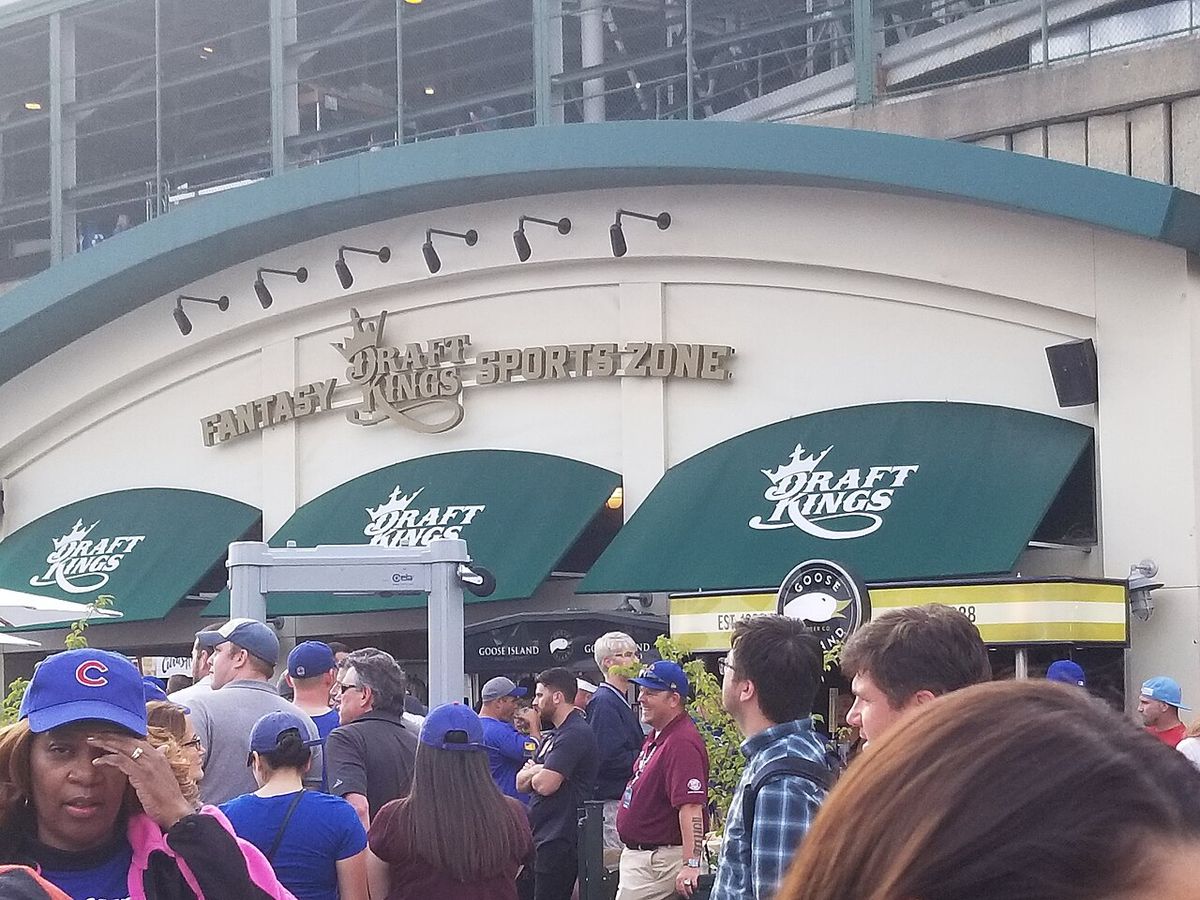
The legalization of single-event sports betting in Canada has led to a diverse market for spread betting. Leading international and domestic operators provide extensive point spread markets on all major North American sports. As of 2006, the number of spread bettors in the UK was heading towards one million. This environment means Canadian bettors can often find different spreads and prices across operators, making line shopping a valuable practice. Major U.S. operators like DraftKings and FanDuel are also accessible in some Canadian provinces, including Ontario. Canadian bettors must be 19 years of age (18 in Alberta, Manitoba, and Quebec) to participate. The market's development is evident in the depth of analysis available, with numerous expert picks, against-the-spread predictions, and detailed game breakdowns published weekly for leagues like the NFL and NBA, helping inform wagering decisions.
- DraftKings is recognized for market depth and an intuitive interface.
- FanDuel is noted for ease of use and consistent cash-out features.
- Operators are accessible in Ontario and, as of 2026, in Alberta.
- The legal betting age is 19 in most provinces, and 18 in Alberta, Manitoba, and Quebec.
- In the UK, a 2007 report from Cass Business School found only 1 in 5 spread bettors ends up a winner.
- In the UK, a study found serious gambling problems developed in almost 15% of spread bettors compared to 1% of other gamblers.
Analysis and Strategy for Bettors
Successful spread betting often involves analysis that goes beyond simply picking the better team. Since the point spread is designed to reflect public perception and balance money, it may not always align perfectly with the true strength of the teams. Astute bettors look for discrepancies between the posted line and their own projections, a gap where value can be found. This analysis can incorporate statistical models, injury reports, situational factors like travel or scheduling, and historical against-the-spread (ATS) performance. For instance, a team may be consistently undervalued by the market as a home underdog, creating a profitable betting trend over time. Mathematical analysis of sports with low scoring, like baseball or hockey, may employ Poisson or Skellam statistics to model outcomes.
The public's betting tendencies can significantly influence line movement. A popular team like the Dallas Cowboys may attract heavy betting action on the favourite, causing the spread to widen beyond what the analytics suggest is fair. This creates opportunities to bet on the underdog if the line is perceived as inflated. Similarly, late-breaking news, such as a key player being ruled out, can cause sharp, rapid line moves. Bettors also monitor totals, assessing team tendencies in pace, offensive efficiency, and defensive strength to predict whether a game will go over or under the posted number.
- Assess the closing line value versus your own projection.
- Consider team situational factors (e.g., travel, rest, motivation).
- Analyze historical against-the-spread (ATS) records and trends.
- Monitor injury reports and their impact on team performance.
- Account for public betting sentiment and line movement.
- Compare spreads and odds across multiple legal sportsbooks.

Key NFL Spread Betting Considerations
The National Football League is the largest driver of spread betting action in North America. Each week, hundreds of thousands of wagers are placed on NFL point spreads and totals. The opening week of the season presents unique challenges, as lines are based purely on preseason projections and can vary widely between sportsbooks. Historical trends are also weighed, such as the poor Week 1 record of Super Bowl losers. As the season progresses, spreads become more informed by actual team performance, but new factors emerge. By Week 5, bye weeks begin, reducing the number of games. Key injuries, weather conditions, and playoff implications start to influence lines. Late in the season, teams that have secured playoff positioning may rest starters, while teams out of contention may evaluate younger players, which can affect their ability to cover a spread. Bettors must adjust their analysis for these motivational factors.
| Week 1 Game (2026) | Spread Range | Key Betting Note |
|---|---|---|
| Seahawks vs. Patriots | SEA -3.5 (consistent) | Super Bowl loser trend applies to Seahawks. |
| Rams vs. 49ers | LAR -3.5 to -4.5 | Logistics favour 49ers who spent week in Melbourne. |
| Bears vs. Panthers | CHI -2.5 to -3.5 | Panthers were 10-5 ATS as home underdog in 2025. |
| Cowboys vs. Browns | DAL -2.5 to -3.5 | Significant line variation across sportsbooks. |
Risks and Regulatory Framework
All forms of gambling, including spread betting, carry the risk of financial loss. The fundamental risk in North American point spread betting is limited to the amount staked plus the vig. However, in UK-style sports or financial spread betting, losses can exceed the initial stake dramatically, as they are a multiple of how wrong the prediction was. This is why financial spread betting often involves risk management tools like stop-loss orders, which automatically close a bet if losses reach a predetermined level. In Canada, all legal sports betting operators are required to be licensed by provincial authorities, which enforce rules on responsible gambling, age verification, and game integrity.
Match fixing, where participants manipulate a game's outcome for betting gain, is treated with extreme severity across all sports. Players, coaches, and officials are universally prohibited from betting on their sports, and any involvement in fixing outcomes results in lifetime bans. The point spread itself is designed for betting markets and, in theory, participants on the field have no incentive to consider it, as they are playing to win the game under its standard rules. Regulatory bodies and sports leagues work to monitor betting patterns for irregularities that may suggest corruption. For individuals, it is important to gamble only with discretionary funds, set limits, and be aware of provincial problem gambling helplines.
Questions about Spread betting
What does 'against the spread' mean in betting?
Betting 'against the spread' (ATS) means wagering on a team to cover the point spread set by the bookmaker. If you bet on a favourite against the spread, they must win by more than the spread number. If you bet on an underdog against the spread, they must either win outright or lose by fewer points than the spread. The term is used to describe the outcome of a bet relative to the handicap, separate from the straight-up win or loss.
How does point spread betting work in the NFL?
In the NFL, a point spread is a handicap applied to the favoured team. For example, if the Kansas City Chiefs are -6.5 against the New York Jets, the Chiefs must win by 7 or more points for a bet on them to win. A bet on the Jets at +6.5 wins if the Jets win outright or lose by 6 or fewer points. Spreads use half-points to avoid ties. The betting odds are typically -110, meaning you wager $110 to win $100.
What is the difference between a point spread and a moneyline?
A point spread bet involves a handicap on the margin of victory, while a moneyline bet is a simple wager on which team will win the game outright, with no spread involved. Moneylines use positive and negative odds to reflect the implied probability of winning. A favourite has negative odds (e.g., -200), meaning you must bet $200 to win $100. An underdog has positive odds, meaning a smaller bet can yield a larger return. The point spread focuses on performance relative to a handicap, whereas the moneyline focuses solely on the winner.
Where can I find expert NFL picks against the spread?
Many sports betting analysis websites and news publications provide expert NFL picks against the spread each week. These picks are often made by professional handicappers or analysts who study team statistics, trends, injuries, and situational factors. These resources are widely available online and are typically free to access. It is common for multiple experts to provide picks for every game on the weekly slate, along with analysis explaining their reasoning.
What happens if an NFL game ties against the spread?
If the final score difference lands exactly on the point spread number, the result is a tie, known as a 'push'. When a push occurs, sportsbooks refund the full stake to all bettors on that market, meaning no money is won or lost. To minimize pushes, bookmakers almost always use half-point spreads (like -3.5), which ensure there is no possible tie outcome. This forces every bet to be either a win or a loss, which is preferable for the sportsbook's operations.
Is spread betting legal in Canada?
Yes, point spread betting on sports is legal in Canada through provincially licensed and regulated online sportsbooks. Popular licensed operators include bet365, Sports Interaction, DraftKings, and FanDuel, with availability varying by province. Bettors must be of legal age, which is 19 in most provinces and 18 in Alberta, Manitoba, and Quebec. All legal operators are required to promote responsible gambling practices and are subject to provincial regulatory oversight.
Sources and further reading
- Spread betting (Wikipedia)
- Best Sports Betting Apps: Reviewing the Top Sportsbooks (November ... (cbssports.com)
- Best Betting Sites in Canada: Top 10 Sportsbooks Ranked in 2026 (covers.com)
- Sports Betting Dime: Expert Betting Analysis, Odds & News | SBD (sportsbettingdime.com)
- Best sportsbook promos: November 2026 sports betting bonuses and ... (sportsline.com)
- NFL Picks & Predictions Today, Best NFL Bets by Odds Shark (covers.com)
- NFL Week 1 Odds: Line Shopping Every Game for Canadian Bettors (rg.org)
Checked by the Nosy Mag desk. Last updated 2026-11-11.