Lottery mathematics
Lottery mathematics is the branch of combinatorics used to calculate the precise probabilities of winning or losing in draw-based lottery games. It provides the foundational formulas that determine the published odds for games like Lotto Max and Lotto 6/49. The calculations, based on combinations without replacement, reveal why jackpot odds are astronomically long and why seemingly improbable coincidences can occur in random draws. Understanding this mathematics confirms that every combination is equally likely, regardless of any perceived pattern.
Fundamental Combinatorics of a Single Draw
The core of lottery mathematics lies in calculating combinations, specifically the number of ways to choose a subset of numbers from a larger pool where order does not matter. In a standard lottery format, a player selects T numbers from a pool of P unique numbers. The draw then randomly selects W winning numbers from that same pool without replacement. The probability of matching exactly M of the winning numbers is given by a well-established combinatorial formula.
This formula divides the number of favourable outcomes by the total number of possible draws. The total number of possible winning sets is expressed as 'P choose W', written mathematically as C(P,W). The number of ways to get M matches is the product of two factors. First, one must choose which M numbers match from the T numbers on the ticket, calculated as C(T,M).
Second, one must choose the remaining W−M winning numbers from the P−T numbers not on the ticket, calculated as C(P−T, W−M). The probability is therefore Pr[M∣P,T,W] = [C(T,M) × C(P−T, W−M)] / C(P,W). An equivalent formula approaches the problem from the perspective of filling out the ticket, yielding the identical result: Pr[M∣P,T,W] = [C(W,M) × C(P−W, T−M)] / C(P,T). These formulas are deterministic and apply to any game with a single pool of numbers drawn without replacement.
For the classic Canadian Lotto 6/49 game, the parameters are P=49, T=6, and W=6. To calculate the jackpot odds of matching all six numbers (M=6), the formula simplifies considerably. The number of favourable outcomes is exactly one. Thus, the probability of winning the Classic Jackpot is exactly 1 in 13,983,816. This number is a constant derived purely from the game's structure and is unaffected by the number of tickets sold or the size of the jackpot.
Games with Multiple Pools: Power Balls and Bonus Balls
Many modern lottery games, including several offered in Canada, involve draws from two separate pools of numbers, such as a main set and a power ball. The probability calculation for these games is the product of the probabilities for each independent pool. Consider a game where W1 main numbers are drawn from a pool of P1, and W2 power balls are drawn from a separate pool of P2. A ticket selects T1 and T2 numbers from these respective pools.
The probability of getting M1 matches in the main pool and M2 matches in the power ball pool is the product of the two individual combinatorial probabilities. The general formula is Pr[M1,M2] = [C(T1,M1) × C(P1−T1, W1−M1) / C(P1,W1)] × [C(T2,M2) × C(P2−T2, W2−M2) / C(P2,W2)]. This multiplicative principle extends to games with three or more independent pools. For games where a bonus ball is drawn from the same original pool after the main draw, a different formula applies that accounts for the non-replacement across both draws.
The probability for matching M1 from the main draw and M2 from the bonus draw, given T numbers on a ticket from a pool of P, is Pr[M1,M2] = [C(W1,M1) × C(W2,M2) × C(P−W1−W2, T−M1−M2)] / C(P,T). These formulas allow for the precise calculation of odds for complex prize tiers. For instance, the odds of winning the second prize in Lotto 6/49, which involves matching five main numbers plus the bonus number, can be accurately determined using the bonus ball model. This model accounts for the fact the bonus number is drawn from the remaining pool after the main numbers are removed.
Similarly, the structure of Lotto Max, which involves a main draw of seven numbers from 1-50, incorporates additional separate draws for MAXMILLIONS prizes, each with its own set of seven numbers. The odds for each $1 million MAXMILLIONS draw are calculated independently using the single-pool formula with parameters P=50 and W=7. The main jackpot odds for Lotto Max are also based on this single-pool calculation, adjusted for the number of selections per play. This mathematical framework ensures consistent and transparent odds across all prize categories in multi-draw games.
Calculated Odds for Major Canadian Lottery Games
The application of lottery mathematics produces the official odds published by Canadian lottery corporations. These odds are fixed for each game based on its specific numerical parameters. For Lotto Max, the main jackpot requires matching all seven numbers from a pool of 50. A $5 Lotto Max play provides three sets of seven numbers. The overall odds of winning any prize in Lotto Max are about 1 in 7 per $5 play.
Other major Canadian games have their own distinct odds derived from their unique number pools and match requirements. Lotto 6/49's Classic Jackpot odds are the canonical 1 in 13,983,816. The Daily Grand jackpot, for matching five numbers plus a Grand Number, has odds of 1 in 13,348,188. These figures are not estimates but exact mathematical probabilities determined at the game's design stage. The following table shows key odds for several prominent games.
| Game | Jackpot Prize | Match Required | Number Pool | Odds of Winning Jackpot |
|---|---|---|---|---|
| LOTTO MAX | Up to $70 million | 7/7 | 50 | 1 in 33,446,140* |
| LOTTO 6/49 (Classic) | $5 million | 6/6 | 49 | 1 in 13,983,816 |
| DAILY GRAND | $1,000/day for life or $7M | 5/5 + Grand Number | 49 + Grand (7) | 1 in 13,348,188 |
| ONTARIO 49 | $250,000 (progressive) | 6/6 | 45 | 1 in 4,072,530 |
| LOTTARIO | $2 million | 6/6 | 49 | 1 in 13,983,816 |
*Per $5 play (3 selections). The odds for winning any prize in Lotto Max are 1 in 7 per $5 play. It is crucial to understand that these odds are immutable and based solely on combinatorial counting. They do not change with rollovers, the number of tickets sold, or the time of year. A rollover increases the jackpot prize pool but does not alter the fundamental probability of any single ticket matching the winning numbers.
Guaranteeing a Win and Minimum Ticket Problems
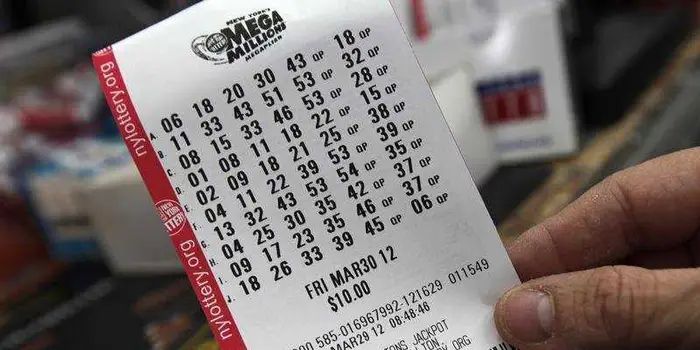
The only certain method to guarantee winning a lottery jackpot is to purchase a ticket for every possible number combination. For a 6/49 game, this means buying 13,983,816 distinct tickets. For such a strategy to be financially rational, the total cost of acquiring all tickets, including any overhead, must be less than the expected total winnings. This calculation must factor in the potential need to share the jackpot with other winners. This is a theoretical exercise, as logistical costs and tax implications typically make it impractical.
A more nuanced and actively studied problem in combinatorial design is finding the minimum number of tickets needed to guarantee at least some level of match, known as the lottery covering problem. For example, in a 5-from-90 lotto game, researchers have determined that the minimum number of tickets required to guarantee at least one ticket matches at least 2 numbers is 100. These problems are mathematically complex and often remain open for different lottery formats. They explore the most efficient way to cover possible outcomes, which has implications for system plays offered by lottery corporations.
Lottery corporations offer combination plays, such as selecting eight or nine numbers for Lotto Max, which generate multiple combinations on a single ticket. An eight-number Combination Play for Lotto Max costs $48 per draw and generates eight unique seven-number selections. These selections are then each combined with three Quick Pick sets, resulting in 32 total combinations recorded in the central computer. While this increases coverage and the chance of winning, it does not alter the underlying odds per combination.
It simply allows a player to buy many combinations in a structured way. The mathematical search for minimal covering systems continues to be an area of academic research. This research is separate from the commercial product offerings available to players. These system plays are a practical application of covering design principles. However, they are not optimized to the theoretical minimums studied by mathematicians.
Analysing Coincidences and Suspected Fraud
Lottery mathematics is also used to analyse rare coincidences that may suggest manipulation or simply illustrate the nature of randomness. A famous example occurred on October 1, 2022, in the Philippines, where 433 people won the jackpot. The winning numbers were 9, 18, 27, 36, 45, and 54, all multiples of nine. The probability of this specific set being drawn in a 6/55 lottery is about 1 in 29 million, which is the same as any other specific set.
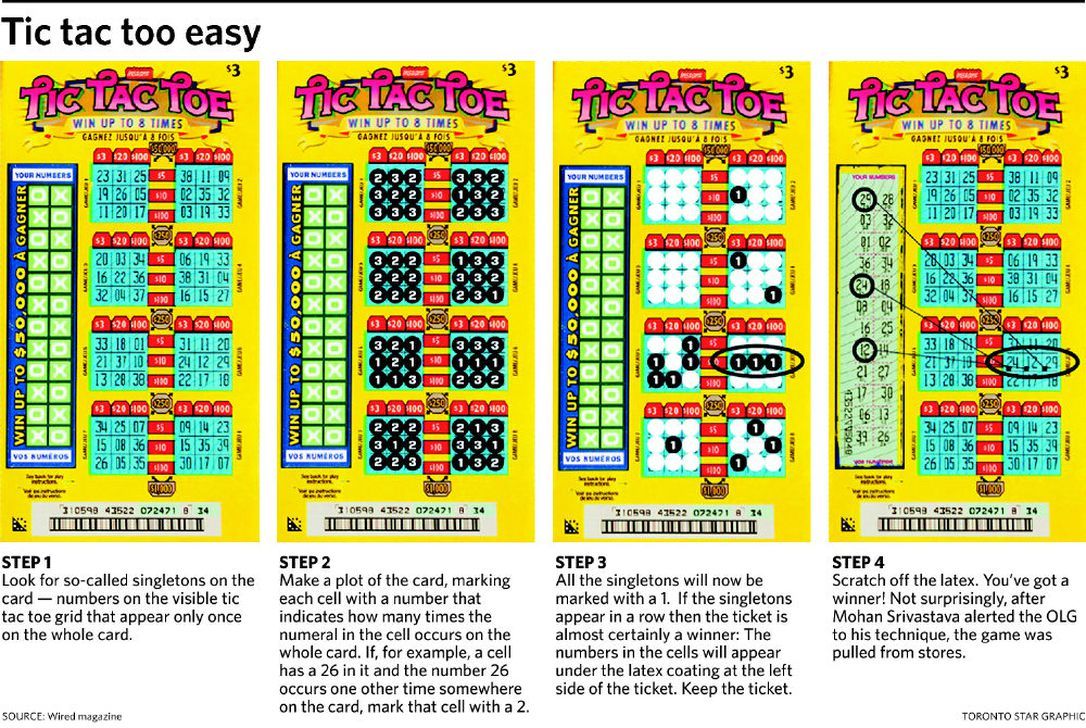
The extraordinary number of winners, not the numbers themselves, raised suspicion. To rigorously assess fraud, mathematicians like Fields Medalist Terence Tao have applied Bayesian probability. This framework evaluates two competing hypotheses: the null hypothesis (the draw was fair) and the alternative hypothesis (the draw was manipulated). The analysis requires estimating the prior probability of fraud and the likelihood of the observed event under both hypotheses. If corrupt officials randomly selected numbers beforehand, the probability of the specific set appearing is still 1 in 29 million under the alternative hypothesis, making the evidence inconclusive on its own. Another documented coincidence happened in the Bulgarian national 6/49 lottery, where the identical six numbers were drawn in consecutive draws on September 6 and September 10, 2009. The probability of this specific recurrence is astronomically small, but the probability that some set of numbers repeats eventually is much higher.
Lottery mathematics helps contextualize these events, separating truly suspicious patterns from the expected occurrences of low-probability events given enough draws over time. The draws for major Canadian lotteries use random number generators independently tested and certified. Draws are witnessed by third parties and parallel audits are conducted to ensure integrity. These security measures are designed to prevent the type of manipulation that mathematical analysis seeks to detect.
Common Misconceptions and Responsible Play
A prevalent misconception is that odds improve when a jackpot rolls over or that certain numbers are 'due' to appear. The odds are a fixed property of the game's combinatorics. A rollover increases the prize, not the probability. Another myth is that buying more tickets in a systematic way improves the expected value. While buying more tickets linearly increases the chance of winning, the expected financial return, after accounting for ticket cost and potential prize sharing, is almost always negative. No skill or system can alter the fundamental randomness of the draw. Strategies often focus on number selection, but mathematics confirms every combination has equal probability.
Some players avoid common patterns like consecutive numbers, believing they are less likely. However, the draw mechanism cannot distinguish these patterns. The only strategic financial consideration is that if a player does win a jackpot, choosing less common number combinations may reduce the chance of having to share the prize with other winners who picked the same numbers. Canadian lottery corporations promote responsible gaming through programs like GameSense, which educates players on how games work and the odds of winning and losing.
- Odds are fixed and based only on the number pool and match requirement.
- Rollovers increase the jackpot size but do not change the odds of winning.
- All number combinations have an equal probability of being drawn.
- Buying more tickets increases chance linearly but does not change the per-ticket odds.
- System plays cover more combinations but are simply a bundled purchase method.
- Geographic location does not affect odds, though more tickets sold in populous areas yield more winners from those areas.
Historical Lottery Records in Canada
While the mathematics of odds remains constant, the history of Canadian lottery prizes shows how jackpots have grown over time. These records are often set when no ticket matches all winning numbers, causing the top prize to roll over and increase. The size of a jackpot does not influence the probability of winning, but it captures public attention and drives ticket sales. The following list highlights some of the largest lottery prizes ever offered or won in Canada, demonstrating the progression of jackpot caps and notable wins.
- 2020: The first Lotto Max $70-million prize was awarded.
- 2019: The first Lotto Max $65-million draw was won by a Montreal family.
- 2015: The first Lotto Max draw for $60 million occurred after rules changed from a $50 million cap.
- 2005: Seventeen oil and gas workers from Alberta split a $54 million jackpot.
- 1974: The first national lottery in Canada was held to raise money for the Montreal Olympics. Nine women from Quebec City split a $1 million prize.
The odds of winning these historic jackpots were identical to the odds for the same games today. This is because the fundamental combinatorial formulas have not changed. This historical perspective reinforces that while prize amounts evolve, the underlying mathematics governing chance remains steadfast. The calculations used to determine the odds for these past draws are the same as those used for current draws.
Questions about Lottery mathematics
How are lottery odds calculated?
Lottery odds are calculated using combinatorics, specifically combinations without replacement. The probability is the number of favourable outcomes divided by the total possible outcomes. For a simple game, the formula is Pr[M matches] = [C(T, M) × C(P−T, W−M)] / C(P, W), where P is the number pool, T is numbers on the ticket, W is winning numbers drawn, and M is matches. For games with multiple pools, like a main draw and a power ball, the probabilities for each pool are multiplied together.
Can you increase your odds of winning the lottery?
The only way to increase your mathematical chance of winning is to buy more tickets, as each unique combination purchased adds another chance. However, this increases cost linearly without changing the fundamental odds per combination. No strategy for selecting numbers, such as using birthdays or avoiding patterns, changes the probability that a specific ticket will win. System plays or combination tickets simply bundle many combinations into one purchase but do not alter the underlying odds for each set of numbers.
What happened in the Philippine lottery with 433 winners?
On October 1, 2022, 433 people won the jackpot in a Philippine 6/55 lottery. The winning numbers were 9, 18, 27, 36, 45, and 54, all multiples of nine. Mathematically, the probability of this specific set is about 1 in 29 million, the same as any set. The suspicious element was the high number of co-winners. Mathematician Terence Tao used Bayesian probability to analyse the event, noting that assessing fraud requires assumptions about the likelihood of manipulation, not just the rarity of the numbers.
Do Lotto Max odds change when the jackpot is large?
No, the odds of winning the Lotto Max jackpot remain 1 in 33,446,140 per $5 play regardless of the jackpot size. A rollover increases the prize money but does not affect the combinatorial probability of matching the numbers. When the jackpot reaches $50 million, additional $1 million MAXMILLIONS draws are added. Each MAXMILLIONS draw has its own independent draw with the same odds of 1 in 33,446,140 to match all seven numbers on a single selection.
What are the odds of winning the Lotto Max jackpot?
The odds of winning the Lotto Max jackpot are 1 in 33,446,140 per $5 play. This calculation is based on lottery mathematics using combinatorics for a single pool of balls. A $5 play provides three selections, so the odds per play are the total combinations divided by three. These odds are fixed and derived from the fundamental probability formula for matching all numbers drawn from a single pool without replacement.
What are the odds of winning the Lotto 6/49 Classic Jackpot?
The odds of winning the Lotto 6/49 Classic Jackpot are exactly 1 in 13,983,816. This is a direct application of the single pool probability formula in lottery mathematics, where P=49, T=6, and W=6 for a perfect match M=6. Every combination has an equal probability of being drawn, calculated by the formula Pr[M|P,T,W] = C(T,M) * C(P-T, W-M) / C(P,W). This foundational combinatorial calculation confirms the constant odds for this lottery structure.
Sources and further reading
- Lottery mathematics (Wikipedia)
- How math can reveal lottery fraud (scientificamerican.com)
- LOTTO MAX (olg.ca)
- How To Play Lotto Max Online (olg.ca)
- Lotto Max | BC Lottery (playnow.com)
- Think you'll win the $90M Lotto Max? Here's a primer on your odds (cbc.ca)
- Lottery Odds Explained | Understand Your Ticket (playsmart.ca)
Checked by the Nosy Mag desk. Last updated 2026-11-10.