Genetic history of the Indigenous peoples of the Americas
The genetic history of the Indigenous peoples of the Americas reveals a complex story of ancient migrations, isolation, and adaptation spanning tens of thousands of years. Scientific research, primarily through the analysis of ancient and modern DNA, traces the origins of these populations to ancestral groups in Northeast Asia and Siberia. This history is foundational to understanding the deep roots and remarkable diversity of First Nations, Métis, and Inuit peoples in Canada. The genetic narrative, while providing a scientific framework, exists alongside and in dialogue with the rich oral traditions and origin stories held by Indigenous communities themselves.
Foundations in Ancient Siberia and East Asia
The genetic origins of Indigenous American peoples are deeply rooted in the population dynamics of Pleistocene Northeast Asia. Genetic studies consistently show that all Indigenous Americans descend from a founding population that began to separate from other East Asian groups roughly 36,000 years ago. This ancestral group subsequently experienced a significant period of gene flow with a distinct population known as Ancient North Eurasians, a Paleolithic Siberian people with genetic connections to both European hunter-gatherers and early East Asians. This admixture event, estimated to have been completed around 22,000 years ago, created the ancestral population often termed 'Ancestral Indigenous Americans' or 'First Americans'. The proportion of Ancient North Eurasian ancestry in modern Indigenous populations varies across studies, with estimates ranging from about 14 percent to over 50 percent in some groups.
This ancestral population likely spent a prolonged period in relative isolation, possibly in a region known as Beringia, the vast grassland that connected Siberia and Alaska during periods of lower sea levels. Genetic evidence points to a small founding population, with an effective size of only about 70 individuals, which later expanded dramatically. The period of isolation allowed for the development of unique genetic markers that would later be carried throughout the Americas. This Beringian standstill hypothesis helps explain both the distinctiveness of Indigenous American genetics and their shared descent from a common source, despite the immense cultural and linguistic diversity that later developed.
The Initial Peopling and Rapid Expansion
Genetic data indicates that the initial migration of people south of the continental ice sheets into the Americas began after about 16,000 years ago. Once south of the glaciers, populations expanded rapidly throughout the continents. A major genetic split occurred between northern and southern Indigenous American branches between approximately 17,500 and 14,600 years ago, forming the foundational divergence for all subsequent populations. The pattern of genetic diversity observed today suggests this southward expansion occurred quickly, likely following coastal routes which were more traversable than inland passages. Western South America shows greater genetic diversity and less population structure than eastern South America, supporting the model of a rapid migration along the Pacific coast.
The story of the Clovis infant known as Anzick-1, dated to over 12,500 years ago from Montana, powerfully connects ancient and modern peoples. DNA sequenced from this skeleton showed strong affinities with all existing Indigenous American populations and with ancient Siberian sites, while ruling out close ancestry with European sources. This finding provided direct genetic evidence that the widespread Clovis archaeological culture was created by the descendants of the first peoples to enter the Americas, not by a separate migration from Europe. The genetic unity of early populations across the continents is further supported by studies of dozens of ancient genomes, which have dismissed previous claims of two distinct founding populations during the initial peopling.
Later Migrations and Population Diversity
While the initial migration established populations throughout North and South America, later movements contributed to the genetic composition of specific regions. The ancestors of Na-Dene speaking peoples and the Eskimo, Aleut speaking groups, which include the Inuit, Yupik, and Aleut, represent later migrations from Siberia into the Americas. Genetic studies confirm these groups are derived partially from distinct Siberian populations that entered after the initial peopling. For example, Inuit populations inherited almost half their ancestry from a second East Asian migrant wave, while Na-Dene speakers inherited about a tenth of their ancestry from a third wave. These later migrations primarily affected the northern extremes of North America and Greenland.
Genetic studies have also detected notable and complex signals of distant ancestry. A 2015 study found an ancient genetic signal shared with Australasians among some Indigenous peoples of the Amazon region. This signal, sometimes called 'Population Y', has been linked to a deep East Asian lineage ancestral to modern East Asians and Andamanese populations. It represents a very early branch of human diversity that contributed minimally to some South American groups. Furthermore, evidence exists for a back-migration from the Americas into Siberia after about 11,500 years ago, demonstrating that genetic exchange was not solely unidirectional. The overall picture is one of a primary founding population followed by later, more limited migrations and deep ancestral connections.
Insights from Y-Chromosome DNA
The paternal lineage, traced through Y-chromosome DNA, provides a clear record of the peopling of the Americas. Before European contact, only two primary Y-DNA haplogroups were present: Q-L472 and C-L1373. Haplogroup Q, specifically its subclade Q-M3, is overwhelmingly dominant, found in about 83 percent of South American populations and significant proportions in North American groups. The Q-M3 mutation is estimated to be about 15,000 years old, coinciding with the initial migration, and likely evolved in Beringia or Alaska. Its minimal presence in Eurasia confirms its origin in the Americas. Within the Americas, distinct subclades like Q-M19, unique to South America and arising 5,000 to 10,000 years ago, point to early population isolation and tribal group formation after migration into the continent.
The second pre-Columbian lineage, haplogroup C, is almost entirely represented by its subclade C-P39. This lineage is most common among Na-Dene speaking peoples, particularly Athabaskan groups, where it reaches a frequency of 42 percent. Its distribution supports the model of a later migration specific to the ancestors of Na-Dene speakers from the Russian Far East. The presence of other haplogroups, such as R1b1a1a2, in contemporary Indigenous populations is universally attributed to post-1492 admixture with Europeans. The highest frequencies of this European lineage are found among eastern North American tribes like the Ojibwe, reflecting the history of contact and colonization in those regions.
Insights from Mitochondrial DNA
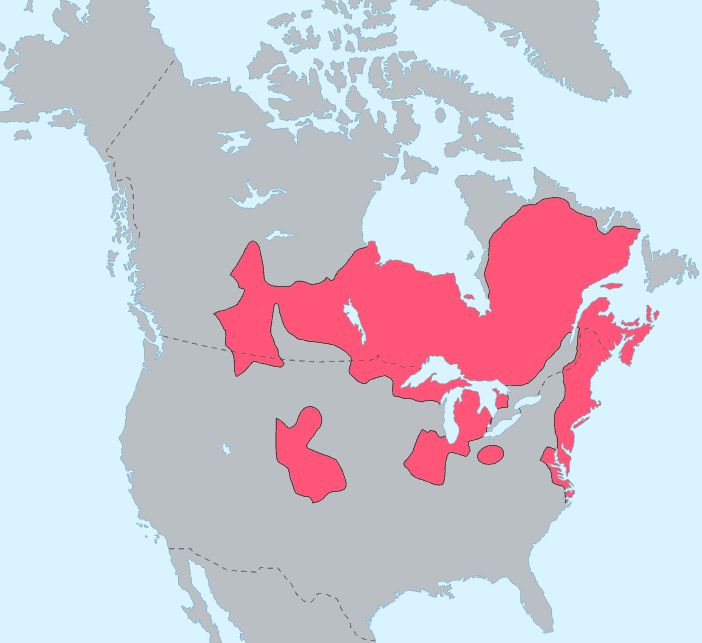
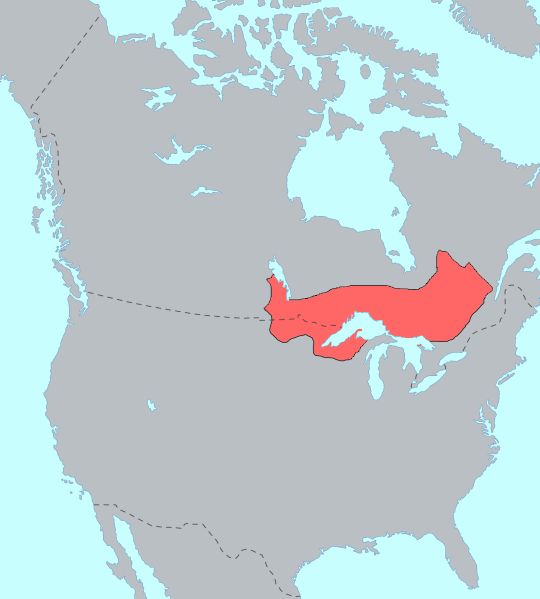
Maternal lineages, traced through mitochondrial DNA, tell a complementary story. All Indigenous American mtDNA can be traced to five founding haplogroups: A, B, C, D, and X. More precisely, they belong to the subclades A2, B2, C1b, C1c, C1d, D1, and X2a. About 95 percent of Indigenous American mtDNA descends from a minimal founding female population carrying subclades A2, B2, C1b, C1c, C1d, and D1. The remaining 5 percent consists of the X2a, D2a, C4c, and D4h3a sub-haplogroups. Haplogroup X2a is particularly notable as it is found only in the Americas, with its highest frequency among Algonquian peoples, where it can comprise up to 25 percent of mtDNA types.
The distribution of these mtDNA lineages reinforces the model of a rapid expansion from Beringia. The greatest overall frequency of the four primary haplogroups (A, B, C, D) occurs in the Altai-Baikal region of southern Siberia, pinpointing a likely source area. Subclades genetically closer to the Indigenous American versions are found among Mongolian, Amur, Japanese, Korean, and Ainu populations. A 2023 study added further detail, identifying northern coastal China as a contributing source to the gene pool of Native Americans, as well as to Japanese and other East Asian populations. The distinct mtDNA profile of ancient Paleo-Eskimos, which falls within sub-haplogroup D2a1 and links to modern Aleut and Siberian Yupik populations, provides clear genetic evidence for the later Arctic migration that gave rise to Inuit and related peoples.
Continuing Research and New Discoveries
The field of Indigenous American genetic history is undergoing rapid transformation due to technological advances in DNA sequencing and increased collaboration. Recent studies involving high-coverage genomes from Indigenous American individuals are revealing extensive and previously uncharacterized genetic diversity. Large-scale genomic mapping projects are exposing lost migrations, ancient ancestry links, and millions of new genetic variants specific to these populations. This ongoing research continues to refine the timeline, confirming that the ancestors of today's Indigenous Americans were not in the Americas earlier than about 21,000 years ago, while also revealing the details of population splits and interactions.
This scientific narrative exists within a critical context. For many Indigenous peoples, oral traditions and origin stories provide their own deep histories of emergence and belonging in the Americas. Some Indigenous archaeologists advocate for the careful integration of these oral traditions with archaeological and genetic evidence. The genetic story, as noted by anthropological geneticist Jennifer Raff, is akin to reconstructing a life from an Instagram feed, not inaccurate, but inherently incomplete without the full richness of lived experience and cultural knowledge. Contemporary research increasingly acknowledges this, emphasizing that genetic data is one part of a much larger history of human presence in the Americas.
Genetic Diversity and Population Structure
Indigenous American populations collectively show lesser genetic diversity than populations from other continental regions, a signature of their descent from a relatively small founding group that underwent rapid expansion. The strongest genetic affinity for Indigenous Americans outside the Americas is observed with Paleosiberian peoples of Northeast Asia. Within the Americas, a clear pattern exists of decreasing genetic diversity with increasing geographic distance from the Bering Strait, the presumed point of entry. Similarly, genetic similarity to Siberian populations decreases with distance from Alaska. This pattern supports a model of sequential founder effects, where each new population established by migrants carried only a subset of the genetic variation from its parent group.
Population structure within the Americas varies significantly. There is a relative lack of strong genetic differentiation between Mesoamerican and Andean populations, suggesting continued interaction along the Pacific coast. In contrast, eastern South America shows more pronounced population structure. Exceptions to simple patterns exist, such as the Chibcha speakers of Colombia, whose ancestry derives from both North and South American sources, indicating complex regional movements. Overall, the genetic landscape reflects an initial rapid spread followed by varying degrees of isolation, adaptation, and local interaction, giving rise to the remarkable cultural and biological diversity of Indigenous peoples across two continents.
Questions about Genetic history of the Indigenous peoples of the Americas
Where did the first peoples in the Americas originally come from?
Genetic evidence conclusively shows that the ancestors of all Indigenous peoples in the Americas originated from Northeast Asia. Their lineage diverged from other East Asian populations approximately 36,000 years ago. This group later admixed with a distinct population known as Ancient North Eurasians in Siberia around 22,000 years ago, forming the ancestral population that eventually migrated into the Americas. The strongest genetic affinities for Indigenous Americans outside the Americas are with Paleosiberian peoples from regions like the Altai-Baikal area.
How many major migrations were there into the Americas?
Genetic studies indicate one major founding migration that populated most of North and South America after about 16,000 years ago. However, there were at least two later, more limited migrations. These later movements brought the ancestors of Na-Dene speaking peoples and Eskimo, Aleut speaking groups, which include the Inuit, into the northern extremes of North America and Greenland. These groups carry a mix of ancestry from the initial founding population and from distinct later waves of migration from Siberia.
What is the Bering Land Bridge theory and what does genetics say about it?
The Bering Land Bridge, or Beringia, was a vast expanse of land connecting Siberia and Alaska during ice ages when sea levels were lower. Genetics supports that the ancestral Indigenous American population spent a prolonged period isolated in this region or adjacent areas after diverging from Siberian groups. This 'Beringian standstill' allowed for the development of unique genetic markers before a rapid expansion southward when ice sheets retreated. The theory is strongly supported by the estimated age of key genetic mutations and the pattern of decreasing diversity with distance from Beringia.
Is there genetic evidence linking Native Americans to Europeans or Australians?
Indigenous Americans share a deep ancestral connection with Europeans only indirectly through their Ancient North Eurasian ancestry, a population that contributed to both groups at different times. There is no evidence for direct migration from Europe. A more surprising finding is a faint genetic signal shared between some Amazonian populations and Indigenous Australasians. This 'Population Y' signal represents a very ancient lineage, likely from a deep East Asian branch that also contributed to Australasian peoples, and indicates a complex early population history in Asia before the peopling of the Americas.
How does genetic evidence relate to Indigenous oral traditions about origins?
Genetic research provides a scientific narrative based on DNA analysis, while Indigenous communities possess rich oral traditions and origin stories that situate their beginnings within the Americas. Some view these stories as literal, others as metaphorical. Many Indigenous scholars and allies emphasize that genetic evidence is one perspective and should not override or dismiss deeply held traditional knowledge. The scientific story is considered incomplete without the context, history, and lived experience preserved in oral traditions, and there are growing calls for respectful dialogue between these different ways of knowing the past.
What are the main DNA haplogroups found in Indigenous American populations?
The primary paternal Y-DNA haplogroups present before European contact were Q-L472 and C-L1373, with Q-M3 being overwhelmingly dominant across the continents. The main maternal mtDNA haplogroups are A2, B2, C1b, C1c, C1d, D1, and X2a. Haplogroup X2a is found only in the Americas and reaches its highest frequency among Algonquian peoples. The presence of other haplogroups, like the European R1b, in modern populations is a result of post-1492 admixture. These genetic markers provide a roadmap of ancient migrations and population separations.
Sources: Wikipedia and current public reporting, checked by the Nosy Mag desk. Last updated 2026-10-22.