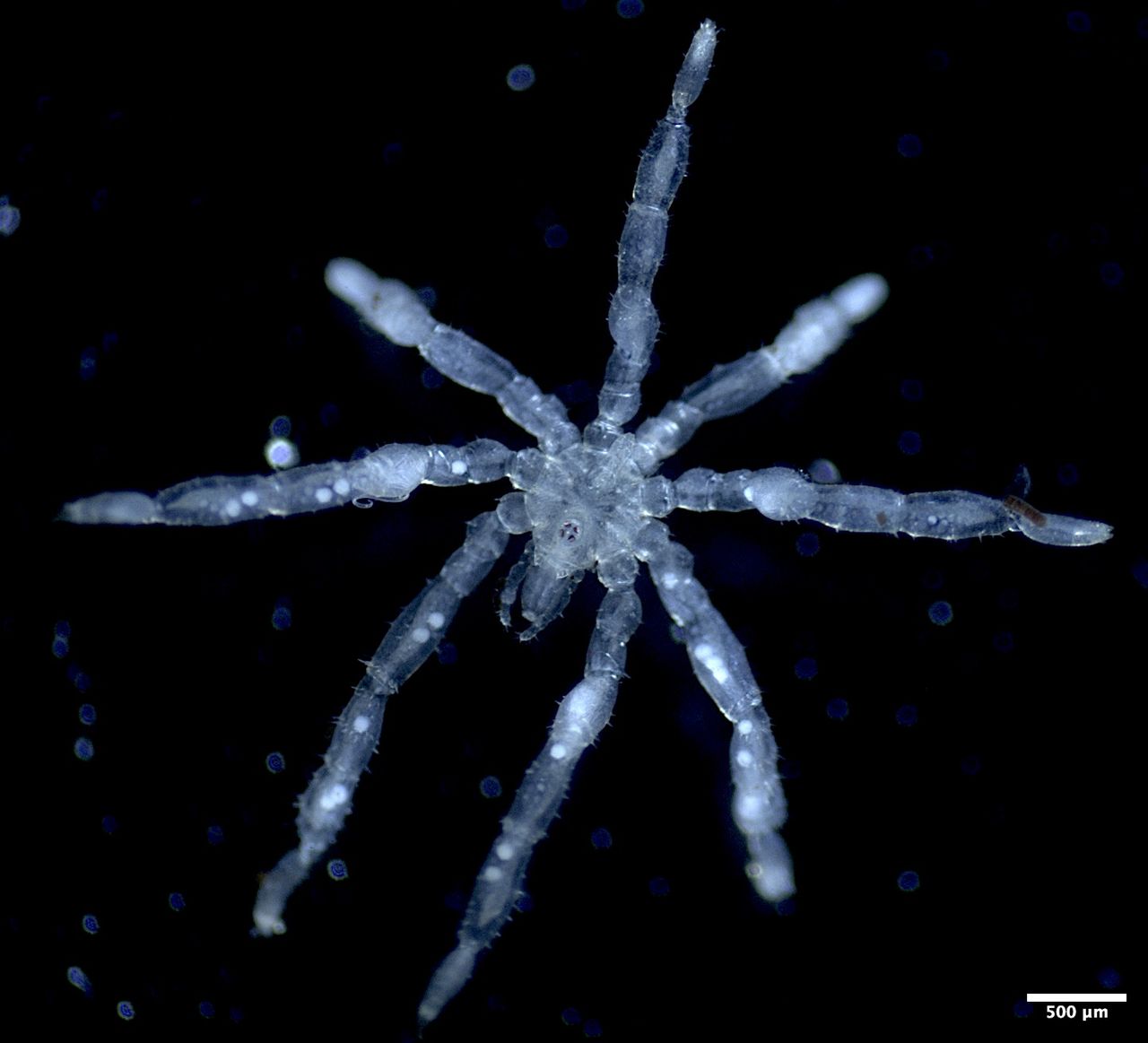
UBC researchers discover two new species of sea spiders in B.C.'s Salish Sea
Scientists have identified two previously unknown species of marine arthropods in British Columbia's Salish Sea, marking the first such discovery in the region in nearly 100 years. The findings reveal fascinating details about these ancient creatures and their ecological roles.
University of British Columbia researchers have made a startling marine biological discovery that sounds like it came straight from a science fiction novel. Two new species of sea spiders have been documented in the Salish Sea, representing the first such findings in these coastal waters in almost a century. These peculiar marine creatures combine unsettling physical characteristics with fascinating biological adaptations that have survived hundreds of millions of years of evolution.
Documenting marine biodiversity
The research team, led by zoologist Cormac Toler-Scott, conducted extensive fieldwork between September 2023 and August 2024 across multiple locations in British Columbia including Vancouver, Quadra Island, Bamfield and Victoria. Their discoveries shed new light on the rich biodiversity of the Salish Sea, an inland waterway that has been studied for decades yet continues to reveal biological surprises. The last documented discovery of sea spider species in this region occurred in the 1930s, making this finding particularly significant for marine biologists studying this ecosystem.
The nature of sea spiders
Despite their name, sea spiders (pycnogonids) are not true spiders but marine arthropods that have evolved separately for approximately 500 million years. They share distant evolutionary relationships with terrestrial arachnids like scorpions and spiders, as well as marine species like horseshoe crabs. These creatures display remarkable size variation, ranging from smaller than a centimeter to over 70 centimeters in length for deep-sea species. Their body structure represents one of nature's most enduring biological designs, having survived multiple mass extinction events.
READ MORE: Invasive Spotted Lanternfly Detected in Ontario for First Time, Threatening Agriculture
READ MORE: Three B.C. glaciers face extinction within decades due to climate change, study warns
Their distinctive anatomy includes multiple pairs of legs (up to 12 in some species) and a specialized feeding structure called a proboscis used to extract nutrients from their prey. This ancient body plan has remained relatively unchanged through geologic time, making them living fossils that provide valuable insights into early arthropod evolution. The proboscis serves as both mouth and feeding tube, allowing them to parasitize other marine organisms by sucking out bodily fluids.
Callipallene pilosuspedes: The hairy-footed hunter
The first newly described species, Callipallene pilosuspedes, earned its name from the Latin for "hairy feet" due to the long, curved spines covering its lower legs. UBC researchers provided a vivid description:
"It sports red eyes, a short proboscis with claws to grasp food before biting, and a triangular, three-lipped mouth covered in sensory tendrils - a tiny marine Sarlacc pit, if you will."
This creature exhibits several specialized adaptations including grooming appendages that help maintain its spiny legs. Its predatory behavior involves using clawed proboscis to capture prey before delivering a bite, suggesting it occupies a specific niche in the marine food web. The sensory tendrils around its mouth likely help detect chemical cues in the water, aiding in prey location. The presence of specialized grooming appendages indicates these creatures invest significant energy in maintaining their distinctive hairy legs, which may serve sensory or defensive functions.
Tanystylum kiixin: A micro-ecosystem
The second species, Tanystylum kiixin (pronounced "kee-hin"), presents a contrasting biological story. Named after an ancient Indigenous village near its discovery site, this species has small limbs and poor grooming ability. Researchers noted it often appears covered in debris and parasites, leading to what Toler-Scott describes as
"an ecosystem within an ecosystem within an ecosystem."
This unique characteristic makes Tanystylum kiixin particularly interesting to marine ecologists. The accumulated debris and parasites create microhabitats that support additional marine life, demonstrating how single species can influence broader ecosystem dynamics. The naming convention also reflects growing collaboration between Western science and Indigenous knowledge in biological research, honoring the cultural history of the region where it was found. Unlike its hairy-legged counterpart, this species appears to have evolved different survival strategies that make it more susceptible to external attachments.
Ancient survival strategies
Sea spiders have survived multiple mass extinction events by developing specialized survival strategies. Many shallow-water species live as parasites on larger marine organisms. As Toler-Scott explains,
"They use this weird apparatus called a proboscis to suck the juices out of their host."This parasitic lifestyle represents an efficient energy strategy in nutrient-poor environments.
Their simple body plan lacks specialized respiratory structures, relying instead on diffusion through their exoskeleton. This adaptation allows them to thrive in various marine environments from tidal zones to deep ocean trenches. The newly discovered species continue this ancient lineage while developing unique local adaptations. The shallow water species tend to be smaller and more parasitic, while deeper water varieties can grow much larger, showing how environment shapes their evolutionary path.
Scientific implications
The formal registration of both species in global taxonomic databases represents an important contribution to marine biology. These findings highlight how much remains unknown about marine biodiversity, even in relatively well-studied areas like the Salish Sea. Toler-Scott notes,
"I only had one field season but there's definitely more diversity out there that we haven't documented,"suggesting future discoveries likely await researchers.
The discoveries also have potential implications for conservation biology. Understanding the full range of species in an ecosystem is crucial for effective marine protection efforts. As climate change alters ocean conditions, documenting baseline biodiversity becomes increasingly important for monitoring environmental changes. The presence of these species serves as an indicator of ecosystem health and provides valuable data for tracking how marine life responds to changing ocean temperatures and chemistry.
Ecological significance
Beyond their scientific novelty, these sea spiders play important roles in marine ecosystems. As both predators and prey, they contribute to energy transfer through food webs. Their presence indicates healthy ecosystem functioning, while their specialized adaptations demonstrate nature's capacity for evolutionary innovation. The discovery of Tanystylum kiixin with its attached micro-ecosystem shows how even small organisms can create habitats for other marine life.
The discovery also underscores the value of basic scientific research. While these creatures may not have immediate practical applications, understanding marine biodiversity helps scientists predict how ecosystems might respond to environmental changes and human impacts. Each new species documented adds another piece to the complex puzzle of marine ecology. The fact that these species went undocumented for nearly a century in a well-studied region suggests there may be many more discoveries waiting in the world's oceans.
Future research directions
The discovery opens numerous avenues for future research. Scientists are particularly interested in studying the relationship between these sea spiders and their host organisms, as well as their role in nutrient cycling within marine ecosystems. The unique grooming behavior of Callipallene pilosuspedes and the micro-ecosystem surrounding Tanystylum kiixin both present opportunities for deeper ecological study. Researchers also hope to investigate how these species have adapted to the specific conditions of the Salish Sea compared to their relatives in other parts of the world.