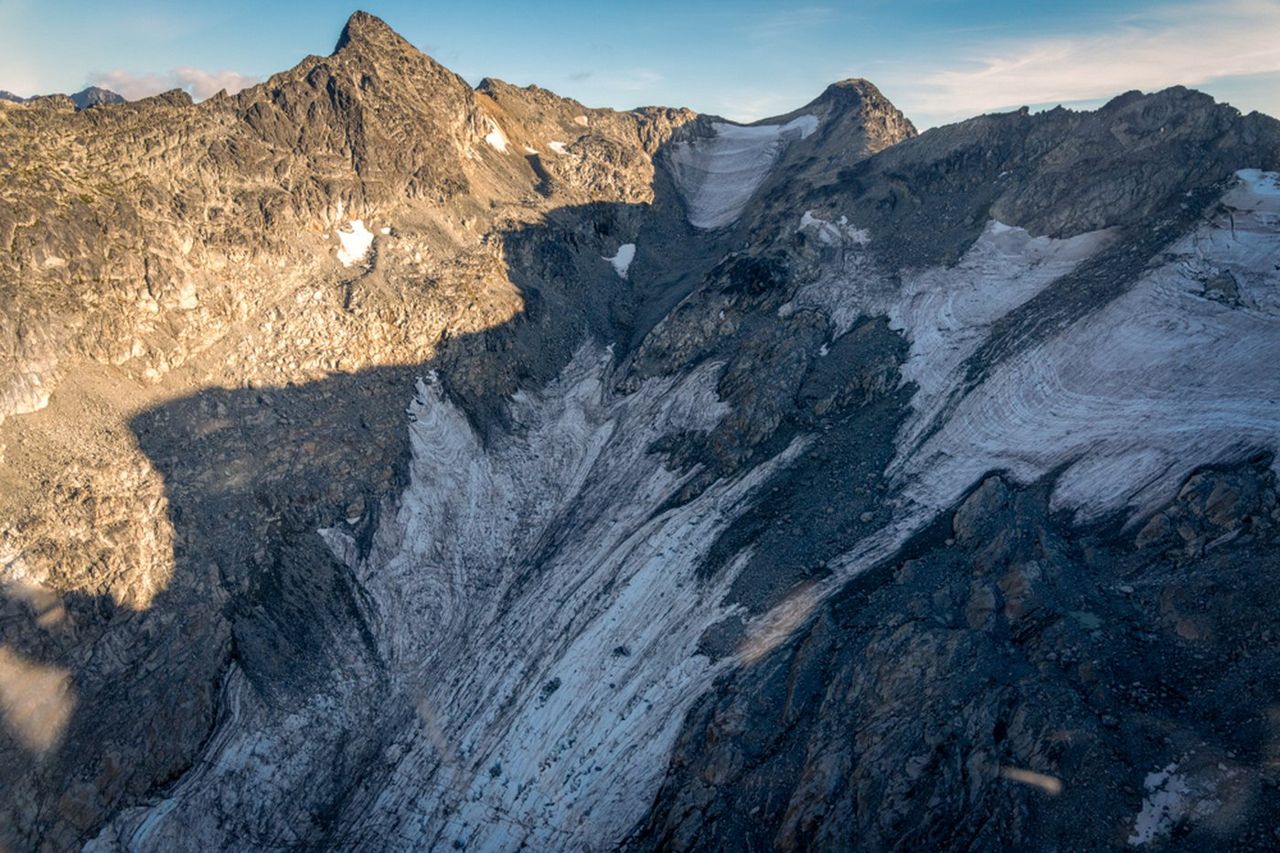
Three B.C. glaciers face extinction within decades due to climate change, study warns
A Simon Fraser University study reveals three southwestern B.C. glaciers could vanish completely within 10 to 70 years, with the Whistler Glacier already 95% gone.
Three glaciers in British Columbia's southwest are on track to vanish completely within decades due to climate change, according to a new study from Simon Fraser University. Published in the journal Annals of Glaciology, the research provides detailed measurements of glacial retreat in the Whistler region, documenting how warming temperatures have transformed these frozen landscapes over the past half-century.
The alarming findings
The study reveals that the Whistler Glacier has experienced the most dramatic decline, shrinking by 95% over the past 50 years. The Horstman and Blackcomb glaciers have fared slightly better but still lost up to 75% of their area during the same period. Lead researcher Chloé Monty described the extent of the shrinkage as shocking, noting that image comparisons clearly show the dramatic retreat.
"Glaciers respond slowly to climate, so the changes that we're seeing now are reflecting the changes to the climate that have happened in the last several decades,"Monty told CityNews. The research team used historical aerial photographs and modern satellite imagery to track changes in glacier coverage since the 1970s.
The Whistler Glacier's fate
The Whistler Glacier has already fractured into three smaller ice masses due to its drastic reduction in size. Glaciers are measured by coverage area to determine whether they still qualify as glaciers, and the Whistler Glacier has fallen below the threshold in some definitions. Monty explained the scientific debate surrounding glacial classification:
"Technically Whistler Glacier is a relict glacier. Has it disappeared? That depends on your definition. The question is really, when will it get to zero ice?"The study projects complete disappearance of the Whistler Glacier within 10 years, while the Horstman and Blackcomb glaciers may persist for three to seven more decades.
READ MORE: UBC researchers discover two new species of sea spiders in B.C.'s Salish Sea
READ MORE: Alberta referendum mail-in voting claims fact-checked as misinformation spreads online
Economic and recreational impacts
The loss of these glaciers has already affected local tourism and winter sports. Both the Whistler and Horstman glaciers once hosted summer ski camps, providing year-round training opportunities for athletes. Whistler Blackcomb ski resort suspended summer skiing on the Horstman Glacier last year after operations began in the 1980s, while summer skiing on the Whistler Glacier ended in the late 1990s. Monty emphasized that resorts are adapting by developing alternative summer activities, such as mountain biking, to compensate for the loss of glacier-based tourism. This shift reflects broader changes occurring at ski resorts worldwide as warming temperatures alter traditional winter sports seasons.
Broader climate implications
The study serves as a microcosm of global glacial retreat patterns. While these three glaciers represent a small fraction of Canada's ice cover, their rapid disappearance illustrates the accelerating impacts of climate change on mountain environments. Glaciers play crucial roles in regional water cycles, serving as natural reservoirs that release meltwater during dry summer months. Their loss could affect downstream water availability for ecosystems and human communities. The research also highlights how glacial retreat contributes to rising sea levels, though these particular glaciers represent a relatively small contribution compared to larger ice sheets.
A warning for larger glaciers
While the three studied glaciers are beyond saving, Monty stressed that it's not too late to prevent the disappearance of larger glaciers in B.C. and across Canada.
"This is definitely a very sad story,"she said.
"But it doesn't mean that there aren't things that we can do to reduce our carbon emissions now that would help prevent the loss of bigger glaciers and the losses also to the ice sheets that would contribute probably more significantly to sea level rise."The study suggests that immediate action to reduce greenhouse gas emissions could still preserve larger glacial systems that haven't yet passed critical tipping points.
The role of climate policy
The study underscores the urgent need for carbon emission reductions to mitigate further glacier loss. Monty pointed out that the current state of these glaciers reflects decades of climate inaction. Without significant policy changes, larger glaciers could face similar fates, with cascading effects on ecosystems, water supplies, and global sea levels. The researchers emphasize that while some glacial loss is now inevitable due to past emissions, the scale of future damage can still be reduced through concerted climate action. Their findings add to the growing body of evidence documenting climate change impacts in Canada's mountainous regions.
Scientific methodology and definitions
The SFU study contributes to ongoing scientific discussions about how to classify shrinking ice masses. As glaciers retreat below certain size thresholds, researchers debate whether they should still be considered glaciers or reclassified as "ice patches." This terminology matters for both scientific accuracy and public understanding of climate change impacts. The research team used standardized glaciological measurement techniques to track changes in area, thickness, and volume over time. Their work provides a detailed case study of how mountain glaciers respond to warming temperatures, offering insights that could help predict future changes in other glacial systems.
Historical context of glacial retreat
The study builds upon decades of glaciological research documenting the progressive decline of mountain glaciers worldwide. The Whistler region's glaciers have been particularly vulnerable due to their relatively low elevation and southern location within British Columbia. Historical records show these glaciers began retreating significantly in the late 20th century, with acceleration occurring in recent years as global temperatures continue to rise. The 95% reduction of the Whistler Glacier since the 1970s represents one of the most dramatic examples of glacial retreat documented in North America.
Future projections and adaptation
Beyond documenting current losses, the study helps predict future scenarios for mountain environments. Researchers warn that without substantial reductions in greenhouse gas emissions, similar patterns of glacial retreat will continue across Canada's western mountain ranges. Communities and industries that depend on glacial meltwater or winter tourism must prepare for permanent changes to their local environments. The study highlights the importance of developing adaptation strategies alongside mitigation efforts, as some degree of continued warming and glacial loss is already locked in due to past emissions.