Invasive Spotted Lanternfly Detected in Ontario for First Time, Threatening Agriculture
The destructive spotted lanternfly has been confirmed in Windsor, marking its first appearance in Canada and posing risks to vineyards, crops and forests.
A highly destructive invasive insect has been detected in Canada for the first time, sparking immediate containment efforts by agricultural officials. The spotted lanternfly, native to southeast Asia, was confirmed in Windsor, Ontario on September 15 by the Canadian Food Inspection Agency (CFIA). This marks a significant biosecurity threat to Canada's agricultural and forestry sectors.
Origins and Spread
The spotted lanternfly is a plant-hopping insect that first appeared in North America in Pennsylvania in 2014. Native to China, India, and Vietnam, this pest likely arrived in the United States through international trade shipments. The Canadian detection comes twelve years after the species was first observed in North America, showing its gradual northward expansion through natural dispersal and human-assisted transport.
Ecological Threat Profile
According to the Invasive Species Centre, the pest poses widespread risks due to its feeding habits. Both nymphs and adults extract sap from over 100 plant species, with particular damage to grapevines that could devastate Ontario's wine industry. While favoring the invasive tree-of-heaven, the lanternfly also targets black walnut trees and other hardwoods. This broad host range makes it particularly challenging to control once established in an area.
READ MORE: UBC researchers discover two new species of sea spiders in B.C.'s Salish Sea
READ MORE: Venezuela's Acting President Delcy Rodríguez Commits to Future Elections in Milestone UN Address
This insect's rapid spread stems from its ability to hitchhike on vehicles and outdoor equipment. Females lay egg masses on nearly any flat surface, including camping gear, firewood and vehicles, enabling long-distance transportation if undetected. Each egg mass contains 30-50 eggs, allowing populations to grow exponentially when introduced to new areas.
Immediate Containment Measures
Following the Windsor discovery, the CFIA implemented movement restrictions on potentially infested plant materials in the area. These regulations prohibit the transport of certain materials that could harbor lanternflies or their eggs. Surveillance efforts are underway to determine the infestation's scope under the agency's spotted lanternfly response framework.
The Invasive Species Centre emphasized that early detection dramatically improves containment prospects.
"Spotted lanternfly can have widespread economic, ecological, and social impacts if allowed to spread uncontrolled,"warned the centre in a press release. Executive Director Colin Cassin urged public vigilance:
"You can help identify and report new invasive species, such as spotted lanternfly."
Identification and Reporting Protocol
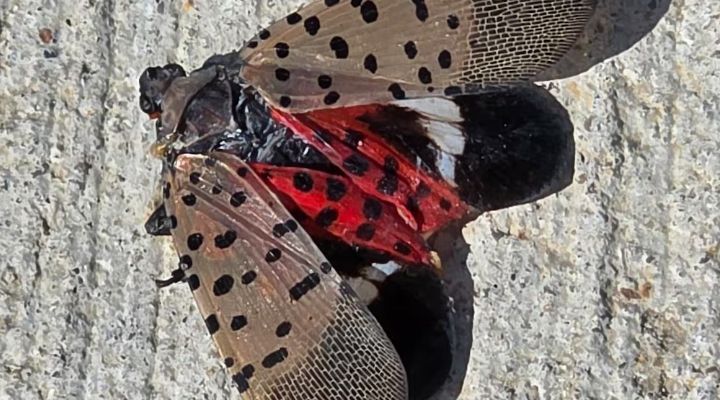
Officials advise residents to follow a "spot it, snap it, catch it, report it" protocol when encountering suspected lanternflies. The insects progress through distinct life stages: egg masses resembling gray putty, black-spotted red nymphs, and inch-long adults with spotted wings and red underwings. These visual characteristics help distinguish them from native species.
Citizens should photograph specimens, seal them in plastic bags, and immediately report sightings to the CFIA with location details. The agency conducts follow-up inspections and may collect specimens for confirmation. Accurate reporting helps authorities map infestation zones and allocate resources effectively. Reports should include the date, precise location, and clear photos of the insect or egg mass.
Transport Prevention Strategies
Authorities recommend thorough inspections of vehicles and outdoor equipment when leaving infested areas, paying special attention to wheel wells, bumpers, and undercarriages where egg masses may be laid. High-pressure car washes are recommended to dislodge hidden egg masses that might otherwise go unnoticed. Firewood transport restrictions remain critical, as moving untreated wood between regions can introduce pests.
These precautions mirror containment strategies deployed in U.S. states battling lanternfly invasions. Since its Pennsylvania discovery, the species has spread to 17 states despite quarantine efforts. The Canadian response aims to avoid similar widespread establishment through proactive measures.
Agricultural and Economic Impacts
The Windsor detection raises alarms for Ontario's $4.4 billion grape and wine industry. Pennsylvania vineyards have reported vine deaths and increased production costs from lanternfly infestations, with some growers seeing 90% crop losses in affected areas. Beyond viticulture, at-risk sectors include fruit orchards, nursery plants, and hardwood forestry operations.
Municipalities also face costs from lanternfly swarms in urban areas, where the insects excrete sticky "honeydew" that promotes mold growth on sidewalks and outdoor furniture. The sugary waste product attracts other pests and creates slippery surfaces requiring additional maintenance.
Ecological Consequences
The spotted lanternfly threatens native hardwood forests already under stress from climate change and other invasive species. By weakening trees through excessive sap feeding, the insect could alter forest composition and reduce biodiversity. The potential cascading effects on wildlife dependent on these trees remain a significant concern for conservationists.
The pest's preference for tree-of-heaven, itself an invasive species, creates a complex ecological dynamic. Some control strategies target this host tree, which could inadvertently benefit native vegetation if implemented carefully. However, complete eradication becomes challenging once the lanternfly establishes alternative host relationships with native species.
Public Participation and Monitoring
Successfully containing the spotted lanternfly will require widespread public cooperation. Residents in Windsor and surrounding areas should familiarize themselves with identification guides and reporting procedures. Early detection of satellite populations outside the initial infestation zone could prevent broader establishment.
The CFIA maintains an online reporting system for suspected sightings, streamlining the verification process. Quick public response to potential sightings gives authorities the best chance to eradicate isolated populations before they spread. Educational campaigns aim to raise awareness about the pest's appearance at different life stages.
Broader Implications for Biosecurity
The lanternfly's Canadian debut represents a test case for early-stage invasive species response. Unlike pests established over decades, officials have a narrow window to contain this invasion before exponential spread occurs. Successful eradication would require unprecedented public participation in detection efforts alongside stringent transport controls.
Economically, failure to contain the lanternfly could trigger cascading impacts across agricultural supply chains, from vineyard losses to maple syrup production declines. Ecologically, the pest threatens to destabilize hardwood forest ecosystems already stressed by climate change and other invasive species. This detection underscores Canada's growing vulnerability to globalized biosecurity threats in an era of accelerating species redistribution through international trade and travel.
Future Outlook
The coming months will prove critical for determining whether the Windsor infestation represents an isolated incident or the beginning of broader establishment. Continued monitoring and public education will be essential components of Canada's defense against this agricultural pest. The situation serves as a reminder of the importance of biosecurity measures in an interconnected world where invasive species can cross borders with increasing ease.
Ongoing research into biological controls, including potential natural predators from the lanternfly's native range, may offer long-term solutions. However, immediate efforts must focus on containment and early detection to prevent the establishment of damaging populations across southern Ontario and beyond.