MapQuest's Lake Ontario stance fuels debate over Canada's reliance on U.S. tech giants
A viral MapQuest campaign defending Lake Ontario's name sparks broader conversation about Canada's limited alternatives to dominant U.S. technology platforms.
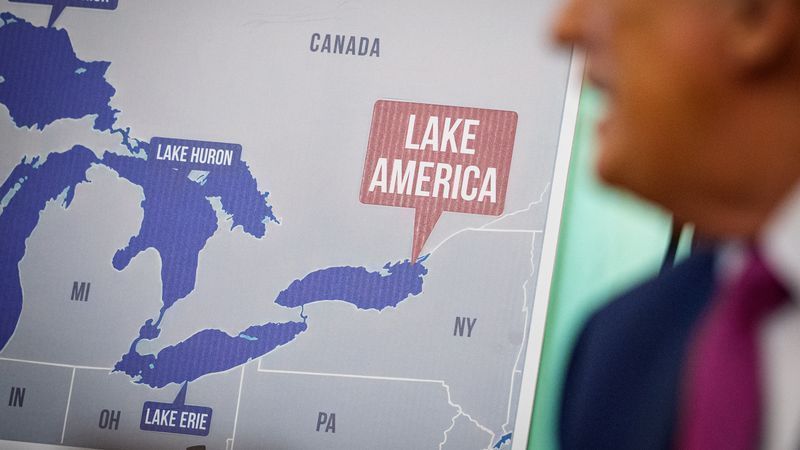
The sudden resurgence of MapQuest in Canadian digital conversations this week has exposed deeper tensions about national technological sovereignty. When the American mapping service defiantly tweeted "We're not changing it" alongside a correctly labeled Lake Ontario screenshot, countering Google Maps' temporary renaming to "Lake America", downloads of the long-dormant app surged 5,000% in Canada compared to last year. This symbolic stand has reignited debates about whether Canadians have meaningful alternatives to U.S. tech dominance beyond performative gestures.
The MapQuest moment
MapQuest CEO Doug Berger confirmed the company's stance resonated particularly strongly with Canadian users, who comprise "a very big chunk" of their customer base. The app briefly became the third most-downloaded free application in North America this week, trailing only ChatGPT and Meta AI, with worldwide searches up 50% compared to last week. While the Lake Ontario controversy proved a marketing windfall, it also served as a reminder of how few competitive Canadian alternatives exist across most digital sectors.
"Hundreds of thousands of people have picked up the app and downloaded it. Obviously, people agree with us and we struck a chord,"Berger told Global News. The incident highlighted how quickly consumer preferences can shift when national identity becomes part of the equation, but also how rarely such options exist for fundamental digital services.
READ MORE: Canadian literary prizes rely on publishers to detect AI-written books amid growing scrutiny
READ MORE: Alberta referendum mail-in voting claims fact-checked as misinformation spreads online
The dependency dilemma
Canada's reliance on American technology infrastructure extends far beyond mapping services. Emily Osborne, policy researcher at the Canadian Shield Institute, notes critical vulnerabilities in cloud computing, payment systems, and social networks where U.S. firms hold near-total market control.
"There's a lot of areas where they can throttle our access to essential services,"she said, pointing specifically to cloud infrastructure where American providers could theoretically activate "a kill switch" for Canadian operations.
This dependency creates both economic and national security concerns. The recent $2 billion acquisition of Canadian payment processor Moneris by U.S. private equity firm Francisco Partners exemplifies a recurring pattern.
"We used to have a Canadian alternative to Google Maps called Avenza and we sold it to a Boston private equity firm,"Osborne noted, underscoring how domestic tech innovations frequently get absorbed into foreign ownership. The Canadian Shield Institute, which includes former Blackberry co-CEO Jim Balsillie on its board, has been studying these digital sovereignty challenges since its launch last year.
Patchwork alternatives
Some sectors offer glimmers of Canadian competition. Toronto-based HOVR and Beck Taxi challenge Uber in urban transportation markets, while SkipTheDishes provides a homegrown food delivery alternative to UberEats. In software, options like Callbridge (for video conferencing), Typewire (email), and cDox (document editing) attempt to carve out niches against Microsoft and Google products. Canadian browser Shift offers an alternative to Google Chrome or Safari.
However, Rotman School of Management professor David Soberman cautions that most alternatives struggle with scale and integration.
"Almost all the dominant companies are American or American owned,"he said. While Canadian Tire's e-commerce platform competes with Amazon on price for physical goods, there's no comprehensive Canadian equivalent to ecosystem offerings like Google Workspace or Microsoft 365 that combine multiple productivity tools.
The social media gap
Nowhere is Canada's tech deficit more apparent than in social networking. While platforms like Gander and NorthSocial attempt to provide homegrown alternatives, they cannot match the "scope and scale" of Meta's platforms according to Osborne.
"It's difficult to switch away from Meta's platforms because all of our friends are going to continue using it. It's hard to convince them all to switch,"she explained. The lack of viable Canadian social media options leaves the country particularly exposed to foreign content moderation policies and data governance decisions.
Payment systems present another critical vulnerability. Despite Interac's domestic success, Visa and Mastercard maintain duopoly control over credit card networks, a situation exacerbated when Canada's largest payment processor Moneris fell under U.S. ownership last month. This financial infrastructure dependency creates potential economic leverage points far beyond consumer convenience.
Consumer behavior and policy solutions
Some policy experts suggest Canada should emulate the European Union's more aggressive approach to digital sovereignty. The EU has cultivated homegrown tech champions while implementing strict data governance regulations like GDPR that force foreign companies to adapt to local standards. Osborne believes similar Canadian interventions might be necessary to foster competitive alternatives, pointing to EU-based email providers like ProtonMail as examples of non-U.S. options Canadians could adopt.
However, Soberman notes that consumer behavior ultimately drives market opportunities.
"If there is a pronounced shift to buying Canadian, that in itself will create an opportunity,"he said, pointing to Shopify's success as proof that Canadian tech firms can achieve global scale when market conditions align. The challenge remains convincing Canadians to prioritize national tech sovereignty over convenience and established network effects, especially when American firms offer bundled software suites that are more cost-effective than piecemeal Canadian alternatives.
Future prospects
The Canadian government has announced plans to launch a domestic mapping satellite by 2055, currently under review by the Major Projects Office, as part of broader efforts to reduce reliance on U.S. technology. However, critics argue this timeline is too slow given current vulnerabilities. Meanwhile, the growing "Buy Canadian" movement faces practical hurdles in the digital realm where alternatives are scarce or lack comparable functionality.
The MapQuest moment, while fleeting, reveals an undercurrent of national frustration with technological dependence. As digital infrastructure becomes increasingly central to economic security and cultural sovereignty, Canada's lack of alternatives to U.S. tech giants creates systemic vulnerabilities. The Lake Ontario naming controversy became a proxy for larger anxieties about foreign control over essential services, from financial transactions to geographic data.
Building meaningful domestic capacity will require coordinated efforts between policymakers, investors, and consumers. Without strategic intervention, Canada risks remaining perpetually reliant on foreign tech ecosystems that may not always align with national interests, a reality underscored when something as fundamental as a lake's name on a digital map can spark international tensions and consumer revolt.