Alberta referendum mail-in voting claims fact-checked as misinformation spreads online
Elections Alberta clarifies security measures after viral posts falsely claim province's mail-in voting system is vulnerable to fraud, detailing multi-layered verification processes that have already rejected ineligible applications.
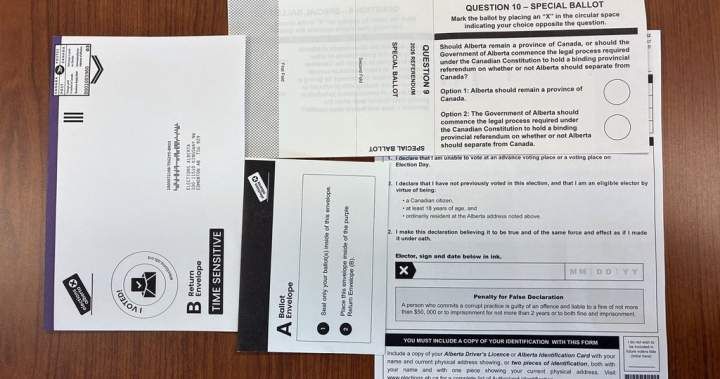
Social media claims alleging vulnerabilities in Alberta's mail-in voting system for its upcoming constitutional referendum have prompted detailed explanations from election officials about their comprehensive security protocols. While viral posts this week suggested the system could be easily exploited by non-residents, Elections Alberta maintains multiple verification layers effectively prevent ineligible applications from being approved, as demonstrated by their rejection of test applications featured in the controversial posts.
Origins and spread of viral misinformation
The controversy emerged on September 20 when an X user posted under dramatic text reading "THIS IS INSANE," amplifying a message from an anonymous follower who claimed to have successfully registered for an Alberta mail-in ballot while residing in British Columbia. The message asserted "No verification of Alberta residents and they will mail the ballot anywhere," attracting over 201,000 views in its first day. This claim gained further traction when an Alberta lawyer shared screenshots appearing to show successful submission of an application using a Vancouver address, creating the impression the system lacked proper safeguards.
Detailed verification procedures explained
Elections Alberta spokesperson Maia Hanrahan provided thorough explanations about their security infrastructure in response to these viral claims. She clarified that while the initial online application form intentionally doesn't automatically block out-of-province addresses to accommodate legitimate voters who might input information incorrectly, every submission undergoes rigorous manual review. "An out-of-province address cannot simply proceed through the process and be approved," Hanrahan emphasized, detailing how staff cross-check all applications against Alberta's comprehensive voter registration system. This verification process examines whether applicants appear in the system and whether their provided details match official records, with any discrepancies or invalid addresses triggering immediate denial.
READ MORE: Three B.C. glaciers face extinction within decades due to climate change, study warns
READ MORE: Canada's privacy watchdog investigates massive driver's licence data breach affecting millions
Investigation confirms system functionality
The Canadian Press conducted verification of the system by entering the Alberta lawyer's confirmation code from her viral screenshot into Elections Alberta's tracking portal. Their investigation revealed the application had been denied the next day with the clear message "Your application has been reviewed and declined," demonstrating the backend verification working as designed. Additionally, Hanrahan noted that even if an application were initially approved, voters must include copies of government-issued identification proving Alberta residency when returning their completed ballots. This creates a secondary security checkpoint ensuring only eligible voters can ultimately have their ballots counted.
Historic expansion of mail-in voting
Lori Williams, a political science professor at Mount Royal University, provided context about the significant procedural changes in Alberta's voting system for this referendum. Previous Alberta elections maintained strict requirements for mail-in ballots, limiting them primarily to voters who could document specific circumstances preventing in-person voting, such as being absent from the province during all voting periods. The October 19 referendum, which poses 10 questions about constitutional matters including whether Alberta should pursue separation from Canada, represents the first instance where special ballots have been made widely available without such restrictions. Williams noted this expansion followed advocacy from various groups aiming to reduce polling station congestion during the complex referendum process.
Security infrastructure and legal deterrents
Former Alberta chief electoral officer Lorne Gibson provided expert insight into the province's verification systems, including the VoterLink database and Register of Electors, which enable thorough checks of applicant information before any ballots are mailed. Gibson contrasted Alberta's approach with jurisdictions that require identification documents upfront with applications, noting that while both methods have merits, Alberta's system includes effective safeguards at multiple stages. He also emphasized the serious legal consequences for voting fraud in Alberta, including potential fines up to $50,000 and jail sentences up to two years under the Election Act, serving as strong deterrents against attempted interference.
Misinformation challenges in electoral processes
The rapid dissemination of these unverified claims highlights growing challenges to maintaining public confidence in electoral systems during an era of instant social media sharing. While digital platforms enable users to conduct informal tests of voting systems and share results immediately, these experiments frequently lack context about comprehensive backend verification processes that may not be visible to applicants. The Alberta case demonstrates how partial or misinterpreted information about election administration can spread quickly and potentially undermine trust, particularly during sensitive votes like constitutional referendums that naturally attract heightened scrutiny. Election administrators nationwide face the dual challenge of maintaining accessible voting methods while simultaneously preventing both actual fraud and damaging misinformation about potential vulnerabilities.
Current status and final safeguards
Elections Alberta's official rules clearly specify that voters must have a "place of ordinary residence" in Alberta, whether they currently reside there or intend to return after temporary absences. Individuals who have permanently established residence outside Alberta remain categorically ineligible to participate in the referendum. The deadline for special ballot applications passed at midnight on Friday, with officials reporting more than 610,000 requests received. For those who successfully handled the verification process, the final security step requires submitting copies of valid Alberta residency documents with their completed ballots, creating an additional authentication layer ensuring only eligible votes are counted in this historic referendum that could shape Alberta's constitutional future.