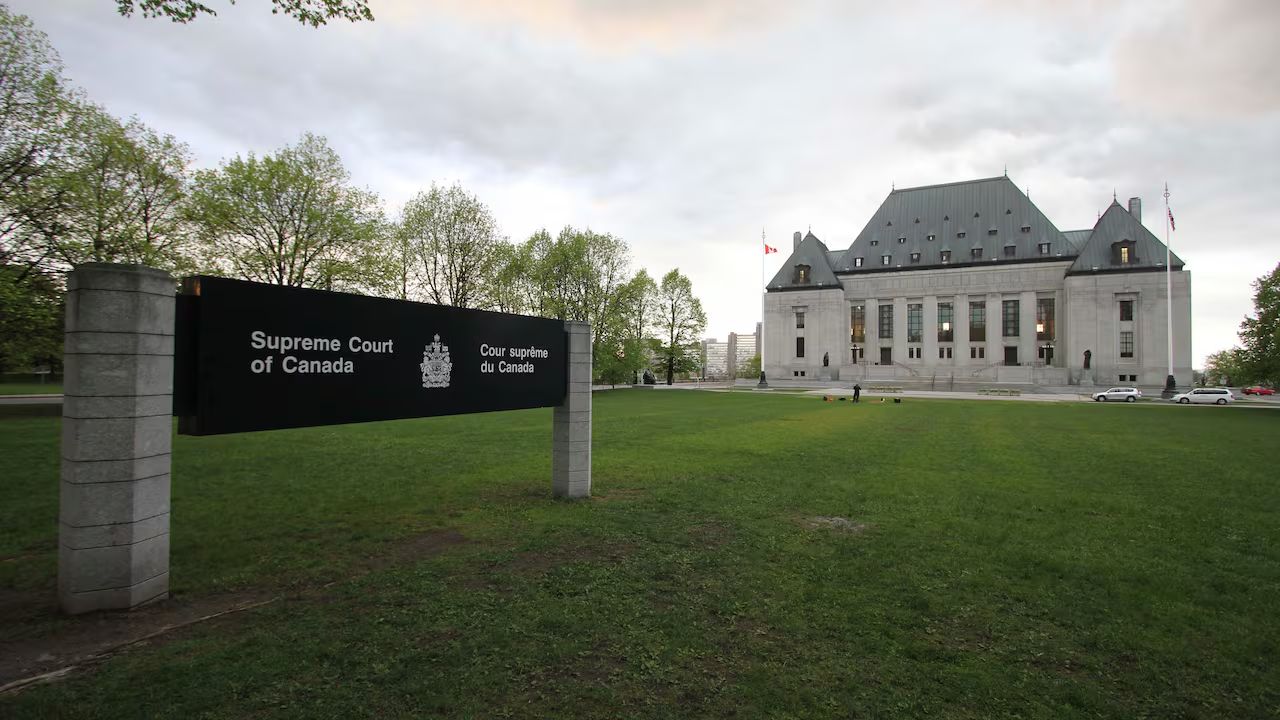
Supreme Court hears challenge to Ontario's plan for international online gambling
The Atlantic Lottery Corporation argues the province's plan to let players compete abroad exceeds its legal powers.
Canada’s Supreme Court heard arguments on Wednesday over whether Ontario can legally allow online gamblers in the province to play against users abroad through its igaming platform.
The Atlantic Lottery Corporation, representing a coalition of provincial governments and lottery operators, is challenging the model on the grounds that it could infringe on their markets and exceed the powers granted to provinces under federal law.
“The decision relied on a lack of express prohibition of international play in section 207(1)(a), and with respect, this is backwards,” said Matthew Milne-Smith, an attorney for the Atlantic Lottery Corporation.
Milne-Smith argued that gambling is prohibited unless specifically authorised by law.
READ MORE: TikTok Shop Tightens Gambling Rules, Restricts Card Breaks to Platform-Controlled Surprise Sets
READ MORE: UK Gambling Market Hits £17.5bn GGY in 2025-26 as Online Growth Outpaces Retail Decline
The case turns on the interpretation of Section 207(1)(a) of Canada’s Criminal Code, which allows provincial governments to conduct and manage lottery schemes within their jurisdictions.
Ontario introduced iGaming Ontario in 2022, allowing licensed private companies to offer online casino games and sports betting in a regulated market.
The province later proposed opening certain games, including poker and fantasy leagues, to international players through a system known as “pooled liquidity,” which would remove the current restriction keeping players and funds within Ontario.
In November 2025, Ontario’s Court of Appeal upheld the proposed international model, reasoning that federal law did not expressly prohibit such participation.
Attorney Ananthan Sinnadurai, representing Ontario, told the Supreme Court that the province would retain control over the experience offered to local players.
“We choose who we partner with. We still run the system in this province, and fundamentally we control the experience of people in Ontario, because that’s the concern,” Sinnadurai said.
He added, “Here, we’re conducting and overseeing the lottery that Ontarians experience.”
Supreme Court justices questioned how the province could enforce its rules against international participants.
One justice said the appeal ruling looked backwards.
The appeal court’s Justice Katherine van Rensburg had dissented from the 2025 ruling, arguing that the international model would be unlawful because parts of the gambling operation would not be conducted and managed by Ontario.
Ontario maintains that the model complies with the law because the provincial agency would continue to oversee the gambling system and determine which companies can participate.