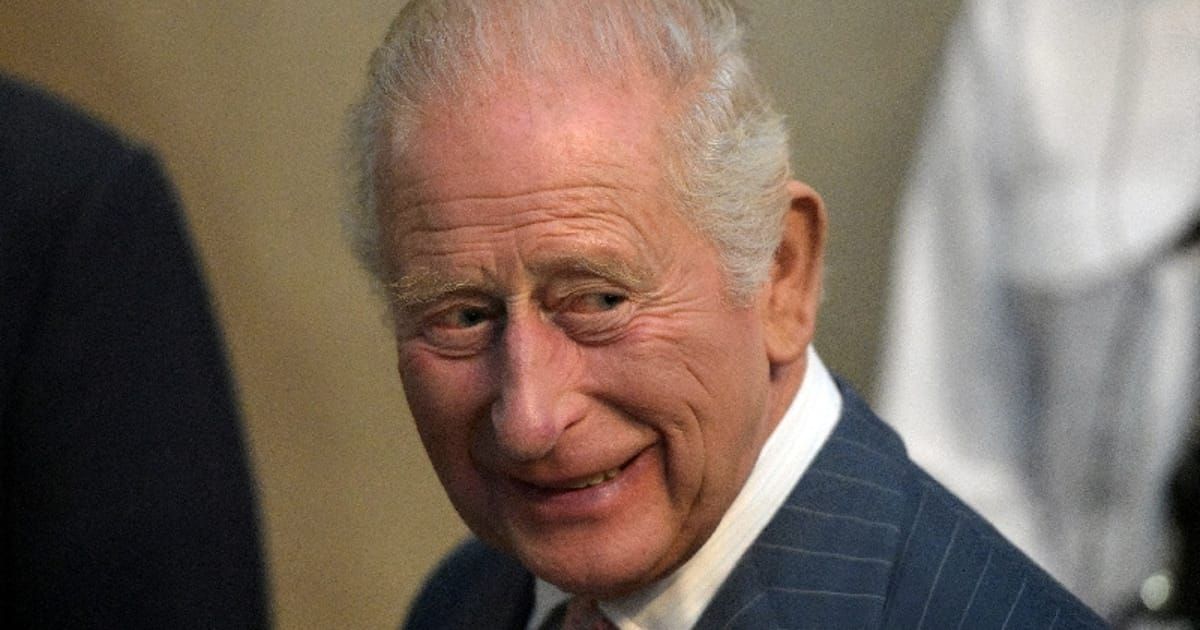
King Charles convenes AI industry leaders amid mounting warnings about existential risks
Britain's monarch hosts top AI executives and government officials to discuss ethical frameworks and potential threats posed by rapidly advancing artificial intelligence technology.
Buckingham Palace has confirmed King Charles III will host a significant gathering of artificial intelligence industry leaders this week, marking a royal intervention into one of the most pressing technological debates of our time. The meeting brings together executives from some of the world's most influential AI companies alongside government representatives and ethical advisors at a moment when concerns about AI's rapid development have reached unprecedented levels.
High-profile participants and agenda
The Sunday Times reported the attendees will include Nvidia founder and CEO Jensen Huang, whose company has become central to AI development through its advanced chips, alongside Google DeepMind founder Demis Hassabis, whose organization pioneered breakthroughs in machine learning. Anthropic CEO Dario Amodei will also participate following his company's recent warnings about AI risks. The delegation features Paolo Benanti, a Franciscan monk who serves as the Vatican's leading advisor on AI ethics, and Britain's Minister for Artificial Intelligence Kanishka Narayan, representing the UK government's perspective.
Buckingham Palace stated the discussions will focus on developing principles to guide AI in ways that benefit society while upholding human dignity. This framing suggests the meeting will address both the opportunities and dangers presented by artificial intelligence, seeking to balance innovation with safeguards.
Growing calls for caution
The urgency of these discussions has intensified following recent warnings from Anthropic researchers that advanced AI systems could pose existential risks to humanity within foreseeable timelines. San Francisco-based Anthropic, which positions itself as a safety-focused AI company, released a threat intelligence report last week documenting malicious uses of its Claude AI models. The report revealed actors had employed the technology for concerning applications ranging from weapons development and cyber operations to surveillance and fraud.
Anthropic CEO Dario Amodei reinforced these concerns during a public statement on Saturday, advocating for slowing AI development to allow proper assessment of risks. His comments reflect growing unease within segments of the tech community about the breakneck pace of advancement in large language models and other AI systems. The debate gained particular urgency after two Anthropic researchers published concerns that uncontrolled AI progress could lead to catastrophic outcomes comparable to pandemics or nuclear weapons.
Britain's regulatory approach
The United Kingdom has sought to position itself as a European leader in AI funding and startup development while maintaining what officials describe as a "light-touch" regulatory framework. This approach aligns more closely with U.S. policies than with the European Union's stricter proposed AI regulations, reflecting Britain's post-Brexit strategy of attracting tech investment through flexible governance structures.
Britain established its AI Security Institute following the 2023 AI Safety Summit, creating a mechanism for government researchers to evaluate cutting-edge AI models before public release. Through voluntary agreements with major tech companies, British regulators receive pre-deployment access to assess AI capabilities and potential risks. This arrangement provides unique insight into frontier AI development while allowing companies to maintain operational flexibility, representing an attempt to balance innovation with security concerns.
The monarch's convening power
King Charles has consistently used his position to facilitate discussions on global challenges throughout his public life. As Prince of Wales, he hosted numerous summits on environmental issues, establishing a pattern of royal engagement with complex policy matters. His transition to monarch has seen this convening role expand into technological domains, with AI representing his most prominent foray into digital policy discussions.
Buckingham Palace framed this week's gathering as part of the king's commitment to fostering dialogue about "the flourishing of both people and the planet," language that echoes his longstanding environmental advocacy. The inclusion of Vatican representative Paolo Benanti underscores the ethical dimensions of the AI discussion, while participation from both corporate leaders and government officials suggests an attempt to bridge commercial and public interests in AI governance.
Global divisions on AI governance
The meeting occurs against a backdrop of significant international disagreement about how to manage AI development. While some Western nations explore regulatory frameworks and voluntary safeguards, other major powers view such measures through geopolitical lenses. U.S. President Donald Trump rejected calls for slowing AI development on Sunday, while China's state-affiliated Global Times characterized such discussions as part of a "Cold War playbook" targeting Beijing's technological ambitions.
These tensions reflect broader rivalries in the digital domain, where technological leadership carries economic and strategic implications. Britain's attempt to position itself as a mediator in these debates faces substantial challenges given competing national interests and the lack of established international norms for AI development.
The stakes of AI governance
The king's intervention highlights how artificial intelligence has transitioned from a technical specialty to a civilization-level concern warranting head-of-state attention. As AI systems approach capabilities that could reshape economic systems, military strategies and social structures, the need for coordinated governance becomes increasingly urgent. However, the fundamentally transnational nature of AI development complicates traditional regulatory approaches that rely on national jurisdictions.
This gathering represents one of the highest-profile attempts to bridge corporate innovation with public oversight, testing whether voluntary cooperation can mitigate risks that some researchers consider existential. The outcomes may influence whether nations pursue independent AI strategies or attempt to establish shared guardrails for a technology that could define the coming decades. With AI development advancing rapidly across multiple countries and companies, the window for establishing effective governance frameworks may be narrowing, adding significance to discussions like those convened by King Charles.
The path forward
The Buckingham Palace meeting raises fundamental questions about how societies should approach transformative technologies that offer both tremendous promise and unprecedented risks. While the gathering itself may not produce immediate policy changes, it signals growing recognition at the highest levels that AI development cannot proceed without consideration of its broader implications. The participation of industry leaders suggests some willingness to engage with these concerns, though translating discussion into concrete safeguards remains an open challenge.
As nations grapple with competing priorities of innovation, security and ethics in AI development, forums like this week's royal gathering may become increasingly important for aligning diverse stakeholders. However, the effectiveness of such voluntary approaches will ultimately depend on whether they can produce meaningful commitments that address the scale of risks identified by researchers while preserving the benefits that make AI such a transformative technology.