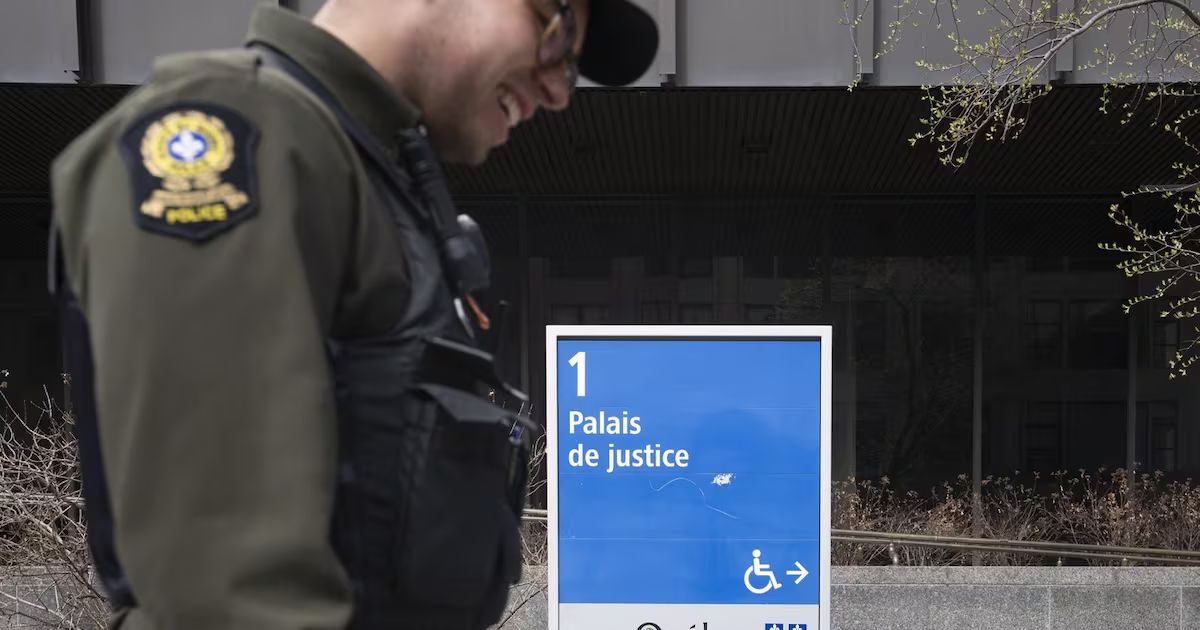
Lawyers ask court to suspend Montreal bylaw banning insults against city employees
The bylaw, which carries fines of up to $2,000, is being challenged on grounds it infringes on Charter rights.
MONTREAL — Lawyers asked Quebec Superior Court on Thursday to suspend a recently adopted Montreal bylaw that bans insults against city employees, including police officers.
Those seeking an injunction argued the bylaw infringes on Charter rights, while city representatives countered that it protects public workers and all Montrealers.
The bylaw prohibits insults, harassment, threats, abuse and intimidation, as well as offensive and aggressive behaviour.
READ MORE: Alberta court again rules federal environmental assessment law unconstitutional
READ MORE: Montreal police arrest man in fatal attack on woman during Zoom call
It can lead to fines of between $300 and $1,000 for a first offence, with subsequent offences carrying fines of up to $2,000.
Justice Eleni Yiannakis heard arguments from lawyers representing an association for progressive jurists and the St-Michel legal clinic.
Before the lawyers pleaded their case, Yiannakis stressed she will rule only on the request for the injunction and not on the constitutionality of the bylaw.
Lawyer Sibel Ataogul told Yiannakis that the bylaw is too broad and encroaches on fundamental freedoms, including freedom of expression, and is against public interest.
She argued that some of the language, namely banning “offensive behaviour” and “insults,” is too vague and goes beyond shielding city employees from violence.
Because the rule is penal rather than administrative, offenders can be subject to arrests, detention and having a public record even if acquitted, she said.
“The city went very far,” she told the judge. “Do we really want to live in a society where incivility…is penalized with an infraction?”
Ataogul said there are already laws against violence, harassment and threats, and that the Supreme Court has ruled people “have the most basic right to say something offensive.”
The group has filed a constitutional challenge against the bylaw, which will be heard at a later date.
Lawyer Dardia Garcelle Joseph argued the bylaw will mainly apply to interactions with police and can lead to serious harm to those already marginalized.
She suggested the city couched its true intentions of protecting police officers by ensuring the rule applies to all municipal employees.
She said the city has publicly recognized its police force has a racial profiling problem, and that the bylaw will harm racialized citizens, who are already stopped more often.
“The effects (of the bylaw) are predictable,” said Garcelle Joseph.
The bylaw was drafted after a video of a young man hurling misogynistic insults at a police officer went viral. The man later said he was a victim of racial profiling and has been charged with defamatory libel.
Michelle Picard, a lawyer representing the city, stressed the bylaw is in the public interest and protects every Montrealer.
She noted several other Quebec municipalities have similar uncontested bylaws.
She said there is no need for an injunction as people “continue to express themselves like they always have, we just ask that they be respectful.”
However, Ataogul argued that when individual fines have been contested, judges across the province have not agreed on what constitutes an insult, including whether the word “racist” qualifies.
Picard pushed back against claims the bylaw had hidden motives, adding there has been a marked “deterioration of public debate” that must be addressed.
She said the bylaw includes not only verbal harassment but also nonverbal behaviour, and that freedom of expression is not absolute.
“It protects the search for truth, personal expression and democratic debate,” she said.
Picard also accused the injunction applicants of arguing on the merits of the case, not the criteria required for an injunction.
Yiannakis told both sides they lacked proof to support their arguments, saying they took claims of racial profiling and increasing incivility as a given without real evidence.
With the bylaw having only been in place for 22 days, the judge said it can be difficult to demonstrate it has caused serious harm.
Yiannakis said she will deliberate and hand down her judgment at a later date.
With files from The Canadian Press, CityNews and CBC News