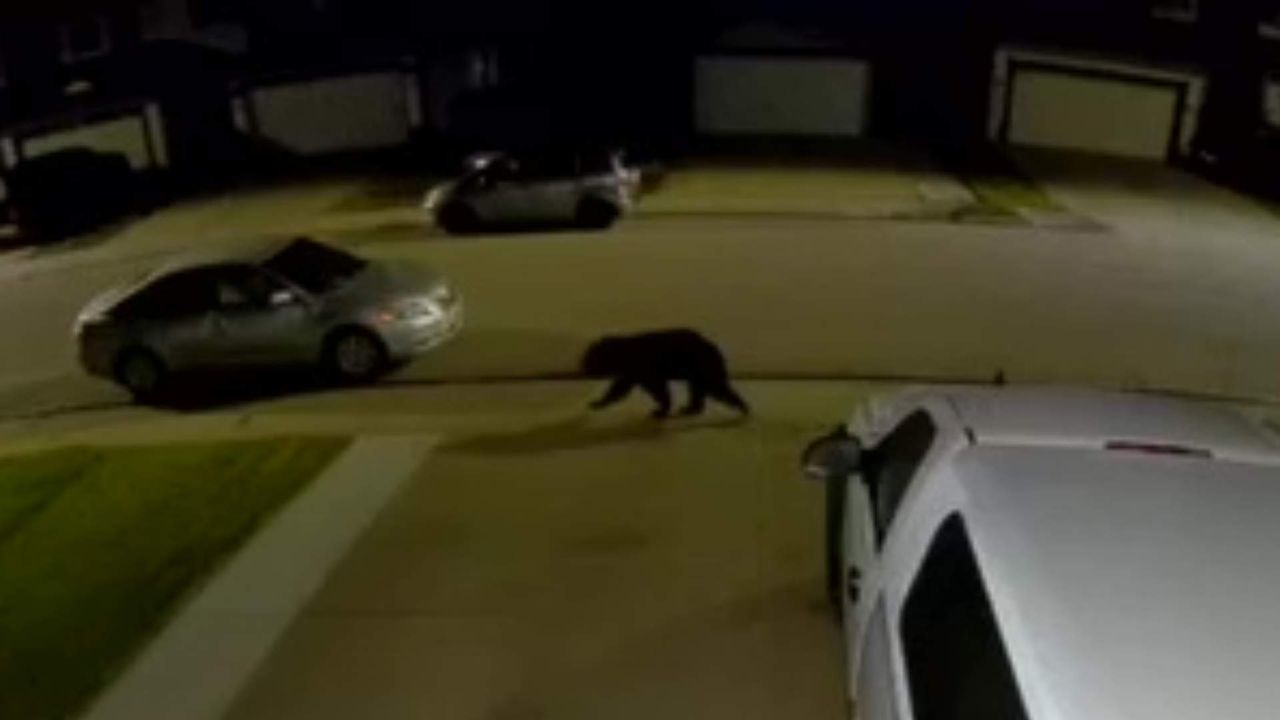
Black bear spotted roaming residential neighbourhoods in northwest Edmonton
A small black bear was captured on video wandering through multiple northwest Edmonton neighbourhoods overnight, prompting wildlife officials to issue safety reminders about urban wildlife encounters during peak feeding season.
Residents of northwest Edmonton experienced an extraordinary wildlife encounter early Tuesday morning when a black bear was documented moving through multiple residential areas. The unusual sighting sparked both surprise and concern among locals while highlighting the complex relationship between urban environments and Alberta's wildlife populations.
Residents react to unexpected visitor
The bear's presence was first noted by Cumberland resident Meagan Hamilton when reviewing footage from her home surveillance system around midnight.
"We saw a little black bear just walking down our yard and past our vehicles, then down our road,"Hamilton recounted, expressing the shock shared by many residents. Her description of the bear's calm demeanor and apparent confusion reflects the complex emotions urban dwellers experience when encountering large wildlife.
"I was just flabbergasted. I couldn't believe that was actually happening,"she said, adding
"How did he get here? Where did he come from?"Hamilton's concern for the animal's welfare was evident as she noted
"It didn't seem like it was aggressive or anything so I just hope that it's taken care of and finds a better place to be."
Multiple sightings across neighborhoods
Global News received numerous videos documenting the bear's movements through residential areas between midnight and 1:30 a.m. The footage provided valuable insight into the animal's behavior patterns, showing it sometimes quickly trotting down streets and other times moving slowly along sidewalks while carefully scanning front yards. The most dramatic encounter came from Canossa resident Donna Davies, whose security cameras captured an unusual predator-prey interaction.
"I got up to see what the fuss was about and I saw a coyote chasing a bear into our cul-de-sac,"Davies recounted. This sighting recalled a similar 2015 incident when a black bear was documented multiple times in the North Saskatchewan River valley, suggesting these occurrences may become more frequent as urban boundaries expand.
Wildlife officials monitor situation
Alberta Fish and Wildlife was promptly alerted to the bear's presence through coordinated reports from Edmonton Police Service and concerned residents. According to a detailed statement from Alberta's Ministry of Public Safety and Emergency Services, the bear was spotted in areas east of St. Albert Trail and south of Anthony Henday Drive near the Cumberland and Oxford neighbourhoods. Officials provided reassurance with their statement:
"There have been no reports of aggressive behaviour, property damage or access to attractants, and no additional sightings have been reported since that time."The lack of recent sightings suggests the bear may have handled back to more suitable habitat, though authorities remain vigilant.
Ecological context for urban visits
University of Alberta ecology professor Mark Boyce provided important biological context about bears' seasonal movements into urban fringes.
"They come up the river valley and that area up in the northwest is right close to Lois Hole Provincial Park and the Sturgeon River and there's lots of good berry habitat,"Boyce explained, highlighting the connectivity between protected areas and urban green spaces. He emphasized the critical biological imperative driving bears during early autumn:
"They need to put on about 25 per cent of their body weight in the fall to be able to make it through to the winter, so this time of year they are feeding heavily. Anything they can get to eat, they're after it."This natural behavior pattern sometimes leads bears to explore beyond their typical ranges in search of valuable calories.
Public safety recommendations
Provincial officials issued comprehensive guidelines to help residents minimize wildlife conflicts, focusing on both prevention and response strategies. They advised securing potential food attractants including garbage, bird feeders, pet food, barbecues and fallen fruit - all of which can inadvertently draw bears into residential areas. For direct encounters, authorities recommend a measured approach: remaining calm, avoiding sudden movements, and slowly backing away while speaking in a calm voice. Additional precautions include keeping pets leashed in areas where bears have been spotted and avoiding locations of recent bear activity. These recommendations form part of broader bear-aware education efforts across Alberta.
Community response and reporting protocols
The coordinated response between residents, police and wildlife officials demonstrates effective implementation of established wildlife protocols. Authorities have asked Edmonton residents to immediately report any bear sightings to either the Edmonton Police Service or Alberta Fish and Wildlife's 24-hour Report-A-Poacher line at 1-800-642-3800. Davies, reflecting on her unexpected wildlife encounter, offered a perspective that balances concern with understanding:
"We don't expect it here, but I guess you have to be bear aware in the city as well. I would love for it to be captured and taken safely out of the city."This measured response from residents highlights growing awareness about urban wildlife issues.
Urban expansion and wildlife habitat
This incident underscores the increasing interface between urban development and natural habitats in Alberta's growing municipalities. As Edmonton expands near protected areas like Lois Hole Provincial Park, such wildlife encounters may become more frequent due to habitat fragmentation and seasonal food pressures. The event highlights the importance of considering wildlife corridors in urban planning and maintaining buffer zones between development and natural areas. While no harm occurred in this case, it serves as a valuable case study for municipal planners and wildlife managers working to balance growth with ecological considerations.
Long-term implications for wildlife management
The northwest Edmonton bear sighting represents more than just an unusual wildlife encounter - it reflects broader environmental changes affecting animal behavior patterns. Climate variations, habitat modifications, and increasing human activity in former wilderness areas all contribute to shifting wildlife movement patterns. Wildlife management strategies must adapt to these changes through continued public education, habitat protection measures, and responsive intervention protocols. The successful handling of this incident demonstrates Alberta's capacity to manage urban wildlife encounters while prioritizing both public safety and animal welfare.