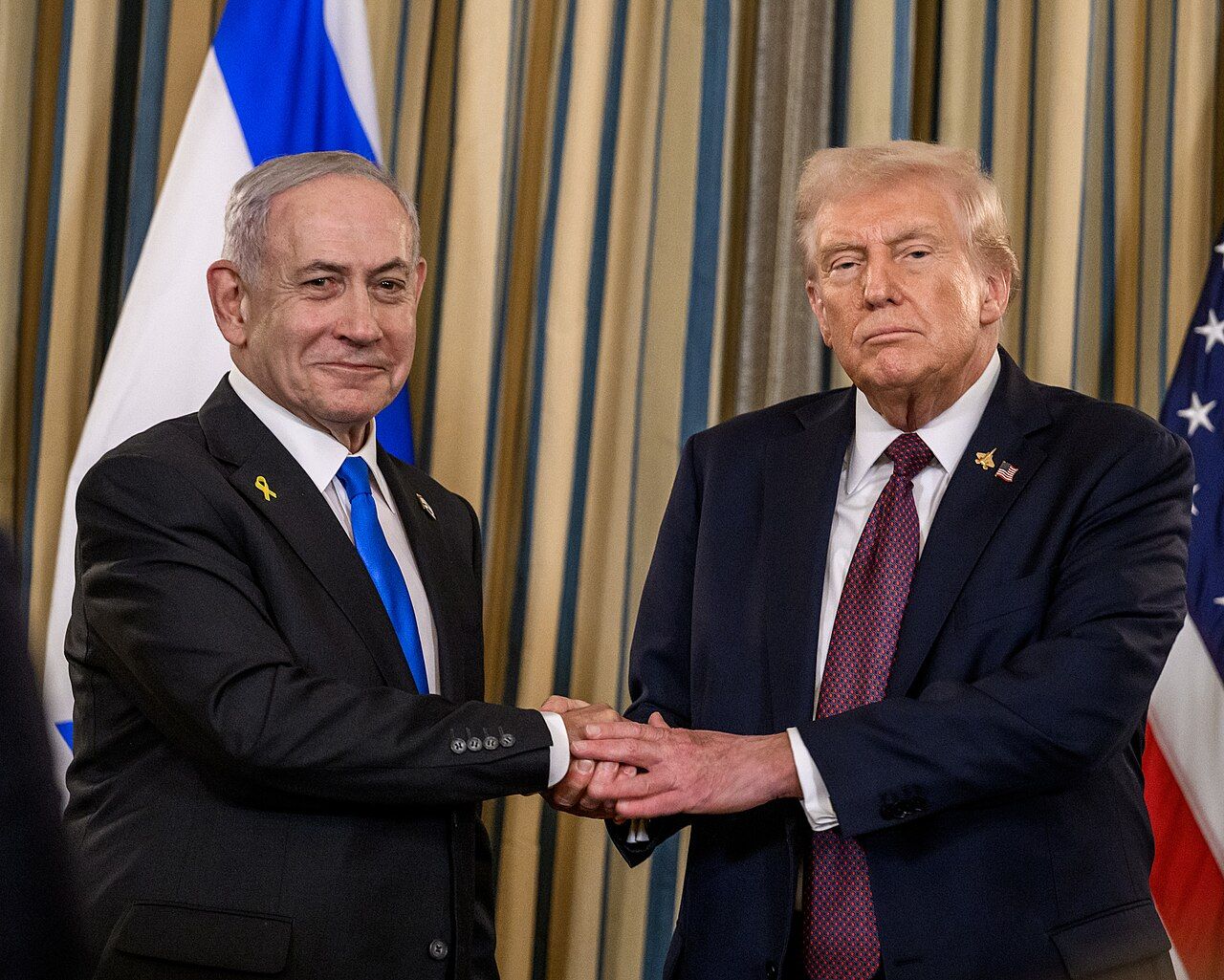
Trump endorses Netanyahu days before Israeli election
The U.S. president's endorsement comes after months of speculation and public disagreements over Middle East strategy.
Explainer
U.S. President Donald Trump endorsed Israeli Prime Minister Benjamin Netanyahu for re-election on Sunday, nine days before Israelis go to the polls. The endorsement was issued in a post on Trump's Truth Social platform, where he praised Netanyahu as a "Great Warrior Prime Minister, and an even greater Partner for Peace in combatting the Islamic Republic of Iran." The public backing comes after months of Trump withholding his support as the two allies' strategies in the Middle East diverged. Israelis are set to vote on Oct. 27 in the first national elections since the Hamas-led attack on Israel on Oct. 7, 2023.
In his message, addressed to "the Great People of Israel," Trump wrote, "Please let this Letter serve to represent my Complete and Total Endorsement of Bibi Netanyahu in his upcoming Race for Re-Election as Prime Minister of Israel." He added, "Bibi Netanyahu has been Strong, Brave, and Brilliant in the face of tremendous opposition, including that coming from even Israel, itself." Trump argued that if Israel elected "the wrong Leader," America would have to finish the work against Iran alone, and "I am not inclined to do so." Netanyahu promptly expressed his thanks on social media, saying, "Together we will complete the mission!"
READ MORE: Trump says Pentagon will not livestream Fort Hood shooter's execution
READ MORE: Israeli president tasks Gadi Eisenkot with forming government
Why was the endorsement delayed?
The absence of an endorsement had been seen as a setback for Netanyahu, who had billed his tight ties to Trump as a selling point for staying in power. Trump had refused to endorse Netanyahu earlier this month when asked repeatedly about the Israeli leader's job performance in an interview with Time magazine. Instead, Trump avoided the subject, shifting the focus to his own popularity. When asked in that interview about backing Netanyahu, Trump said, "I'm not involved in politics anymore," despite his active campaigning for U.S. politicians. Trump told Axios on Sunday that his endorsement was never in doubt. "I was always going to do that. I just didn't want to do it too soon," Trump said in a telephone interview.
Where have Trump and Netanyahu disagreed?
The two leaders, close allies who jointly launched strikes on Iran in February, have had public disagreements over the course of the nearly eight-month war. Trump criticized Israel's decision to attack a key Iranian gas field in the first weeks of the conflict. In June, Trump acknowledged calling Netanyahu "f***ing crazy" in a phone conversation where he expressed frustration about Israel's attacks on Lebanon. Trump had reportedly asked Netanyahu not to take further action in Lebanon in an attempt to preserve a short-lived April ceasefire with Iran. Beyond Iran, Netanyahu in August rejected Trump's latest plan to advance a stalled ceasefire in Gaza, pushing back on the U.S. administration's call for Israel to withdraw from territory it controls.
What is the political context for Trump's endorsement?
Trump's endorsement is not certain to give Netanyahu and his right-wing Likud party a boost, as Israeli public support for Trump has diminished amid Israeli-U.S. disagreements over Iran. The war has upended the global oil and gas supply, driving up consumer fuel prices. A Pew Research Center poll found this month that roughly two-thirds of U.S. voters disapprove of Trump's handling of the war. Trump's Republican Party is facing a critical midterm election on Nov. 3 that will decide whether it maintains control of the U.S. Congress. Experts have speculated that Trump's prior reticence may have come from public perception that Israel coaxed the U.S. into the war.
In his social media post, Trump defended the decision to initiate the war against Iran, arguing it was only a matter of time before Iran would have attacked both the U.S. and Israel. Netanyahu, in a video response, directed comments to U.S. voters, attempting to offer support for Trump's party. "Let me say to the American people: If you are worried about today's gas prices, think of what will happen if Iran gets nuclear weapons, something that Donald Trump and I will never allow," Netanyahu said. "When that threat of that regime disappears, gas prices will go down, and how. But only under Trump." The election will determine whether Netanyahu remains in power after one of the most consequential periods in Israel's history or is defeated by centrist rivals.
With files from CityNews, NBC News and NBC4 Washington