Types of sports bets
Sports betting is a popular form of entertainment for adults in Canada, with legal single-game wagering available in provinces like Ontario for those 19 and older. The core types of bets offered by Canadian sportsbooks include moneyline, point spread, totals (over/under), and parlay wagers. Understanding these fundamental bet types is essential for the offerings of operators like Sports Interaction, bet365, and Stake. This guide explains the mechanics, calculations, and strategic considerations behind the most common sports wagers placed by Canadians.
Moneyline Betting
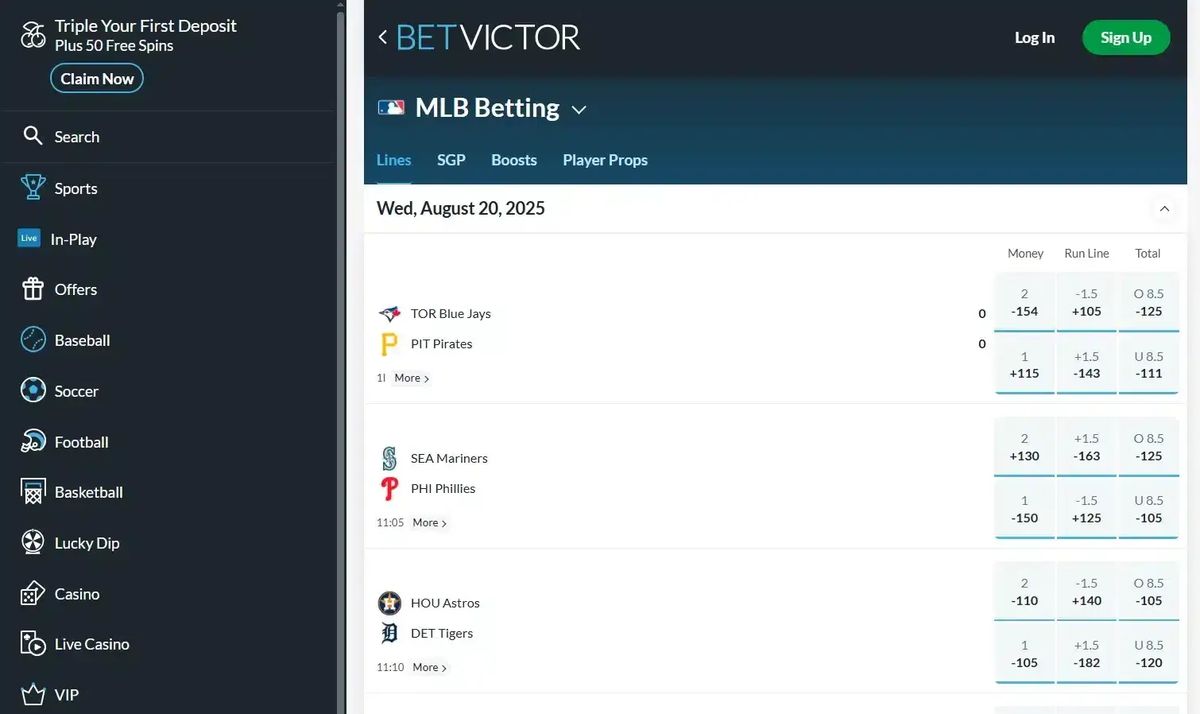
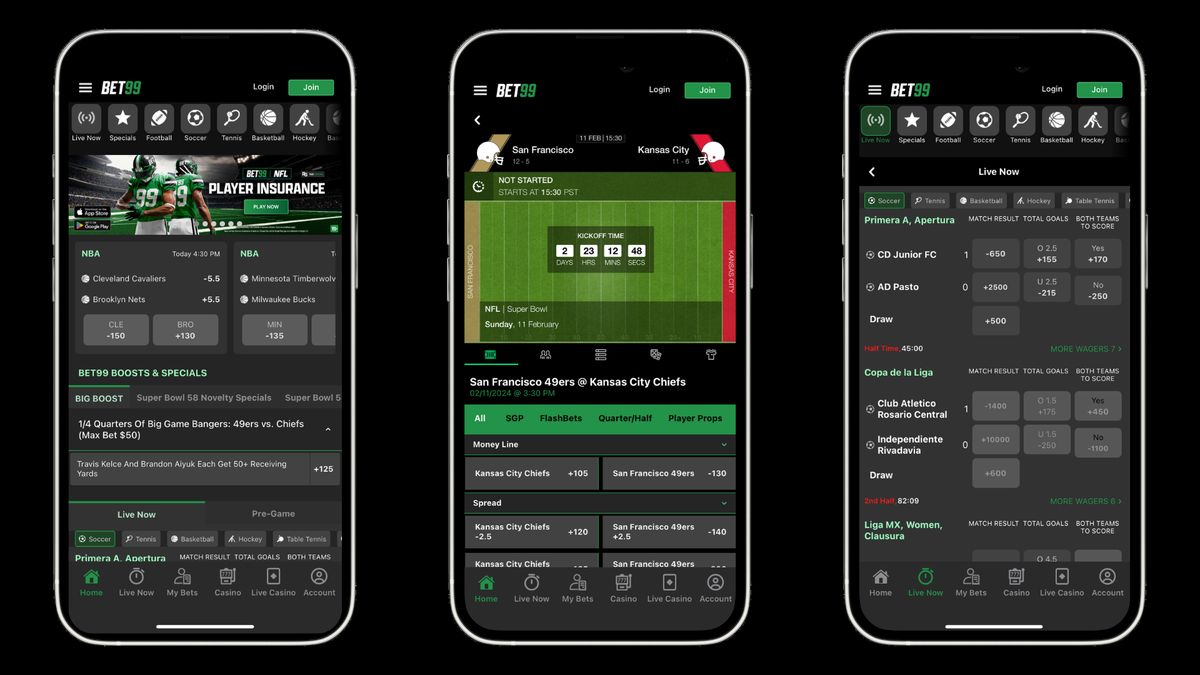
Moneyline betting is the most straightforward wager, requiring the bettor to simply pick the winner of a game or event. This bet type is common across all major sports like the NFL, NBA, CFL, and NHL. Odds are presented in American format, with favourites indicated by a negative number (e.g., -200) and underdogs by a positive number (e.g., +165). The negative number shows how much must be wagered to win $100 in profit, while the positive number shows the profit from a $100 wager. For example, a -200 favourite requires a $200 bet to win $100, resulting in a total return of $300. A +165 underdog yields a $165 profit on a $100 bet, for a total return of $265. The disparity between the odds reflects the perceived competitiveness of the matchup, with closer odds like +115/-135 indicating more evenly matched teams.
Moneylines are one of the 'big three' pregame bets alongside point spreads and totals, and their odds can shift significantly based on betting action. Live or in-game moneyline betting is also widely available, allowing wagers to be placed with dynamic odds as the event unfolds. Sports that allow for draws, such as soccer, will feature a third moneyline option for the tie. While simple in concept, successful moneyline betting requires analysis of team performance, matchups, and other variables to identify value, as favourites do not always win. Managing bankroll responsibly is crucial, as betting on heavy favourites offers smaller payouts but higher perceived safety, while underdog bets offer larger potential returns with greater risk.
Betting odds in Canada are presented in three formats: decimal, fractional, and American. For example, in a moneyline bet, a team with a negative number is the favourite. This number shows how much a bettor must wager to win $100. A team with a plus number is the underdog, and that number shows how much a $100 bet would win. A $100 bet on a favourite like Toronto at -150 would yield a profit smaller than the stake. A $100 bet on an underdog like Montreal at +130 would yield a profit larger than the original wager. This relationship between odds, risk, and potential payout is central to moneyline strategy.
| Moneyline Odds | Team Status | Profit on $100 Bet | Total Return |
|---|---|---|---|
| -200 | Favourite | $50 | $150 |
| +110 | Underdog | $110 | $210 |
| +150 | Underdog | $150 | $250 |
| +165 | Underdog | $165 | $265 |
Point Spread Betting
Point spread betting, often called 'the spread,' levels the playing field between two teams of perceived unequal strength by applying a handicap to the favourite. The bettor wagers on whether the favoured team will win by more than the specified spread or if the underdog will lose by less than the spread (or win outright). A typical point spread line appears as 'Green Bay (+3.5) (-110) at Buffalo (-3.5) (-110).' Here, Buffalo is favoured to win by 3.5 points, meaning a bet on Buffalo only wins if they win by 4 points or more. A bet on Green Bay wins if they win outright or lose by 3 points or less.
The number in parentheses like -110 is the odds attached to the spread bet, indicating the bettor must wager $110 to win $100. This standard odds value is known as the 'juice' or 'vig.' The use of half-points (e.g., 3.5) is common to eliminate the possibility of a push, where the result lands exactly on the spread number. If a push does occur, all bets are refunded. Point spreads are fundamental for sports like football and basketball, where margins of victory are common. Understanding how to interpret and handicap the spread is a key skill for sports bettors, as it involves predicting not just the winner, but the precise margin of victory.
Totals (Over/Under) Betting
Totals betting, commonly referred to as over/under betting, involves wagering on the combined score of both teams in a game. The sportsbook sets a line representing the predicted total points, runs, or goals, and the bettor chooses whether the actual combined score will be over or under that number. A typical line is presented as 'Milwaukee vs. Toronto Over 240.5 (-110) / Under 240.5 (-110).' In this NBA example, the implied total is 240.5 points. The -110 odds again indicate the standard vig. Totals betting shifts the focus away from which team wins and onto the overall offensive or defensive nature of the contest. This bet type is available for most team sports and can also be applied to individual player or team statistics, such as a quarterback's passing yards. Bettors analyse factors like team pace, offensive efficiency, defensive rankings, and even weather conditions (in outdoor sports) to make informed over/under predictions. Like point spreads, half-points are used to avoid pushes, though a push does occur if the total lands exactly on the set line, resulting in refunded wagers.

Parlay Betting
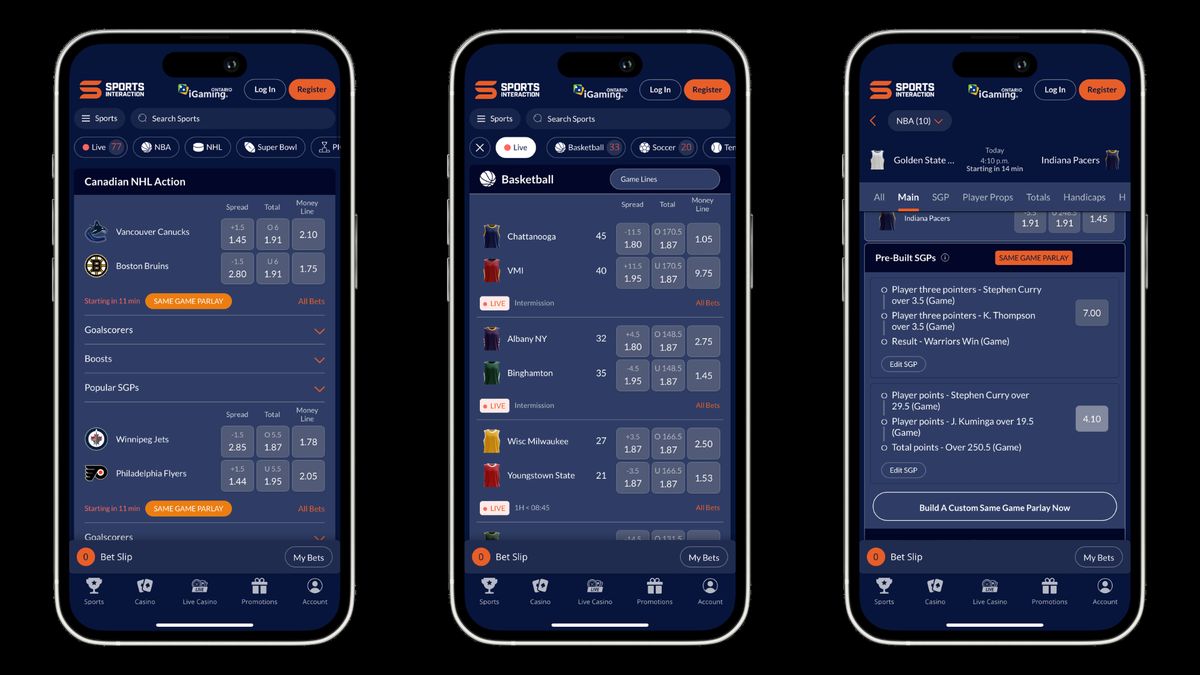
A parlay bet, also known as an accumulator or combo bet, is a single wager that links together two or more individual bets, called legs. The appeal of a parlay is the potential for a large payout from a small stake, as the odds of each leg are multiplied together. However, the risk is high because every leg in the parlay must win for the entire bet to succeed. If even one leg loses, the entire parlay is lost. Parlays can combine different bet types, such as moneylines, point spreads, and totals, from different games or even different sports.
The odds for a parlay are calculated by multiplying the decimal odds of each selection. For example, a three-leg parlay with odds of -110 (decimal approx. Some sportsbooks offer features like 'parlay insurance' or 'Stake Shield,' which may provide a refund or reduced payout if one leg fails. A 'push' in one leg typically results in that leg being removed, and the parlay reverting to the next smallest bet type. Same-game parlays, which combine multiple bets from a single event, have grown in popularity but may have specific rules regarding pushes.
Common bet types in Canada include the moneyline, point spreads, over/under totals, and parlays. A parlay is a bet that combines multiple selections into one wager. Each additional selection in a parlay increases the potential payout. However, it also compounds the risk because the chance of all selections winning decreases. Before legal changes, Canadians could often only legally place parlay bets through provincial lotteries. Bettors should carefully consider the balance between potential reward and the increased difficulty of winning with more legs.
- Double: A parlay with 2 selections.
- Treble: A parlay with 3 selections.
- Four-fold accumulator: A parlay with 4 selections.
- Five-fold accumulator: A parlay with 5 selections.
- Ten-fold accumulator: A parlay with 10 selections, offering very high odds but low probability.
The 'Canadian' Bet and Other Multiples
Beyond standard parlays, there are specialized multiple bets with fixed structures. The 'Canadian' bet, also known as a Super Yankee, is a complex wager involving five selections. It consists of 26 individual bets: 10 doubles, 10 trebles, 5 four-fold accumulators, and 1 five-fold accumulator. This means a unit stake is multiplied by 26, so a $2 per bet stake results in a total wager of $52. The bet can yield a return if only two selections win, but a profit typically requires three or more correct picks due to the high total stake.
This bet type exemplifies the high-risk, high-reward nature of multiples. It is one of several named accumulator bets derived from horse racing but now applied to sports. These bets are offered by most major sportsbooks but are generally considered advanced wagers due to their complexity and capital requirements. Bettors should thoroughly understand how the combined stakes and potential returns are calculated before placing such a wager.
The 'Canadian' bet is sometimes referred to as a Super Yankee. It is a large multiple bet that has five selections. This single wager contains a total of 26 individual bets. It has a similar makeup to a Yankee or Lucky 15 bet but uses five selections instead of four. This structure ensures coverage across many possible winning combinations. The substantial initial stake required for all 26 bets is a significant consideration for any bettor. The complexity also means it can be difficult to manually calculate potential returns without using a sportsbook's bet slip calculator.
- 10 separate double bets (combinations of two selections).
- 10 separate treble bets (combinations of three selections).
- 5 separate four-fold accumulator bets (combinations of four selections).
- 1 five-fold accumulator bet (all five selections).
Proposition and Futures Betting
Proposition bets, or prop bets, are wagers not directly tied to the final outcome of a game. They focus on specific occurrences or statistical milestones within an event. Common player props include betting on the number of goals a hockey player will score, the passing yards for a quarterback, or the strikeouts by a pitcher. Team props might involve which side will score first or the total three-pointers made in a basketball game. Prop bets add a layer of engagement to watching a game, as they can remain relevant regardless of the final score.
Futures bets are long-term wagers on outcomes that will be decided well in the future, such as which team will win the Stanley Cup, the Super Bowl, or a league's Most Valuable Player award. Futures odds are posted well in advance and fluctuate based on team performance, injuries, and trading activity throughout a season. These bets typically require tying up funds for an extended period but can offer substantial payouts for correctly predicting an outcome before the odds shorten. Both prop and futures markets have expanded significantly with the growth of online sports betting, providing a wide array of niche wagering opportunities beyond traditional game lines.
Odds Formats and Sportsbook Landscape
Canadian sportsbooks present betting odds in three primary formats: American, Decimal, and Fractional. American odds, described in the moneyline section, are prevalent in Canada. Decimal odds represent the total payout per unit staked, including the original stake. Fractional odds, common in horse racing, show the profit relative to the stake (e.g., 5/2 means a $2 profit on a $2 stake, for a total return of $7). All formats convey the same probability but in different numerical forms. Major international and domestic sportsbooks like Sports Interaction (SIA), bet365, BetMGM, and Stake now compete for Canadian customers. These platforms offer comprehensive betting menus across major and niche sports, competitive odds, live betting with streaming, and various promotional offers.
Questions about Types of sports bets
What is a parlay in sports betting?
A parlay is a single bet that combines two or more individual wagers, known as legs. To win a parlay, every leg must be correct. The odds for each leg are multiplied together, creating the potential for a large payout from a small stake. However, the risk is high because if any one leg loses, the entire parlay bet is lost. Parlays can include different bet types like moneylines, point spreads, and totals from various games.
What does moneyline mean?
A moneyline bet is a wager on which team or competitor will win a game or event outright, with no point spread involved. Odds are presented with a plus (+) sign for the underdog and a minus (-) sign for the favourite. The negative number indicates how much you need to bet to win $100, while the positive number shows how much you would win on a $100 bet. It is the simplest and most fundamental type of sports wager.
What is a point spread?
A point spread is a handicap applied to a sports contest to create a balanced betting market between two teams of unequal strength. The favourite must win by more than the spread for a bet on them to succeed, while the underdog must lose by less than the spread (or win outright). For example, if Team A is a -7.5 point favourite, they must win by 8 or more points. The spread is designed to attract equal betting action on both sides.
What is a 'Canadian' bet?
A 'Canadian' bet, also known as a Super Yankee, is a specific type of multiple bet involving five selections. It is not a single bet but a bundle of 26 individual wagers: 10 doubles, 10 trebles, 5 four-fold accumulators, and 1 five-fold accumulator. This makes it a complex and high-stakes wager, as the total stake is 26 times the unit stake. A return is possible with only two correct selections, but a profit usually requires three or more wins.
How does over/under betting work?
Over/under betting, also known as totals betting, involves wagering on whether the combined points, runs, or goals in a game will be over or under a number set by the sportsbook. For example, a basketball game between Milwaukee and Toronto might have a line of 240.5 points. This bet type is not related to picking a winner. The odds, such as -110, show that a bettor must wager $110 to win $100. It is a popular wager type available at Canadian sportsbooks like Sports Interaction and bet365.
Sources and further reading
- Best Sports Betting Apps in Canada (November 2026) (canadasportsbetting.ca)
- Best British Columbia Sports Betting Sites & Apps for November 2026 (covers.com)
- Sports betting in Ontario: Where to bet, types of wagers, how to win (ca.sports.yahoo.com)
- What is a Canadian bet? | Bet Types Explained (sportinglife.com)
- What is a Canadian bet? | Bet Types Explained (sportinglife.com)
- Parlay Betting Sites in Canada (betting.ca)
Checked by the Nosy Mag desk. Last updated 2026-11-11.