Daily fantasy sports
Daily fantasy sports (DFS) are a subset of fantasy sport games. Participants build virtual teams of real professional athletes within a salary cap and earn points based on those athletes' actual statistical performances in live games. These contests are conducted over short-term periods, such as a single day or week, as opposed to a full season. In the United States, the industry was dominated by FanDuel and DraftKings, which controlled an estimated 95% of the market as of September 2015. In Canada, these contests are offered by licensed operators where provincial regulations permit.
Gameplay and Core Formats
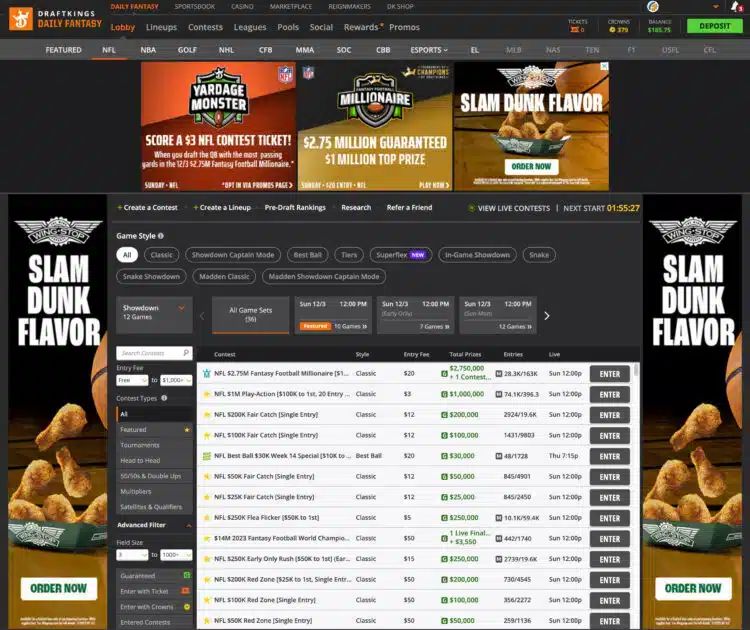
Daily fantasy sports contests are built around constructing a roster of professional athletes whose real-world performances translate into fantasy points. The most traditional format is the salary cap game, where each athlete has a cost and users must stay under a maximum budget. Users enter their constructed lineup into a contest where it competes against others based on accumulated statistics from a single day's or week's games. DFS contests are broadly categorized into cash games and tournaments, also known as Guaranteed Prize Pools (GPP). Cash games are designed for consistent outcomes. The most common is the 50/50 or double-up, where roughly the top 50% of finishers win a prize. Head-to-head contests are another variant where one user directly challenges another. GPP tournaments offer larger, tiered prize pools with payouts that heavily reward the top finishers. Operators also offer variations like Triple-up, Quadruple-up, and Quintuple-up games. Leagues are smaller versions of GPP contests with a smaller number of contestants.
The range of sports covered by DFS operators is extensive. Major North American sports like the NFL, NBA, MLB, and NHL form the core offering. Many operators also include contests for college football and basketball, association football, golf, auto racing, tennis, and mixed martial arts. Scoring systems are sport-specific, with points awarded for statistical achievements such as touchdowns, goals, rebounds, or strikeouts. Daily fantasy contests have also been held for professional-level esports events, such as the 2015 League of Legends World Championship on DraftKings. The structure and payouts of daily fantasy games have been described as providing a feeling of instant gratification to its players, similar to that of online gambling.
Historical Development and Mainstream Rise
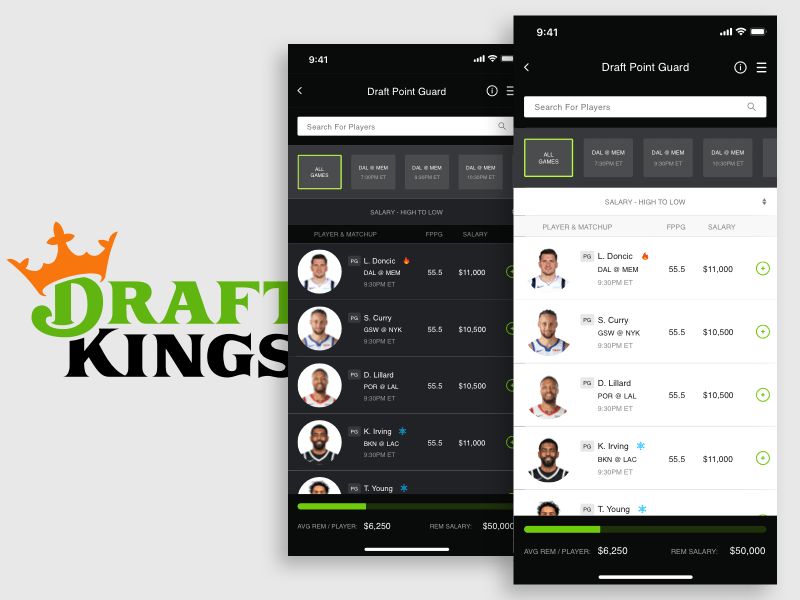
The concept of short-term fantasy sports has early precedents, such as the phone-based games run by the company Phoneworks in the late 1980s and early 1990s. Among the first websites to specialize in the format was Instant Fantasy Sports, established in 2007 and later acquired by NBC Universal and re-branded as SnapDraft. The modern online era's explosive growth is tied to FanDuel, launched in Edinburgh, Scotland in 2009, and DraftKings, established in Boston in 2012. FanDuel's founder, Nigel Eccles, was motivated by a carve-out for fantasy sports in the 2006 U.S. Unlawful Internet Gambling Enforcement Act. DraftKings was founded by former VistaPrint executives Jason Robins, Matthew Kalish, and Paul Liberman.
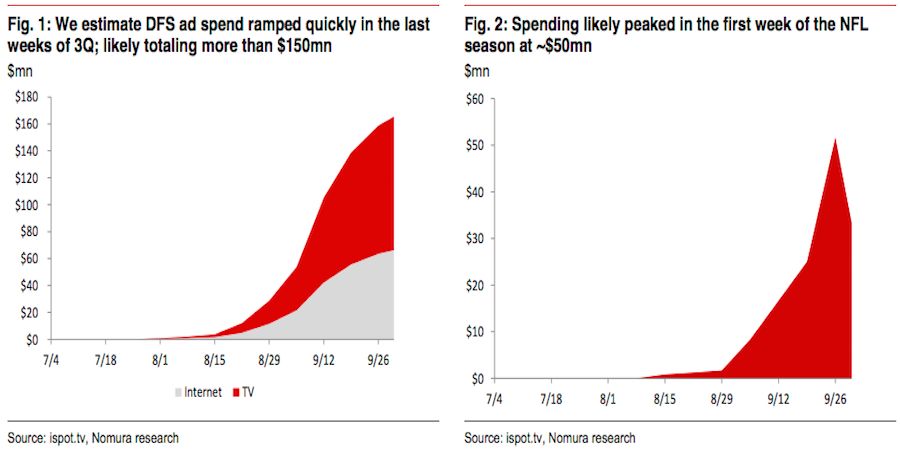
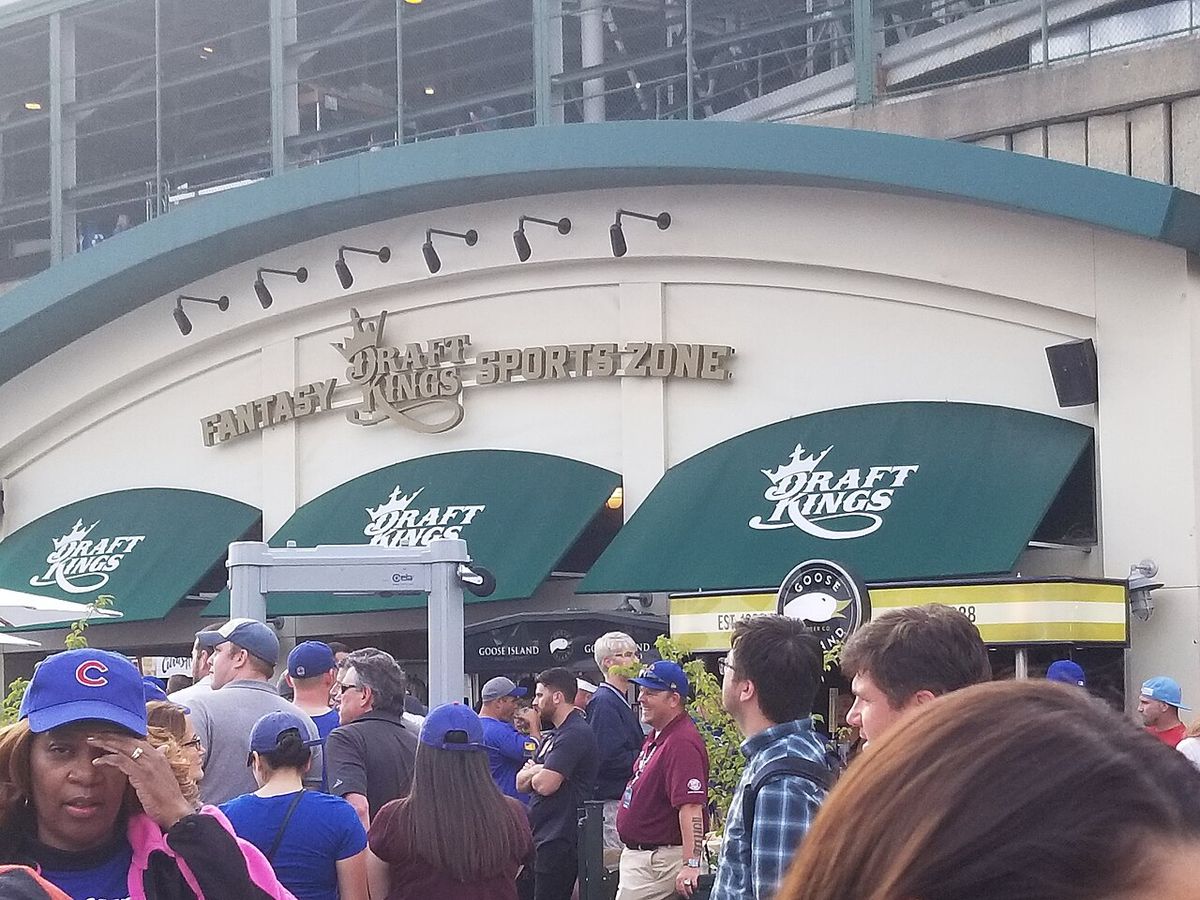
Between 2013 and 2015, DraftKings and FanDuel achieved a duopoly, controlling an estimated 95% of the U.S. DFS market. Their growth was fueled by massive venture capital investments, including funding from major sports leagues. Major League Baseball made an equity investment in DraftKings in April 2013. The National Basketball Association acquired an equity stake in FanDuel and entered into a four-year sponsorship deal in November 2014. This period was defined by aggressive marketing campaigns. In September 2015 alone, the two companies spent over $107 million on television advertising, with nearly half during NFL telecasts. Their sponsorship deals extended to individual teams and league-wide partnerships.
The mainstream popularity of DFS was driven by its convenience and the allure of large cash prizes. Industry observers and network executives like Fox Sports president Erik Shanks credited daily fantasy with increasing television viewership and fan engagement. By 2015, established players like Yahoo! Sports launched paid daily and weekly fantasy games. The companies pursued several high-profile investments and partnerships during this peak growth period. In Australia, the DFS service Moneyball was established in 2015, securing $1.8 million in series A funding.
- April 2013: Major League Baseball invests in DraftKings.
- 2014: DraftKings acquires competitors DraftStreet and StarStreet, and raises $41 million led by The Raine Group.
- September 2014: FanDuel raises $70 million in a Series D funding round led by Shamrock Capital Advisors.
- November 2014: The NBA acquires an equity stake in FanDuel and signs a four-year sponsorship.
- November 2014: DraftKings signs a multi-year sponsorship with the NHL.
- April 2015: FanDuel signs sponsorship deals with sixteen NFL teams.
- July 2015: FanDuel raises $275 million in a Series E round, valuing the company over $1 billion.
- September 2015: DraftKings and FanDuel expand into esports contests. FanDuel acquires AlphaDraft.
Legal Scrutiny and the Sports Betting Pivot
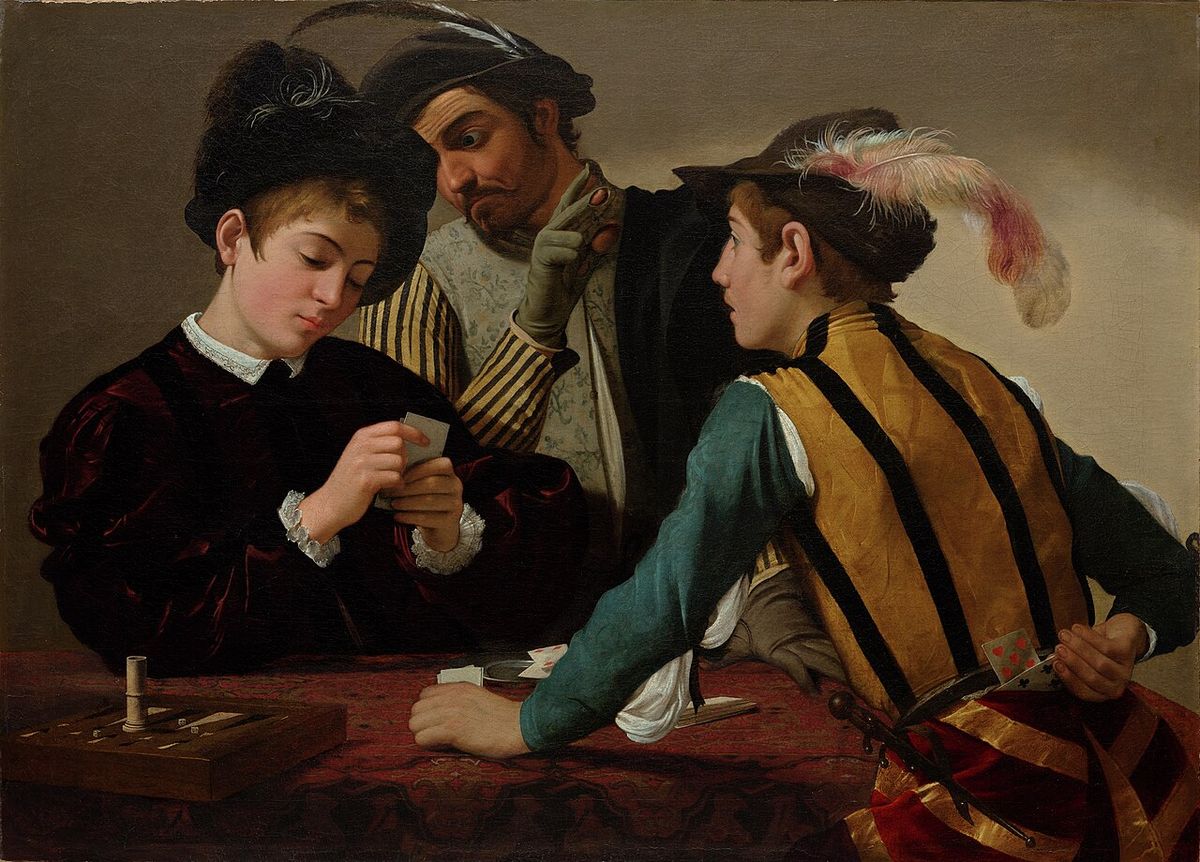
From its inception, the legal status of daily fantasy sports was contested, with critics arguing it constituted illegal sports betting. The industry faced a significant crisis in October 2015 when allegations surfaced that a DraftKings employee had used inside information to win $350,000 on FanDuel. This sparked investigations by state attorneys general, including Eric Schneiderman in New York, and led to multiple class-action lawsuits alleging fraud, negligence, and false advertising. In response, the companies barred their employees from playing on any public DFS sites. The FBI launched its own investigation on October 14, 2015. Washington NFL player Pierre Garçon also filed a class-action lawsuit against FanDuel for using his likeness without permission. It was settled out of court.
State-by-state legal battles ensued over whether DFS was a game of skill or chance. By December 2017, 18 states, including Massachusetts, Virginia, Ohio, New York, New Jersey, and Pennsylvania, had issued rulings or passed laws explicitly classifying DFS as a legal game of skill. The legal landscape was fundamentally altered in May 2018 when the U.S. Supreme Court, in Murphy v. National Collegiate Athletic Association, struck down the federal Professional and Amateur Sports Protection Act of 1992. This decision allowed states to legalize sports betting, with Delaware and New Jersey among the first.
This ruling presented a massive business opportunity. DraftKings and FanDuel, with their large customer bases and brand recognition, were positioned to expand. Both companies launched sports betting operations in New Jersey in August 2018. FanDuel agreed to be acquired by the Irish bookmaker Paddy Power Betfair to serve as its primary U.S. subsidiary. The failed attempt by DraftKings and FanDuel to merge in 2017, blocked by the U.S. Federal Trade Commission over monopoly concerns, highlighted their dominant position. Analysts had predicted this pivot, noting the companies' regulatory expertise and influence.
The Rise of Pick'em and Alternative Formats
Following the legalization of sports betting, the daily fantasy industry diversified beyond the salary-cap model. A new, simplified format gained popularity: the pick'em contest. In these games, users predict whether athletes will go 'over' or 'under' a statistical projection set by the operator. Users typically combine multiple picks into a single entry, with potential payouts scaling based on the number of correct predictions. This format is often seen as more accessible to casual players than constructing a full roster under a salary cap.
PrizePicks was founded in Atlanta in 2015 and grew by offering these simplified pick'em style contests. By the mid 2020s, PrizePicks became the largest standalone daily fantasy sports operator in North America, operating in dozens of U.S. jurisdictions including states without legal sports betting like Georgia and Texas. Other operators, including Underdog Fantasy, Betr, and Sleeper Fantasy, introduced alternative formats such as best ball drafts and peer-to-peer pick'em games. DraftKings later introduced its own pick'em product called Pick6 through its licensed sportsbook platform.
Beginning in 2023, this pick'em model came under regulatory scrutiny. Authorities in several states questioned whether these house-backed games should be classified as sports betting, which requires a different license. This led some operators to modify their contest structures or exit certain markets. In response, companies like PrizePicks introduced peer-to-peer versions of their games, such as its Arena product, where users compete directly against each other rather than against the house. The diversification of DFS formats in the 2020s included several distinct types of contests, catering to different player preferences.
- Salary Cap: The classic format where users build a lineup under a budget.
- Pick'em: Users predict if athletes will go over or under a stat projection.
- Best Ball: Users draft a team once. The platform scores their best weekly lineup automatically.
- Peer-to-Peer Pick'em: Users compete directly against other players rather than the house.
- Head-to-Head: A one-on-one contest between two users.
- Guaranteed Prize Pool (GPP): Large-field tournaments with tiered payouts.
- 50/50 (Double-Up): The top half of finishers double their entry fee.
- Leagues: Smaller versions of GPP contests with tiered payouts and fewer contestants.
The Modern DFS Landscape and Key Platforms
As of 2026, the daily fantasy sports market features a mix of legacy giants, specialized pick'em operators, and new entrants blending fantasy with other gaming elements. DraftKings and FanDuel remain major players, offering both their original salary-cap DFS and full-scale sportsbooks. Underdog Fantasy has risen to prominence with a user-friendly app focused on pick'em contests and best ball drafts, known for large guaranteed prize pools like its $15 million Best Ball Mania contest in 2025. Sleeper Fantasy has carved a niche with a social, chat-focused platform, while Betr offers a mix of micro-betting and pick'em games.
The platform experience varies significantly between desktop and mobile. For most operators, the mobile app is the primary focus, offering streamlined navigation. Underdog's app is praised for its clean, minimalist interface. DraftKings is noted for providing a strong and easily navigable experience on both desktop and mobile. The choice of platform often depends on a user's preferred contest type, as operators tend to specialize. A comparison of major operators and their key features illustrates the market segmentation and the evolution from pure DFS to diversified gaming.
| Operator | Key Feature | Notable Contest Type | Additional Notes |
|---|---|---|---|
| DraftKings | Comprehensive platform with sportsbook | Salary cap DFS, Pick6 pick'em | Founded 2012 in Boston. Early MLB investor. |
| FanDuel | Major sportsbook subsidiary of Flutter Entertainment | Salary cap DFS, large GPPs | Founded 2009 in Scotland. Acquired by Paddy Power Betfair. |
| Underdog Fantasy | User-friendly mobile app | Pick'em, Best Ball drafts | Known for large guaranteed contests like Best Ball Mania. |
| PrizePicks | Largest standalone DFS operator | Pick'em contests | Founded 2015 in Atlanta. Operates in many non-betting states. |
| Sleeper Fantasy | Social, chat-integrated platform | Peer-to-peer contests | Focus on community and chat features. |
| Betr | Micro-betting focus | Pick'em games | Blends DFS with real-time micro-wagers. |
| bet365 Fantasy | Free-to-play collectible card game | PvP leagues with player cards | 2026 launch via partnership with LOW6. Separate from sportsbook. |
Welcome bonuses and ongoing promotions are a key differentiator among DFS sites. Common offers for new users include deposit matches, where the operator adds a percentage of the user's first deposit as bonus funds, and 'bet and get' promotions. First bet safety nets, which refund a losing first entry as site credit, are also popular. For existing users, operators run recurring promotions like weekly freeroll tournaments, reload bonuses, and referral programs. Historically, aggressive marketing included a three-year, $250 million sponsorship deal between DraftKings and ESPN in 2015, though aspects were later scaled back. Promotions for fantasy sports are typically separate from those offered for an operator's sportsbook or casino products.
DFS in the Canadian Context and Recent Entrants
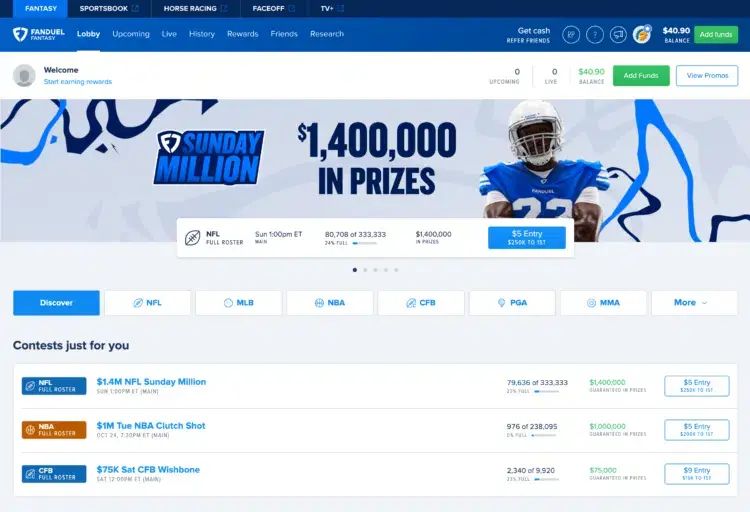
Daily fantasy sports have a presence in Canada, with major international operators offering contests where provincial regulations permit. The legal landscape varies by province, but generally, paid fantasy contests are considered games of skill. Major operators like DraftKings and FanDuel serve the Canadian market, alongside other platforms like Sleeper and PrizePicks. Canadian media company TheScore launched a DFS product called QuickDraft in December 2015, positioning it as a free-to-play service with smaller cash prizes during a period of heightened legal scrutiny in the United States.
A significant new entry into the North American fantasy market in 2026 was bet365 Fantasy Sports. The leading global sportsbook operator, bet365, expanded its free-to-play fantasy offering to the United States and Canada through a partnership with the gaming studio LOW6. Launched ahead of the 2026 FIFA World Cup, the app is available to adults in Canada and the U.S., excluding Washington state. Unlike traditional DFS, the bet365 product incorporates collectible card game (CCG) mechanics, where users acquire, train, and trade virtual player cards to build their squad for player-versus-player (PvP) leagues. This model represents a further evolution of the fantasy sports concept, blending real-world player performance with mobile gaming elements like pack openings and attribute upgrades.
For Canadian users, this adds another option to the fantasy sports scene, particularly for soccer fans. The legal context in Canada includes an opinion from former Alcohol and Gaming Commission of Ontario general counsel Don Bourgeois, who determined in 2015 that DFS would likely be classified as a game of chance under Canadian law, though authorities have not targeted DFS services. Historically, the government has only targeted illegal gambling operations with a presence in the country. Sport Select offers legal sports wagering through Canada's lotteries but is subject to a prohibition on wagering on individual sporting events.
Player Considerations and Responsible Play
For Canadians interested in daily fantasy sports, understanding the specific rules and contest structures is crucial. The classic salary-cap game requires significant research into player matchups, injuries, and salary efficiency to build a competitive lineup. A 2015 study by McKinsey & Company over the first half of the MLB season estimated that 91% of DFS winnings were won by only 1.3% of players, highlighting the advantage of skilled 'sharks'. In contrast, pick'em games simplify the decision to over/under predictions but require knowledge of player form and team contexts. Best ball drafts appeal to those who enjoy the draft process but not the weekly management of a traditional fantasy league. Choosing a platform often depends on which format a player finds most enjoyable and where they believe their sports knowledge provides an edge.
The availability of DFS contests varies by jurisdiction. In the United States, DFS is fully restricted in states like Washington, Idaho, Hawaii, Nevada, and Montana, and faces specific regulations in others. Services have historically blocked residents of these states, though investigations found geoblock restrictions could be circumvented. In Canada, operators must comply with provincial laws. Players should always verify that a platform is legally operating in their province before depositing funds. Most reputable operators use geolocation technology to ensure users are within permitted regions when entering paid contests.
Daily fantasy sports are a form of paid gaming and should be approached with caution. It is intended for adults only. While skill plays a significant role, outcomes are inherently uncertain and linked to the unpredictable nature of live sports. Players should only wager money they can afford to lose and view DFS primarily as a form of entertainment rather than a source of income. Setting deposit limits, taking breaks, and being aware of the signs of problematic play are important aspects of responsible participation. The NCAA considers all paid fantasy games to fall under its prohibition of sports wagering by student athletes. The PGA Tour changed its rules in 2019 to allow players to endorse companies like DraftKings and FanDuel.
Questions about Daily fantasy sports
What is the difference between daily fantasy sports and traditional fantasy sports?
The core difference is the time frame. Traditional fantasy sports involve drafting a team that competes over an entire season, often in a league with friends, requiring weekly management like trades. Daily fantasy sports (DFS) condenses this into short-term contests lasting a single day or week. In DFS, you draft a new lineup for each contest under a salary cap. The results and payouts are determined immediately after the relevant games conclude, offering instant gratification.
What are DFS pick'em games and how do they work?
Pick'em games are a simplified form of daily fantasy sports that have grown popular. Users are presented with statistical projections for individual athletes, such as a quarterback's passing yards. The player simply predicts whether the athlete will exceed (over) or fall short (under) of that line. Users typically combine two or more picks into a single entry. Payouts scale based on the number of correct predictions. Some formats require all picks to be correct, while 'flex' formats offer a smaller payout if one pick is missed.
What happened with the DraftKings and FanDuel insider scandal in 2015?
In October 2015, a scandal erupted following reports that a DraftKings employee had used non-public, internal data to win $350,000 in a contest on FanDuel. This raised concerns that employees could use insider information about player ownership percentages for an unfair advantage. The controversy triggered investigations by state attorneys general, including Eric Schneiderman in New York, and led to multiple class-action lawsuits. In response, both DraftKings and FanDuel permanently banned their employees from playing any public daily fantasy sports for money.
What is bet365 Fantasy Sports and how is it different?
Launched in 2026 ahead of the FIFA World Cup, bet365 Fantasy Sports is a free-to-play mobile app available in the U.S. and Canada. It incorporates collectible card game (CCG) mechanics. Users acquire virtual player cards through pack openings, then train and upgrade those cards to improve their attributes. They build a squad from their collection to compete in player-versus-player (PvP) leagues, where real-world player statistics drive weekly scoring. It is a distinct product from bet365's sportsbook and focuses on long-term team building.
Who are the major daily fantasy sports operators as of 2026?
The market includes several major operators. DraftKings and FanDuel remain giants, offering comprehensive suites including salary-cap DFS and sportsbooks. Underdog Fantasy specializes in pick'em contests and best ball drafts. PrizePicks is the largest standalone DFS operator focused on pick'em games. Sleeper Fantasy is known for its social, chat-integrated platform. Betr offers a mix of micro-betting and pick'em games. Newer entrants like bet365 Fantasy Sports bring collectible card gameplay to the market.
Are daily fantasy sports legal in Canada?
Daily fantasy sports are legally offered in Canada where provincial regulations permit. The regulatory environment varies by province. Major international platforms like DraftKings and FanDuel serve Canadian customers. The legal status often hinges on the classification of DFS as a game of skill, a principle established in several U.S. state rulings. A 2015 legal opinion for the Canadian Gaming Association suggested DFS would likely be classified as a game of chance under Canadian law, but authorities have not targeted operators.
Sources and further reading
- Daily fantasy sports (Wikipedia)
- Best DFS Apps 2026: Daily Fantasy Sports Platforms Reviewed (foxsports.com)
- Daily Fantasy Sports Sites & Apps in the US in 2026 (football365.com)
- Best DFS apps for 2026: Underdog, other top daily fantasy sports sites (cbssports.com)
- FanDuel: Daily Fantasy Football, NBA, NHL, MLB Leagues for Cash (fanduel.com)
- bet365 Fantasy Sports, App Store (apps.apple.com)
- bet365 launches fantasy sports in US and Canada, Gaming Intelligence (gamingintelligence.com)
Checked by the Nosy Mag desk. Last updated 2026-11-11.