Missing and Murdered Indigenous Women
Missing and Murdered Indigenous Women and Girls (MMIWG) refers to the ongoing crisis of violence disproportionately affecting Indigenous women, girls, and Two-Spirit, lesbian, gay, bisexual, transgender, queer, questioning, intersex and asexual (2SLGBTQQIA+) people in Canada and the United States. This human rights issue, rooted in systemic racism, colonialism, and socioeconomic marginalization, has seen Indigenous women face homicide rates up to six times higher than non-Indigenous women in Canada. Grassroots advocacy led to a landmark Canadian national inquiry, which in 2019 concluded the violence constitutes a genocide. The crisis remains a critical national concern, driving continued calls for action, justice, and systemic change to ensure safety and equity for Indigenous peoples.
Scope and scale of the crisis in Canada
The crisis of missing and murdered Indigenous women, girls, and 2SLGBTQQIA+ people represents a severe and disproportionate level of violence with deep historical roots. In Canada, Indigenous women are significantly overrepresented as victims of homicide and disappearances. Between 1980 and 2012, Indigenous women represented 16 percent of all female homicide victims in Canada while constituting only 4 percent of the female population. A 2011 Statistics Canada report estimated that between 1997 and 2000, the homicide rate for Indigenous women was almost seven times higher than for other women. This disparity persists, with data from 2001 to 2015 showing the homicide rate for Indigenous women was almost six times higher than for non-Indigenous women, representing 4.82 per 100,000 population versus 0.82 per 100,000.
The overrepresentation is even more pronounced in specific regions. In Nunavut, Yukon, the Northwest Territories, and the provinces of Alberta, Manitoba, and Saskatchewan, this overrepresentation of Indigenous women among homicide victims has been even higher, in part due to the larger Indigenous populations in these provinces and territories. A 2007 study by the Province of Saskatchewan, the only province to have systematically reviewed its missing persons files for cases involving Indigenous women, found Indigenous women made up 6 percent of the province's population but 60 percent of its missing women cases. While homicides for non-Indigenous women declined between 1980 and 2015, the number of Indigenous women who were victims of homicide increased from 9 percent of all female homicide victims in 1980 to 24 percent in 2015.
Comparative context in the United States and internationally
In the United States, Native American women are more than twice as likely to experience violence than any other demographic. One in three Indigenous women is sexually assaulted during her lifetime, and 67 percent of these assaults are perpetrated by non-Native perpetrators. According to research from the National Institute of Justice, American Indian women are 1.2 times as likely to experience lifetime violence, 1.8 times as likely to be a victim of stalking, and 1.7 times as likely to be victims of violence in the past year compared to the non-Hispanic white population. On some reservations, Native women face murder rates more than ten times the national average, a devastating issue directly linked to domestic violence, sexual assault, and sex trafficking.
The crisis is not confined to North America. First Nations peoples in Australia have reported similar levels of violence and systemic minimization. The extent of the problem in Australia has been difficult to quantify as no agency keeps track of the exact numbers, but available data suggests the murder rate for Indigenous women is at 12 times the national Australian average. An Australian parliamentary inquiry launched in 2022 was criticized for its lack of media coverage and for being closed not even a year after starting. This international pattern underscores the global nature of colonial legacies and systemic failures in protecting Indigenous women.
Root causes and systemic failures
The violence against Indigenous women and girls stems from deep historical and systemic roots identified as social, economic, and political marginalization. The final report of the National Inquiry into MMIWG described the crisis as a Canadian genocide, rooted in the colonial policies and structures of a settler state. Underlying factors include the intergenerational trauma caused by abuses under Canada's residential school system, racism, sexism, and the legacy of imperialism. Factors such as poverty and homelessness contribute to victimization, as does involvement in sex work, often a consequence of marginalization rather than a cause of violence.
Systemic biases within police forces and justice systems have been identified as major contributors. Families and advocates allege that 'thousands of cases' over the last half-century were not properly investigated due to police bias. The case of serial killer Robert Pickton, who murdered 49 women from the Vancouver area, is frequently cited. Families claim Pickton was able to go on killing for so long because police did not take the disappearances seriously as most of the women were sex workers or Indigenous. A CBC investigative report looking into 34 cases where families disagreed with authorities' 'no foul play' findings discovered suspicious circumstances, unexplained bruises, and other factors warranting further investigation.
Key reports, data, and the National Inquiry
Several major reports have attempted to document the scope of the MMIWG crisis in Canada, though data remains incomplete. In 2014, the Royal Canadian Mounted Police (RCMP) released 'Missing and Murdered Aboriginal Women: A National Operational Overview'. It found that 1,181 Indigenous women were killed or went missing between 1980 and 2012, with 225 cases unsolved. Of these, 67 percent were murder victims, 20 percent were missing persons, 4 percent were suspicious deaths, and 9 percent were unknown. A 2015 update reported 106 unsolved homicide cases and 98 unsolved missing cases. This report was controversial for its assertion, cited by then-Minister Bernard Valcourt, that 70 percent of offenders were of Indigenous origin, a statistic advocates said ignored systemic causes.
The most comprehensive examination was the National Inquiry into Missing and Murdered Indigenous Women and Girls, launched by the federal government in September 2016 after intense pressure. Over three years, it gathered more than 1,000 hours of testimony from 2,300 witnesses. Its final report, Reclaiming Power and Place, released in June 2019, contained 231 Calls for Justice directed at all levels of government and society. The report confirmed the violence is rooted in systemic oppression and a colonial genocidal agenda. It identified four key areas of rights: the right to culture, health and wellness, human security, and justice. A significant finding was the lack of a reliable nationwide estimate of missing and murdered individuals, partly due to Canada not having a national missing persons database until 2010.
Grassroots movement, symbols, and awareness
Long before government action, Indigenous families, communities, and activists built a powerful grassroots movement. The hashtag #MMIW was coined in 2012 by Sheila North Wilson while working for the Assembly of Manitoba Chiefs. Visual symbols like the REDress project, started by artist Jaime Black in 2010, have become powerful reminders. Her first dress displayed in a Winnipeg museum led to the creation of Red Dress Day, observed on May 5 in both Canada and the U.S., to call attention to disproportionate violence. The movement raises awareness of the connection between sex trafficking, sexual assault, and the women who go missing and are murdered.
In the United States, activism led to the creation of a National Day of Awareness for Missing and Murdered Indigenous Women and Relatives, also on May 5. This was a direct response to the 2013 murder of Hanna Harris on the Northern Cheyenne Reservation, where an inadequate law enforcement response forced her family to conduct their own search. Their relentless pursuit of justice sparked community-led marches and advocacy efforts for Hanna and countless unresolved cases. Movements continue to organize events like the National Week of Action for Missing and Murdered Indigenous Women and Relatives, which for 2026 was scheduled for May 4 to 8. These efforts focus on honouring victims, supporting families, and demanding concrete action and accountability from governments and institutions.
Government responses, action plans, and legislation
In response to the National Inquiry's Calls for Justice, the Government of Canada developed a coordinated response involving multiple federal departments. The lead department is Crown-Indigenous Relations and Northern Affairs Canada, with partner organizations including Indigenous Services Canada, Public Safety, the Department of Justice, and the RCMP. In June 2021, the federal government released the National Action Plan: Ending Violence Against Indigenous Women, Girls and 2SLGBTQQIA+ People. This horizontal initiative aims to address the underlying social, economic, cultural, and historical causes of violence identified by the inquiry's final report.
Concurrently, Indigenous-led organizations have developed their own frameworks. The Assembly of First Nations (AFN) created a First Nations-led National Action Plan with direct input from survivors and families, outlining immediate areas for action by all governments. In the United States, legislative responses have been critical. The Violence Against Women Act (VAWA) was reauthorized in 2013, giving tribes jurisdiction to investigate and prosecute felony domestic violence offenses involving both Native American and non-Native offenders on reservations. After being stalled in the Senate, a further reauthorization passed in 2022 as part of the Consolidated Appropriations Act. Additionally, in 2021, U.S. Secretary of the Interior Deb Haaland announced the creation of the Missing and Murdered Unit (MMU) within the Bureau of Indian Affairs to improve case coordination.
Ongoing challenges, data gaps, and policing
Significant challenges remain in addressing the MMIWG crisis, with a core issue being the persistent lack of reliable, disaggregated data. The 2019 National Inquiry highlighted there was no reliable nationwide estimate, a situation echoed in the United States where activists state 'we can't fully count what's being ignored.' In Canada, a database compiled for a 2013 PhD thesis identified 824 missing or murdered Indigenous women between 1946 and 2013. The RCMP's National Centre for Missing Persons and Unidentified Remains (NCMPUR), established in 2010, publishes a 'Fast Fact Sheet' but comprehensive national tracking remains difficult. The Forensic Document Review Project for the National Inquiry found the earlier RCMP reports had 'narrow and incomplete' causes for homicides.
Systemic change within policing is a major hurdle. While the RCMP developed a new 'Hate Crimes and Incidents for Frontline Police Officers' course in 2024, deep-seated biases persist. In jurisdictions like Winnipeg, police reported over 60 percent of missing persons cases in 2022 involved Indigenous women or girls. Implementing the 231 Calls for Justice requires sustained political will and adequate funding, with many horizontal initiative activities having ended. The path forward, as outlined by Indigenous leaders, centres on self-determination, empowering Indigenous communities to deliver culturally safe services, and upholding inherent rights to culture, health, security, and justice as defined in the inquiry's report.
Notable cases and continued advocacy
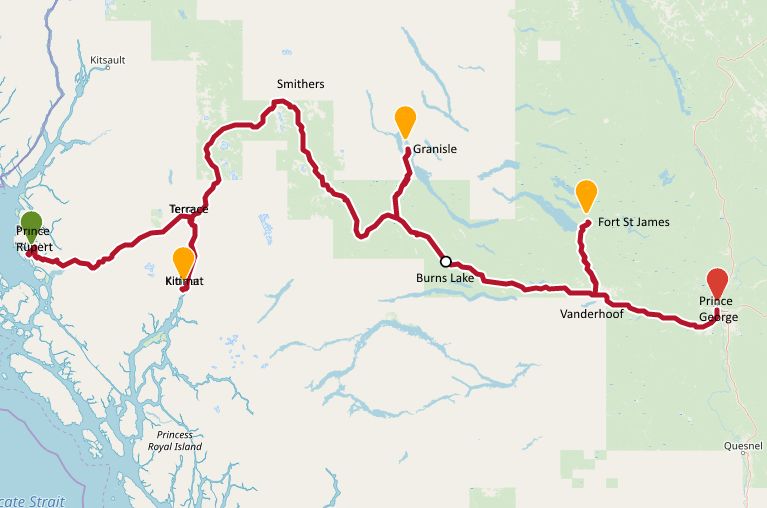
Specific cases have become symbols of the broader crisis and systemic failures. In Canada, these include the 19 women killed in the Highway of Tears murders along Highway 16 in British Columbia, the victims of the unidentified 'Killing Fields' killer in Edmonton, and the 49 women from the Vancouver area murdered by serial killer Robert Pickton. These cases exemplify the patterns of violence and the alleged indifference from authorities that families have fought against for decades. The RCMP established its NCMPUR unit in 2010 partly in response to investigations into murdered and missing Indigenous women, particularly related to the Highway of Tears.
Advocacy continues through organizations like the Native Women's Association of Canada (NWAC), which had documented 582 cases since the 1960s by 2014, with 39 percent occurring after 2000. The Assembly of First Nations continues to host events like its 2024 Virtual Speaker Series for First Nations Women in Leadership to empower community leaders. The work is guided by the principle that raising public awareness alone is not enough, as action and accountability are necessary to address the crisis. Continued demands exist for governments to implement the Calls for Justice, improve data collection, support families, and fundamentally change the systems that have failed Indigenous women, girls, and 2SLGBTQQIA+ people for generations.
Questions about Missing and Murdered Indigenous Women
How does the Violence Against Women Act (VAWA) address MMIWG in the U.S.?
The Violence Against Women Act is a U.S. federal law that has been reauthorized several times. The 2013 reauthorization was significant as it, for the first time, recognized tribes' authority to prosecute non-Native offenders for certain domestic violence crimes occurring on reservations. This was expanded in the 2022 reauthorization. These provisions aim to close jurisdictional gaps that often left Indigenous women unprotected and perpetrators unprosecuted, though limitations and implementation challenges remain.
What is being done now to address the crisis?
Current efforts include implementing the National Inquiry's Calls for Justice through federal and Indigenous-led action plans, such as the Assembly of First Nations' First Nations Action Plan. Governments are funding community-based safety projects, improving data collection, and providing support services for families. Grassroots organizations continue advocacy and awareness campaigns. However, advocates stress that lasting solutions require addressing root causes like poverty, housing, and systemic racism within policing and child welfare systems.
What was the National Inquiry into Missing and Murdered Indigenous Women and Girls?
The Government of Canada established the National Inquiry into Missing and Murdered Indigenous Women and Girls in September 2016. It gathered over 1,000 hours of testimony from 2,300 witnesses over three years. The inquiry's final report was presented to the public on June 3, 2019. It confirmed that the violence is rooted in systemic oppression and a colonial genocidal agenda.
Sources: Wikipedia and current public reporting, checked by the Nosy Mag desk. Last updated 2026-10-21.