London Neurosurgeons Perform World's First AI-Assisted Brain Tumor Surgery in Breakthrough Procedure
A UK hospital has successfully completed the first-ever operation to remove a brain tumour using real-time AI assistance, restoring a patient's vision in a landmark clinical trial.
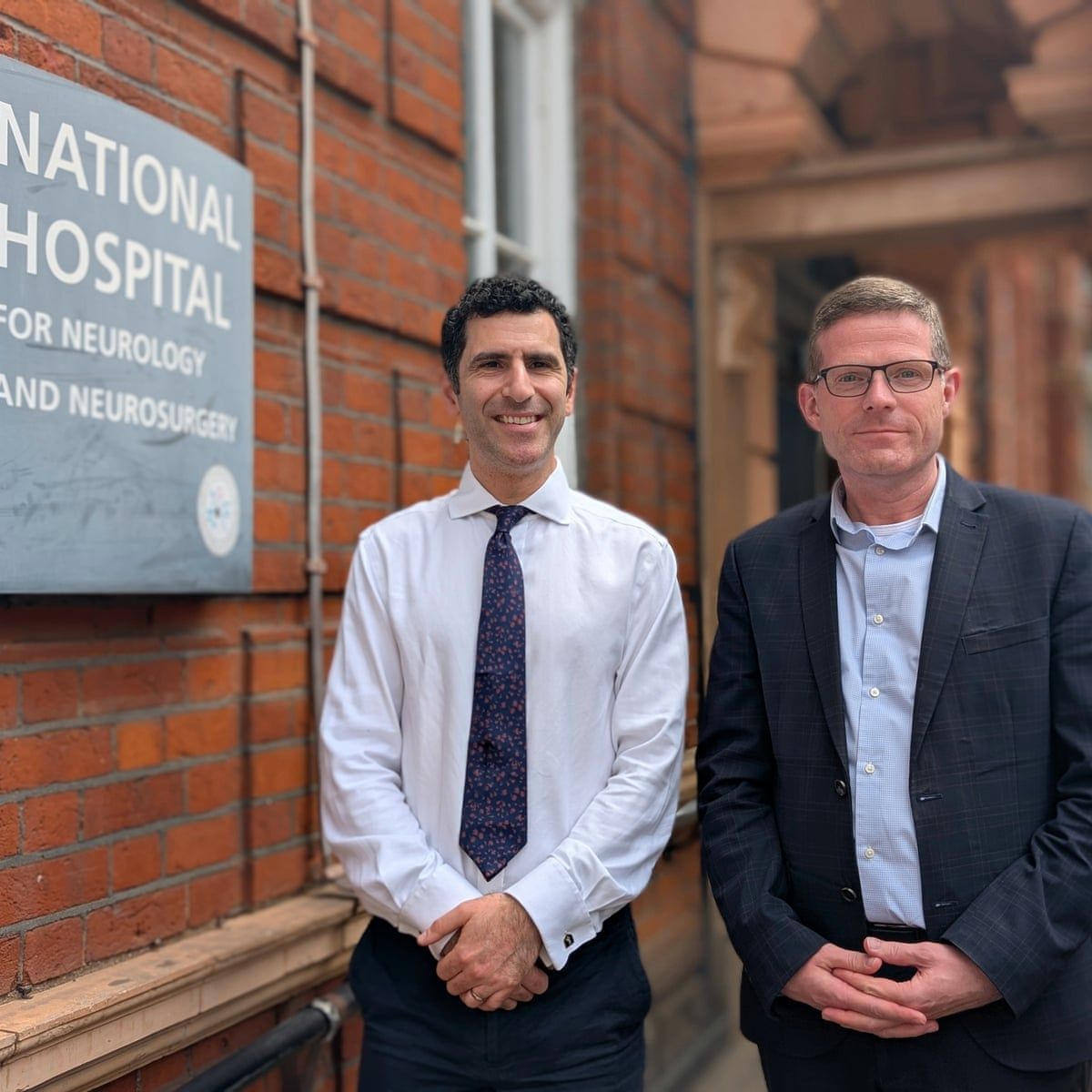
Neurosurgeons at London's National Hospital for Neurology and Neurosurgery have made medical history by performing the world's first brain tumour removal operation with real-time artificial intelligence assistance. The groundbreaking procedure, conducted as part of a clinical trial through the University College London Hospital's NHS Foundation Trust, successfully restored the eyesight of 48-year-old Rhys Hibbert while demonstrating AI's potential to revolutionize delicate neurosurgical interventions that were previously fraught with life-altering risks.
A Precision Breakthrough in High-Risk Surgery
The operation focused on removing a tumour near Hibbert's pituitary gland, a marble-sized structure at the brain's base that is surrounded by tightly packed blood vessels and nerves controlling vision. Hospital officials emphasized the extreme precision required, noting that even a one-millimeter surgical error could have caused blindness, stroke, or death due to the vulnerable anatomy involved. The AI system developed by the UCL Hawkes Institute analyzed live surgical footage in real time to identify hazardous areas and helped surgeons maximize tumour removal while minimizing risks to surrounding critical structures.
Consultant neurosurgeon Hani Marcus, who.int/" target="_blank" rel="noopener">who also serves as a professor of neurosurgery at the UCL Queen Square Institute of Neurology, led the procedure alongside lead surgical resident Danyal Khan. The team maintained full control throughout the operation while benefiting from the AI's continuous analysis of the surgical field. Unlike pre-programmed surgical robots or static imaging guidance, this system provided dynamic, real-time risk assessment that adapted to the evolving conditions during the procedure.
The Patient's Journey and Historic Role
Rhys Hibbert, a customer service manager and community volunteer from the outskirts of London, became the first patient to undergo this experimental procedure after his tumour was found to be progressively threatening his vision. Following his full recovery, Hibbert expressed both pride in contributing to medical advancement and reverence for the institution's legacy, noting the hospital's founding in 1859 as the world's first dedicated neurosurgical hospital.
"To me, it seems very fitting that the same hospital should also be the world's first to carry out an AI‑assisted neurosurgery," Hibbert told the foundation. "I'm also very humbled to have been asked if I'll be prepared to be the world's first patient in this research."
Hibbert's case was particularly significant because without surgical intervention, his tumour would have continued growing and likely caused complete blindness. The successful operation not only removed the tumour but preserved his vision, demonstrating the life-changing potential of this technological advancement.
How the AI Surgical Assistant Works
The proprietary AI system processed live video from the operating theatre to highlight anatomical structures and potential hazards around the tumour with greater precision than human perception alone could achieve. While surgeons relied on their extensive training and experience, the AI provided continuous computational analysis of the surgical field, alerting the team to critical structures at the base of the brain near the tumour.
This real-time analysis capability represents a significant advancement over traditional surgical navigation systems that rely on pre-operative imaging. The technology accounts for subtle tissue movements and instrument interactions during the procedure itself. Developers note the system has additional potential to track surgical instruments and their interactions with brain matter automatically, which could be incorporated in future iterations.
Government Backing for Medical AI Innovation
UK Health Innovation Minister James Frith praised the operation as exemplifying Britain's strategic push to integrate AI safely into healthcare while maintaining rigorous patient safety standards. The government-funded trial forms part of broader NHS modernization efforts to adopt technologies that improve outcomes and efficiency across the healthcare system.
"This is an example of AI at its best: patients getting care previously deemed unimaginable thanks to the latest groundbreaking technology," Frith stated. He added, "AI needs proper safeguards and we will always ensure that safety is taken seriously. But we will also ensure we benefit from the opportunities it brings to deliver faster and more effective care."
The minister emphasized that this approach represents the government's vision for building an NHS that is fit for the future, combining innovative technology with unwavering commitment to patient safety.
The Hospital's Legacy of Neurosurgical Firsts
The National Hospital for Neurology and Neurosurgery holds particular historical significance as the world's first dedicated neurosurgical hospital when founded in 1859. Its Queen Square location has remained a global hub for neurological research and treatment of complex cases for over 160 years. Hospital leaders framed this AI milestone as continuing their tradition of advancing brain surgery techniques that later become standard practice worldwide.
Professor Marcus highlighted how AI assistance could make similarly delicate procedures safer and more accessible at medical centers worldwide. The team plans to refine the technology through further clinical trials to establish its efficacy and safety profile before potential broader deployment across neurosurgical practice.
Broader Implications for Surgical Innovation
This successful first human trial demonstrates AI's capacity to enhance rather than replace surgical expertise in scenarios where split-second decisions carry life-altering consequences. For patients with hard-to-reach brain tumours, such technology could mean the difference between losing or preserving critical functions like vision, speech, or mobility.
The ethical framework surrounding this development proves equally significant to its technical achievements. By maintaining surgeon control while providing augmented decision support, the model addresses concerns about autonomous systems making critical medical decisions without human oversight. This balanced approach could serve as a template for future AI implementations in high-stakes medical environments.
The Future of AI in Neurosurgery
As healthcare systems worldwide face increasing demands with limited resources, carefully implemented AI assistance like this London breakthrough could help expand access to complex surgeries without compromising safety standards. The technology's potential to reduce surgical risks while improving outcomes may make delicate procedures feasible for patients who would otherwise be deemed inoperable.
This achievement may ultimately influence standards for next-generation surgical tools far beyond neurosurgery, setting benchmarks for human-AI collaboration in operating rooms globally. Rhys Hibbert's full recovery offers compelling evidence that such innovations, developed responsibly with patient safety as the paramount concern, can fulfill medicine's oldest imperative: first, do no harm while pushing the boundaries of what's medically possible.