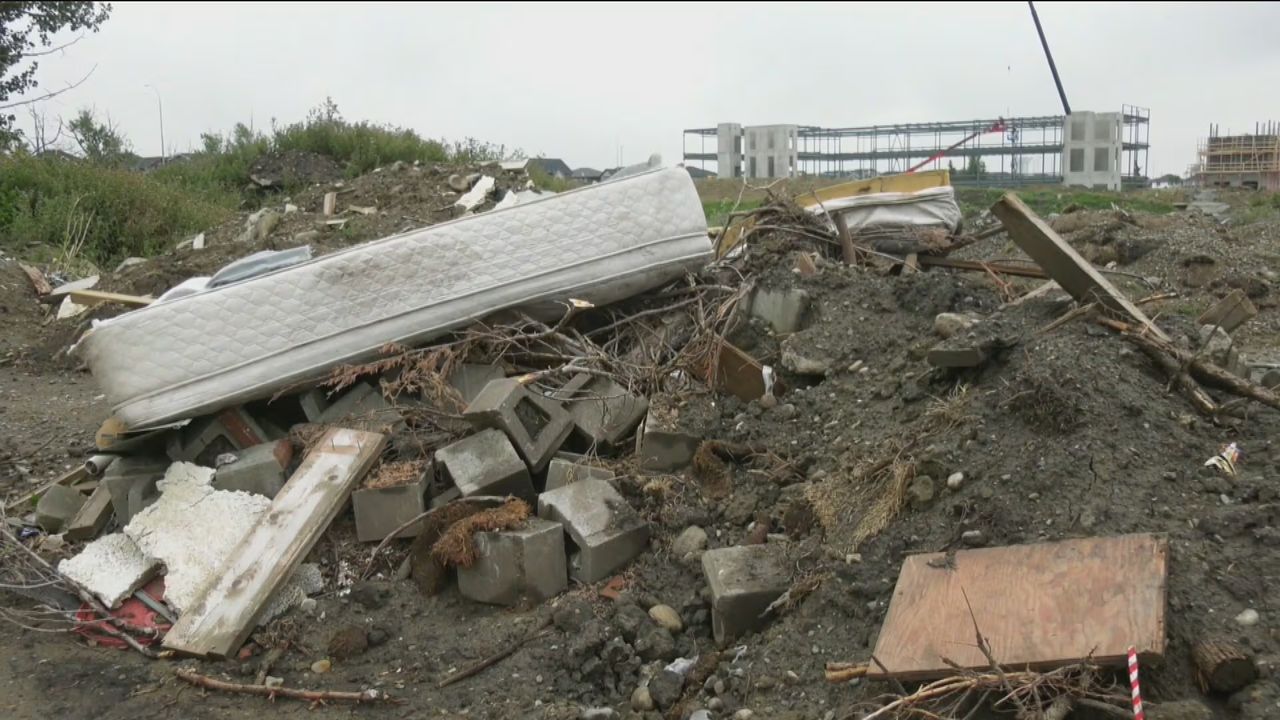
Alberta to increase fines, jail time for illegal dumping
The province will introduce legislation this fall to double maximum fines and allow for jail sentences.
EDMONTON — The Alberta government will introduce legislation this fall to significantly increase penalties for illegal garbage dumping, including fines of up to $1 million for corporations and possible jail time.
Premier Danielle Smith announced the planned changes on Wednesday, saying illegal dumping is a growing problem across the province.
"Far too often irresponsible people are dumping their trash on our roadsides, public lands and in rural communities, leaving farmers and municipalities and taxpayers to clean up the mess," she said. "Albertans expect better than that."
READ MORE: Most Alberta doctors would leave province if it separates from Canada, survey finds
READ MORE: Permanent daylight time creates late starts for NHL teams in Western Canada
The proposed amendments to the Environmental Protection and Enhancement Act would establish fines ranging from $10,000 to $100,000 for individuals and from $100,000 to $1 million for corporations. The province says current maximum fines are $50,000 for individuals and $500,000 for corporations.
Courts could also impose jail terms ranging from a minimum of 30 days to six months for individuals in certain circumstances.
Smith said last year in Calgary alone, there were about 30,000 complaints and nearly 9,000 service requests related to illegal dumping on municipal property, but the city issued just 165 tickets and three fines.
In Edmonton, the city logged more than 600 complaints over five years about dumping on private property, issuing 240 tickets.
"Something is clearly going on here," Smith said. "By being more involved in this, we’re going to be monitoring these numbers."
Municipal Affairs Minister Dan Williams said the changes are meant to address what he said "has become a common problem throughout Alberta."
"I'll be blunt: we see many times people come, often from outside of our rural municipalities, looking for somewhere to dump waste, thinking that no one lives there," he said. "Well, we live there. Rural Albertans do. And we have had enough."
Public Safety Minister Mike Ellis said he has made the issue a priority for peace officers across the province.
New oversight for waste facilities
The legislation would also bring more provincial oversight to waste transfer and storage facilities that represent a higher risk of becoming a nuisance or causing problems if managed poorly.
Environment and Protected Areas Minister Grant Hunter said sites established to store, handle or transfer non-hazardous waste currently only have to notify his department, with no minimum design standards or approval steps.
Under the proposed two-tier system, higher-risk facilities handling larger volumes of waste or storing it for longer periods would have to obtain provincial registration and meet additional operating requirements.
The province expects about 150 of Alberta's 684 waste transfer and storage sites would face the new registration requirements. Lower-risk facilities would remain under the existing notification process.
Hunter said the announcement was not specifically in response to a recent waste-site fire in southeast Calgary, but the province wants more tools to monitor stored material to prevent situations where a fire becomes difficult to extinguish.
Smith said cleaning up after illegal dumping can cost a municipality hundreds of thousands of dollars each year, with the cost ultimately passed on to residents.
"Just think about what it means to trespass onto private property and leave garbage on someone else’s farm," she said. "That’s someone’s livelihood. It’s someone family legacy."
The government is also examining whether barriers to legal waste disposal, such as fees or restrictions, may be contributing to illegal dumping. Hunter has been asked to work with landfills to examine these issues.
An Alberta-wide advertising campaign is planned for the fall. The legislation would require approval by the legislature, which is set to reconvene on Oct. 27.
With files from CBC News, Global News and CityNews