Komagata Maru incident
The Komagata Maru incident was a 1914 immigration dispute in which 376 passengers, primarily Sikhs from British India, were denied entry to Canada while aboard a Japanese steamship in Vancouver's harbour. The event exposed Canada's racially discriminatory immigration policies of the early twentieth century, particularly the 'continuous journey' regulation designed to exclude Indian immigrants. After a two-month standoff, the ship was forced to depart under naval escort, leading to tragedy upon its return to India where British police killed 20 passengers. The incident remains a profound symbol of historic injustice for Canada's South Asian community and a catalyst for ongoing commemoration and apology.
Background of Discriminatory Immigration Laws
The primary tool used to exclude immigrants from India was the 'continuous journey' regulation, enacted by an order in council on 8 January 1908. This rule prohibited the immigration of anyone who did not travel to Canada by a continuous journey from their country of birth or citizenship. Since the Canadian government pressured shipping companies to avoid selling direct tickets from India, the regulation effectively barred all Indian immigrants. This policy was implemented amidst rising anti-Asian sentiment, which had previously erupted in the Vancouver riots of 1907. The Canadian government's goal was to maintain a 'white Canada' policy while still being part of the British Empire, which included India and millions of British subjects. These restrictions were part of a broader pattern of immigration controls targeting various groups during a period of significant migration to Canada from the United States and Europe.
Organizing the Voyage and Charter
Gurdit Singh, a Punjabi businessman based in Singapore and Malaysia, chartered the Japanese steamship Komagata Maru in March 1914 with the explicit goal of challenging Canada's exclusionary laws. He was aware that the continuous journey regulation was preventing Punjabis from immigrating. After signing the charter in Hong Kong, Gurdit Singh was briefly arrested on 25 March 1914, but the police found they had no case against him. Delays were caused by Francis Henry May, the Governor of Hong Kong, before the ship could finally depart. The Komagata Maru left Hong Kong on 4 April 1914 with 165 passengers on board. The ship then made planned stops to pick up more passengers, arriving in Shanghai on 8 April and at the Japanese ports of Moji on 19 April and Yokohama. At Moji, it took on coal and 86 additional passengers, and in Yokohama, it picked up another 14 passengers, including Ghadarite leaders Maulvi Barkatullah and Bhagwan Singh Gyanee. While the ship sailed from Moji to Yokohama, Gurdit Singh traveled ahead by train to Kobe to negotiate charter payments, rejoining the vessel later. The ship left Yokohama on 3 May 1914 with its full complement of 376 passengers.
Arrival and Immediate Confrontation in Vancouver
The Komagata Maru arrived at Vancouver's Burrard Inlet on 23 May 1914. Canadian authorities, including Prime Minister Robert Borden, Conservative MP H. H. Stevens, and immigration official Malcolm R.J. Reid, immediately prohibited the ship from docking. They kept it offshore, cut off its communications, and deliberately stalled the immigration examination process. The strategy was to force the charter to default due to a lack of funds, thereby compelling the ship to leave without a legal fight. The passengers were all British subjects and were challenging the continuous passage regulation and other restrictive measures designed to curb South Asian immigration. Only twenty returning residents, the ship's doctor, and his family were eventually granted admission to Canada during the entire ordeal. The standoff created a tense and highly publicized situation in Vancouver harbour, drawing attention from the local community and international observers.
The Shore Committee's Mobilization and Legal Fight
The local South Asian community in Vancouver quickly mobilized to support the passengers, forming a 'Shore Committee' led by figures like Husain Rahim, Bhag Singh Bhikiwind, Mitt Singh Pandori, Balwant Singh Khurdpur, and Muhammad Akbar. This committee successfully raised a substantial sum, reported as $20,000, to take over the ship's charter and prevent its immediate departure due to financial failure. They also hired lawyer J. Edward Bird to challenge the immigration orders in court. On 29 and 30 June 1914, Bird pushed for a test case by filing a habeas corpus application on behalf of passenger Munshi Singh. The British Columbia Court of Appeal heard the case and, on 6 July 1914, delivered a unanimous ruling against the passengers. The court upheld the continuous journey regulation, definitively denying the Komagata Maru passengers the right to land in Canada. This legal defeat closed the primary avenue for the passengers to gain entry through the Canadian judicial system.
Escalation, Naval Threat, and Forced Departure
Following the court's decision, Canadian authorities escalated pressure on the ship by withholding food and water to force its departure. On 19 July, an armed police force of 150 men aboard the harbour tug Sea Lion attempted to board and seize control of the Komagata Maru. The passengers repelled the boarding party by showering them with coal, fire bricks, and scrap metal. In response, Prime Minister Robert Borden ordered the naval cruiser HMCS Rainbow to Vancouver to, in his words, enforce the law firmly and effectively. Under the threat of naval bombardment, the federal Minister of Agriculture, Martin Burrell, arrived in Vancouver to negotiate a peaceful resolution. The Canadian government agreed to provision the ship for its return voyage, and the Shore Committee allowed the captain to retake control. The Komagata Maru departed Vancouver on 23 July 1914, with only 24 passengers having been allowed to disembark in Canada. The use of military force to expel a civilian ship marked a severe escalation in Canada's enforcement of its immigration policies.
Deadly Return to India and Aftermath
Due to the outbreak of the First World War, British officials, suspecting the passengers of harbouring anti-colonial intent, barred the ship from stopping in Hong Kong and Singapore. It was forced to sail directly to India, arriving at the mouth of the Hooghly River near Calcutta on 26 September 1914. Three days later, the ship was forced to anchor at Budge Budge, where British authorities attempted to force the passengers onto a special train bound for Punjab. The passengers refused to board out of suspicion and instead began a march toward Calcutta. Armed police intercepted them, and after an altercation involving a police superintendent, troops opened fire into the crowd, killing 20 passengers. Others were severely injured or jailed. Gurdit Singh escaped but later surrendered on the advice of Mahatma Gandhi, who urged him to give himself up as a true patriot. Upon surrendering, Gurdit Singh was imprisoned for five years. This violent conclusion transformed the incident from an immigration dispute into a lethal episode of colonial repression.
Violent Repercussions and the Ghadar Connection
The incident had violent repercussions within Vancouver's South Asian community, which was deeply divided by the event and the actions of informants. William C. Hopkinson, a British immigration official, had relied on informants within the community for intelligence on the passengers and their supporters. In August 1914, two of these informants were murdered. Then, on 15 September 1914, informant Bela Singh murdered two Sikhs inside the Vancouver gurdwara. Hopkinson threatened a witness, Mewa Singh, to testify in Bela Singh's favour. Mewa Singh testified against Bela Singh instead. On 21 October 1914, Mewa Singh shot and killed Hopkinson inside the Vancouver courthouse before Hopkinson could testify in Bela Singh's defence. Mewa Singh surrendered, was convicted of murder, and was hanged on 11 January 1915. He is considered a martyr in many South Asian Canadian communities. The Komagata Maru affair also intensified surveillance of Indian activists linked to the transnational Ghadar Movement. The Yugantar Ashram in San Francisco, a centre of Ghadar activity, had telegraphed support to Gurdit Singh during the standoff. Canadian officials intercepted this message and regarded it as evidence of sedition and conspiracy, linking the immigration challenge to broader anti-colonial politics.
Commemoration and Memorials in Canada
The legacy of the Komagata Maru has been actively preserved through decades of community advocacy and public remembrance. Early commemorations included a plaque placed in a Vancouver gurdwara on 23 July 1989 for the 75th anniversary, and another in Portal Park. An 80th-anniversary plaque was placed in Vancouver Harbour in 1994. A monument was unveiled near the Vancouver Convention Centre in July 2012, and the first phase of the Komagata Maru Museum opened at the Ross Street Temple in June 2012. Canada Post issued a commemorative stamp on 1 May 2014 for the centennial. In recent years, Raj Singh Toor, spokesperson for the Descendants of the Komagata Maru Society and a grandson of passenger Baba Puran Singh Janetpura, has been instrumental in securing numerous local recognitions. His advocacy has led to street renamings, such as Komagata Maru Way in Surrey in July 2019 and in Abbotsford in July 2023. He has also secured the installation of heritage storyboards in parks across Metro Vancouver municipalities like Delta, New Westminster, Port Moody, and Richmond between 2020 and 2023. A significant achievement was the co-naming of Canada Place in downtown Vancouver to Komagata Maru Place in February 2024. Furthermore, due to lobbying efforts, 23 May is recognized as Komagata Maru Remembrance Day by the province of British Columbia and many of its cities, including Vancouver, Surrey, and Burnaby.
Governmental Apologies and Political Recognition
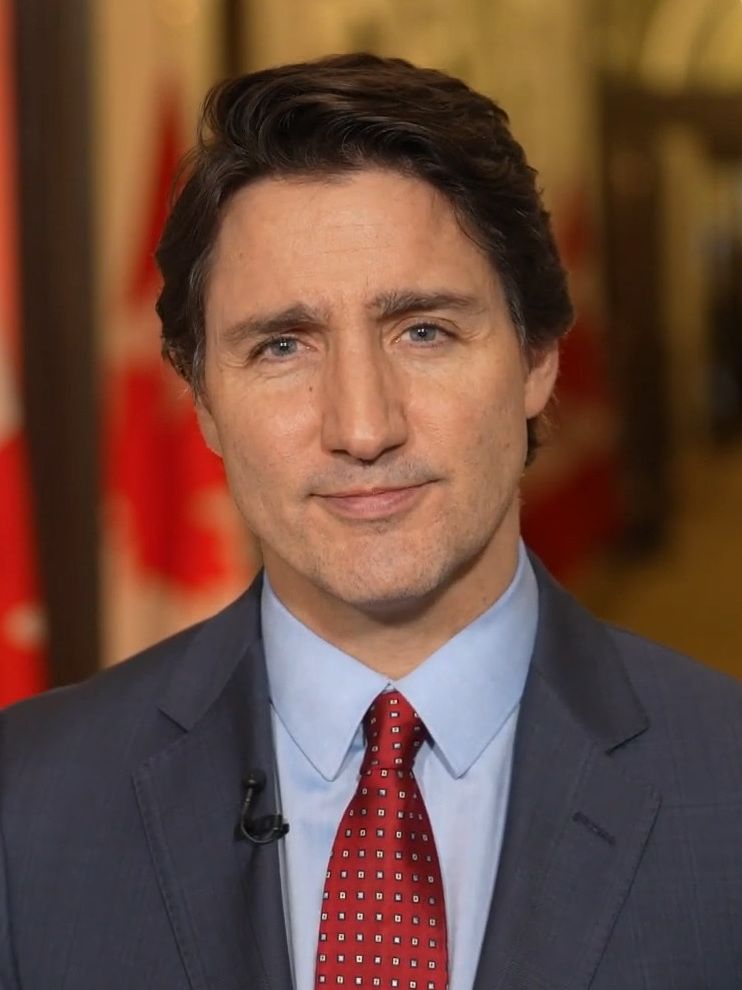
Formal apologies for the incident came after sustained community pressure. In 2006, the Conservative government created the Community Historical Recognition Program to fund projects linked to past immigration restrictions. On 23 May 2008, the Legislative Assembly of British Columbia unanimously passed a resolution apologizing for the events of 23 May 1914. Later that year, on 3 August, Prime Minister Stephen Harper issued an apology at the Ghadri Babiyan da Mela festival in Surrey, British Columbia. However, many in the community, including the Professor Mohan Singh Memorial Foundation, insisted a formal apology in Parliament was necessary and were dissatisfied with Harper's statement. The foundation worked with the government of Justin Trudeau to make this a reality. Trudeau had promised an apology in the House of Commons before being elected, and he fulfilled this on 18 May 2016, delivering a full official apology. In his speech, Trudeau stated the tragedy was one of the darkest chapters in Canadian history and honoured the memory of the passengers and their descendants. The apology was entered into Hansard, the official parliamentary record, fulfilling a key demand of advocates who wanted a permanent public record. Trudeau also specifically acknowledged the lobbying work of the Professor Mohan Singh Memorial Foundation and The Descendants of the Komagata Maru Society in his address.
Legacy in India and Enduring Historical Significance
In India, the Komagata Maru is remembered as an episode of colonial oppression. The Indian government erected a memorial to the Komagata Maru martyrs at Budge Budge near Kolkata in 1952, inaugurated by Prime Minister Jawaharlal Nehru. The monument is shaped like a kirpan, a Sikh dagger, and is locally known as the Punjabi Monument. A tripartite agreement was later signed for the construction of a three-storey building behind the memorial to house a museum and auditorium, with an estimated cost of 24 million rupees as of 2015. In 2014, the Indian government issued two commemorative coins, a five rupee and a one hundred rupee coin, to mark the centennial anniversary. Historically, the incident is a stark example of how British imperial subjects were treated differently based on race. It underscores the transnational nature of early 20th century anti-Asian immigration policies, which influenced similar restrictions like the United States' Asiatic Barred Zone Act of 1917. The incident also played a role in the 1917 to 1918 'Hindu conspiracy' trial in the United States. For Canada, the Komagata Maru remains a critical lesson about the consequences of state-sanctioned racism and a continual reference point for discussions on immigration, justice, and the meaning of multiculturalism.
Questions about Komagata Maru incident
What was the Komagata Maru incident?
The Komagata Maru incident was a 1914 event where 376 passengers, mostly Sikhs from British India, were denied entry to Canada upon arriving in Vancouver aboard a chartered Japanese steamship. Canadian authorities used the 'continuous journey' regulation to block their landing. After a two-month standoff where the ship was kept offshore, it was forced to return to India under naval escort. Upon arrival in Budge Budge, British Indian police opened fire, killing 20 passengers. It is a defining example of Canada's historically discriminatory immigration policies.
Why were the passengers not allowed into Canada?
The passengers were barred under the 'continuous journey' regulation, an order in council from 1908 that required immigrants to travel directly from their country of origin. The Canadian government pressured shipping companies not to sell direct tickets from India to Canada, making compliance impossible for Indian immigrants. The passengers, though British subjects, were considered undesirable by officials aiming to maintain a 'white Canada' policy. Immigration officials, with support from Prime Minister Robert Borden, also suspected some passengers had links to Indian revolutionaries.
How many people died because of the Komagata Maru incident?
Twenty passengers were killed by gunfire from British Indian police on 29 September 1914, when the ship returned to Budge Budge, near Calcutta. The violence erupted after authorities tried to arrest the group's leaders and the passengers refused to board a train to Punjab. No deaths occurred in Canadian waters, though the prolonged detention on the ship under harsh conditions with limited food and water caused significant suffering. The aftermath also included murders of informants and the killing of immigration official William Hopkinson in Vancouver.
Has the Canadian government apologized for the incident?
Yes, there have been multiple apologies. The Legislative Assembly of British Columbia apologized in a unanimous resolution on 23 May 2008. Prime Minister Stephen Harper made a statement of apology at a festival in Surrey, BC, in August 2008. A formal, full apology was finally delivered in the House of Commons by Prime Minister Justin Trudeau on 18 May 2016, which was recorded in the official parliamentary record Hansard as requested by community advocates. Trudeau specifically acknowledged the work of the Professor Mohan Singh Memorial Foundation and The Descendants of the Komagata Maru Society.
How is the Komagata Maru remembered today in Canada?
The incident is commemorated through monuments, plaques, museum exhibits, and educational initiatives. Significant recent recognitions include the co-naming of Canada Place to Komagata Maru Place in Vancouver in February 2024 and the establishment of Komagata Maru Remembrance Day on 23 May in British Columbia and many of its cities. Community advocates like Raj Singh Toor have successfully pushed for heritage storyboards and street renamings in numerous Metro Vancouver municipalities including Surrey, Abbotsford, New Westminster, and Port Moody. The Komagata Maru Museum at the Ross Street Temple in Vancouver also preserves its history.
What was the Ghadar Movement's connection to the incident?
The Ghadar Movement, an anti-colonial organization formed by Indian immigrants in North America, was connected to the incident. Its centre in San Francisco, the Yugantar Ashram, sent a telegram of support to Gurdit Singh during the Vancouver standoff. Canadian officials intercepted this message and regarded it as evidence of sedition and conspiracy. The perception of the passengers as radicals linked to Ghadar influenced both Canadian and British responses. Furthermore, the incident and associated activism contributed to broader immigration restrictions like the United States' Asiatic Barred Zone Act of 1917.
Sources: Wikipedia and current public reporting, checked by the Nosy Mag desk. Last updated 2026-10-20.