Zynga
Zynga Inc. is an American video game developer and publisher, now operating as a label under Take-Two Interactive, specializing in social and mobile games. Founded in April 2007, the company is best known for pioneering social gaming on Facebook with titles like FarmVille and Zynga Poker before successfully transitioning to a mobile-first portfolio. For Canadian players, Zynga's free-to-play games such as Words With Friends, CSR Racing 2, and its social casino slots are widely accessible on mobile devices, connecting millions across the country. The company's acquisition by Take-Two Interactive in 2022 for $12.7 billion solidified its position as a major force in the interactive entertainment industry, with a continued focus on live service games that are played by a significant portion of the global population every month.
Founding and Early Social Gaming Dominance
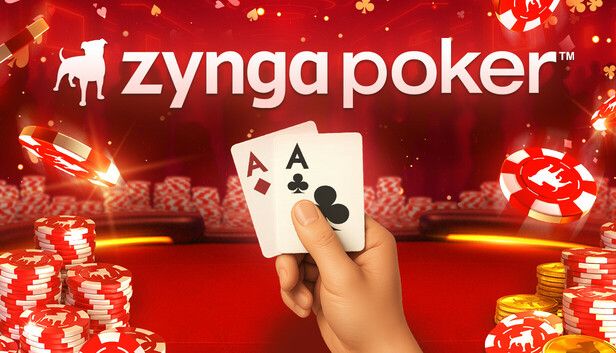
Zynga was founded in April 2007 by Mark Pincus along with Eric Schiermeyer, Justin Waldron, Michael Luxton, Steve Schoettler, and Andrew Trader, initially under the name Presidio Media. The company was renamed Zynga in July 2007, taking its name from Pincus's American bulldog, Zinga. Its first game, Texas Hold 'Em Poker, now known as Zynga Poker, launched on Facebook that same month and was the first game introduced on the social networking platform. Zynga rapidly grew to become the Facebook app developer with the most monthly active users by April 2009, with 40 million people playing its games. The company's breakthrough came in June 2009 with the launch of FarmVille, developed by the acquired studio MyMiniLife, which reached ten million daily active users within six weeks. By February 2010, FarmVille had amassed over 80 million players, and in December 2010, its game CityVille surpassed FarmVille as its most popular title with over 61 million monthly active users.
The company's early business model relied heavily on the Facebook platform, and at one point in 2011, Zynga accounted for 19 percent of Facebook's revenue. This relationship was formalized in a five-year agreement in May 2010 to expand the use of Facebook Credits in Zynga's games. Zynga's initial funding rounds were substantial, raising a total of $854 million in its first four years, including a $490 million round in February 2011. The company filed for an initial public offering in July 2011 to raise up to $1 billion and began trading on the NASDAQ on December 16, 2011, under the ticker ZNGA. At the time of its IPO, Zynga employed approximately 2,000 people and was valued as a dominant force in the emerging social gaming sector.

Transition, Challenges, and Shift to Mobile
Following its public offering, Zynga faced significant challenges as user preferences began shifting away from Facebook-based web games toward mobile platforms. The company announced major layoffs of 520 employees in June 2013, closing offices in New York, Los Angeles, and Dallas. By July 2013, Zynga had reportedly lost nearly half its user base from the previous year, leading to a $400 million decrease in its valuation. A key strategic shift occurred in July 2013 when the company hired Don Mattrick, former president of Microsoft's Interactive Entertainment division, as its new CEO, with Pincus moving to chairman and chief product officer. Further layoffs of 314 workers followed in January 2014, and daily active users fell from 53 million to 28 million year-over-year in the first quarter of 2014.
During this period, Zynga also pivoted away from earlier plans for real-money gaming, announcing in July 2013 it would not pursue that market in the United States, causing its shares to drop 13 percent. The company focused instead on strengthening its mobile portfolio and corporate structure. Don Mattrick left in April 2015, and Mark Pincus returned as CEO before Frank Gibeau, former head of mobile for Electronic Arts, took over as CEO in March 2016. Under Gibeau's leadership, Zynga intensified its focus on mobile gaming and live operations, leading to a recovery. By the fourth quarter of 2017, revenue was $233.3 million, a 22 percent increase from the same quarter in 2016, marking the company's best quarterly performance in five years. As of January 2018, Zynga had 1,681 employees, approximately 80 million monthly active users, and a market capitalization of $3.39 billion.
Acquisition by Take-Two Interactive and Current Structure
On January 10, 2022, Take-Two Interactive announced its intention to acquire Zynga in a cash-and-stock deal valued at $12.7 billion, offering $9.86 per share for all outstanding Zynga stock. Shareholders of both companies approved the merger on May 19, 2022, and the transaction closed on May 23, 2022, making Zynga a wholly-owned label under Take-Two. This acquisition was one of the largest in video game industry history. In June 2023, during the FTC v. Microsoft trial, Microsoft Gaming CEO Phil Spencer disclosed that Microsoft had also considered purchasing Zynga prior to the Take-Two deal. As a subsidiary, Zynga now operates similarly to other Take-Two labels like Rockstar Games and 2K, providing the parent company with a major foothold in the mobile gaming market.
Following the acquisition, Zynga's headquarters were relocated to San Mateo, California, at 1200 Park Place. The company continues to be led by President Frank Gibeau and Chief Product Officer Scott Koenigsberg. Zynga's integration into Take-Two has provided it with greater resources while it maintains its focus on developing and operating live service mobile games. The company's teams span North America, Europe, and Asia, working to craft and sustain its portfolio of popular titles.
Business Model and Game Portfolio
Zynga employs a free-to-play business model, generating revenue through the sale of in-game virtual goods, direct credit card payments, in-game advertising, and banner advertising on its game portals. Historically, it also used partner offers where players could complete surveys or accept credit card offers to obtain game credits. The company launched a pre-paid card program for virtual currency in the United States in March 2010. A key aspect of its strategy is live operations, or LiveOps, which involves constant updates, events, and seasonal campaigns to maintain player engagement and monetization over many years. Zynga's portfolio has been downloaded over 2 billion times worldwide and has generated $7.6 billion in lifetime revenue.
Zynga's game portfolio is diverse, spanning multiple genres and including both original intellectual property and licensed titles. Its most successful and enduring games have become staples in mobile gaming. As of 2017, Zynga's most successful games were Zynga Poker and Words with Friends 2, with about 57 million games being played at any given moment, and CSR Racing 2, the most popular racing game on mobile devices. The company's first game, Texas Hold 'Em Poker, now known as Zynga Poker, was released on Facebook in July 2007. In June 2009, Zynga launched FarmVille on Facebook, and by August it was the first game on Facebook to reach 10 million daily active users.
- Zynga Poker: The company's first game, launched in July 2007, remains a fundamental part of its social casino offerings.
- FarmVille series: The original FarmVille launched in June 2009 and reached 10 million daily active users within six weeks.
- Words With Friends: A mobile word game that received a major dictionary upgrade in 2026, adding over 25,000 new words.
- CSR Racing 2: Noted in 2017 as the most popular racing game on mobile devices.
- Harry Potter: Puzzles & Spells: A match-3 puzzle game based on the popular franchise.
- Empires & Puzzles: A role-playing game combining puzzle combat and base building.
- Hit It Rich! Slots: A social casino game developed by Spooky Cool Labs, featuring brand collaborations like Wheel of Fortune.
Zynga has engaged in partnerships to extend its brands. In February 2012, Zynga and Hasbro partnered to create products based on Zynga properties and brands. In October 2012, they launched eight 'face-to-face' games resulting from their collaboration. These games included FarmVille Hungry Hungry Herd and Animal Games, CityVille Monopoly and Skies, and Words With Friends Classic, Luxe, and To Go. The Hasbro games included ties to Zynga Web and mobile games, such as in-game currency for the digital versions.
Social Casino Focus and Studio Acquisitions
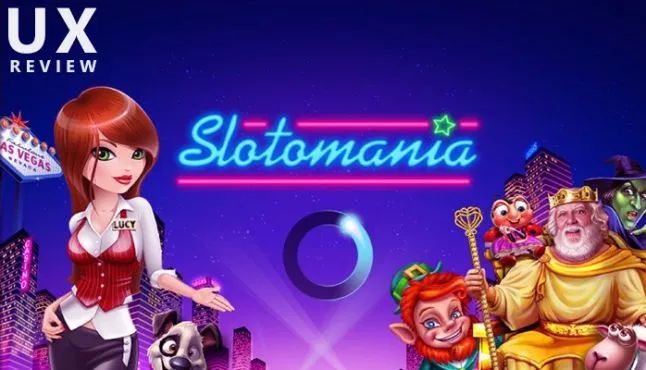
Social casino games, particularly digital slot machines, have become a significant and profitable focus for Zynga. The company established a dedicated social casino division through its acquisition of Spooky Cool Labs, which developed titles like Hit It Rich!, Wizard of Oz Slots, and Willy Wonka Slots. This strategic emphasis was further reinforced in 2026 when Zynga acquired Rising Tide Games, a startup focused on social casino games founded by its former head of social slots, Maytal Olsha. Olsha stated she was excited to partner with the Spooky Cool team and the Zynga Austin Studio on the social slots category. This move aligned with founder Mark Pincus's stated goal to narrow and intensify the company's execution focus around its biggest opportunities.
Social casino games are a major revenue driver in mobile gaming due to their strong player retention and optimized live operations. Zynga's approach in this category involves sophisticated event systems, economy design, and constant content updates to maintain engagement. The company's social casino titles, such as Hit It Rich!, operate like live entertainment ecosystems, featuring collaborations, tournaments, and seasonal events like Halloween-themed updates. Zynga's expertise in this area is built on advanced analytics and modular production systems that allow for scalable content creation and efficient deployment of new features, which are critical for long-term success in the competitive social casino market.
Corporate Culture and Operations
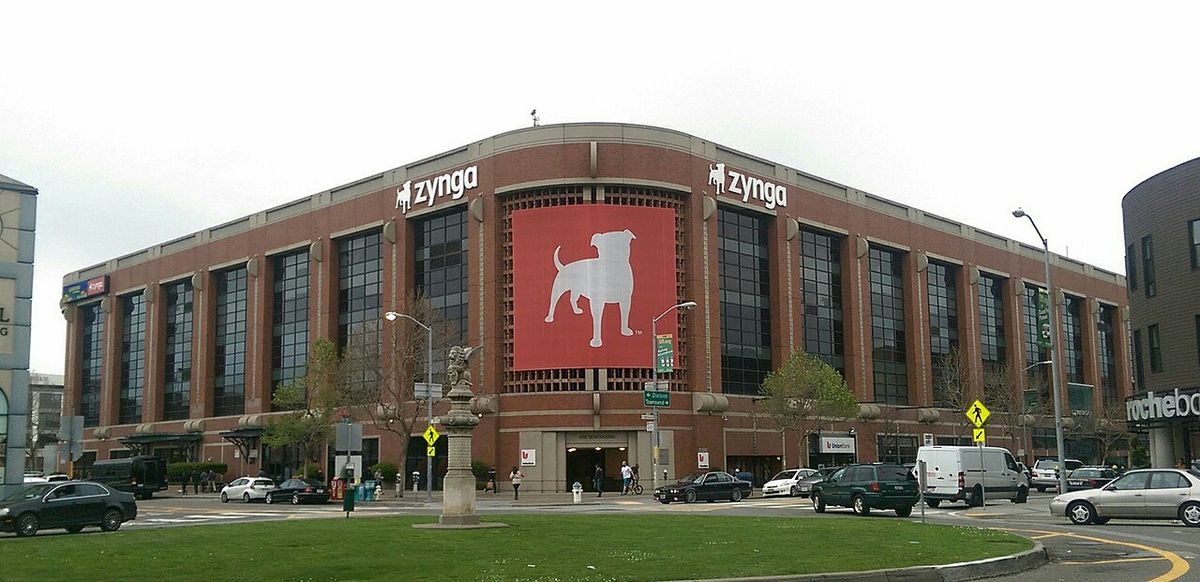
Zynga's corporate culture has been characterized by a focus on creating engaging workplace environments and operating through autonomous teams. Its former San Francisco headquarters, nicknamed "The Dog House," was located in the South of Market district and featured amenities like a coffee shop, gaming arcade, gym, and basketball court, reflecting founder Mark Pincus's goal of a playful, fantasy land-like environment. Employees, referred to as "Zyngites," historically enjoyed perks such as free gourmet meals and access to wellness services. Internally, the company has been described as operating like a federation of city-states, with each major game such as FarmVille or CityVille run by its own autonomous team, a structure that reportedly fostered fierce internal competition and sometimes led to complaints about long hours.
The company has also engaged in philanthropic efforts through Zynga.org, a nonprofit organization started in 2009 that incorporates charitable contributions into its games. As of 2015, Zynga.org had raised $20 million for international humanitarian relief and philanthropic initiatives. More recently, Zynga has integrated cause-driven marketing into its games, such as a FarmVille 3 collaboration highlighted at the 2026 Pocket Gamer Connects event and a FarmVille 2: Country Escape partnership with the animal charity Blue Cross. In 2017, Zynga donated a large sum to the University of Southern California to support the study of social mobile games and diversity in the industry.
Reception and Controversies
Zynga's rapid growth and business practices have attracted both significant popularity and notable criticism. A major point of contention has been the use of spam-like notifications in its early Facebook games, where players would post messages to non-players' feeds for in-game benefits. This led to complaints and large Facebook groups protesting the practice, prompting Facebook to modify its developer policies to restrict such notifications. Zynga has also faced multiple accusations of copying game concepts from competitors. For instance, its game Mafia Wars led to an out-of-court settlement worth an estimated $7 to 9 million with the creators of Mob Wars. Similarly, its game Café World was noted for being nearly identical to Playfish's Restaurant City, and Dream Heights was accused of copying NimbleBit's Tiny Tower.
Founder Mark Pincus has dismissed criticisms about copying game concepts. The company has faced scrutiny over the viability of its free-to-play, virtual goods business model. In July 2012, after announcing disappointing second quarter results, some analysts speculated that the sale of virtual items may not be a long-term, viable business model. Analyst Richard Greenfield downgraded Zynga from "buy" to "neutral" in 2012. In 2012, Zynga took steps to turn its business around, which included introducing new Web, mobile, and multiplayer games. The company worked to increase advertising revenues, which were up to 45 percent in Q2 2012 compared to the previous quarter. In August 2012, Electronic Arts sued Zynga for copyright infringement, alleging that Zynga's The Ville copied expressive elements of EA's The Sims Social. The litigants settled their suit in February 2013.
Financial and Market Performance
Zynga's financial journey reflects the volatility and evolution of the social and mobile gaming market. After its IPO in December 2011 at $10 per share, the stock initially struggled but saw a boost to $13.39 in February 2012 following Facebook's own IPO filing. The stock performed poorly for several years before recovering in 2017, ending that year at $4.00, a 56 percent annual gain. At its peak in early 2018, Zynga had a market capitalization of $3.39 billion, approximately 80 million monthly active users, and 1,681 employees. The company has stated that over one billion people have played its games since its 2007 founding, and according to parent company Take-Two Interactive, about 10 percent of the world's population plays a Zynga game each month.
Zynga's history includes several key acquisitions and partnerships. In June 2009, Zynga acquired MyMiniLife which built and launched FarmVille on Facebook. In 2012, Zynga acquired four game development companies: Game Doctors, developer of Zombie Smash, Page44 Studios, HipLogic and Astro Ape Studios. On November 28, 2011, the Finnish game developer Rovio Entertainment rejected an acquisition attempt from Zynga worth $2.25 billion. In October 2012, Zynga announced a partnership with bwin.party, an international real-money gaming operator, to launch real-money gaming in the UK.
| Year | Key Event or Metric | Figure or Detail |
|---|---|---|
| 2008 to 2011 | Total Venture Funding Raised | $854 million |
| 2011 | Initial Public Offering Price | $10 per share (ZNGA) |
| 2012 | Headquarters Purchase Price | $228 million (San Francisco building) |
| 2017 Q4 | Quarterly Revenue | $233.3 million (22% year-over-year increase) |
| 2018 | Market Capitalization (Jan) | $3.39 billion |
| 2018 | Monthly Active Users | ~80 million |
| 2022 | Acquisition by Take-Two | $12.7 billion |
| Lifetime | Total Game Revenue | $7.6 billion |
| Lifetime | Total Game Downloads | Over 2 billion |
- MyMiniLife (June 2009): Acquired and built FarmVille, which launched on Facebook the same month.
- Spooky Cool Labs (Date not specified): Acquired and became Zynga's social casino division, developing Hit It Rich!, Wizard of Oz Slots, and Willy Wonka Slots.
- Rising Tide Games (2026): Acquired. A startup focused on social casino games founded by former Zynga head of social slots Maytal Olsha.
- Game Doctors, Page44 Studios, HipLogic, Astro Ape Studios (2012): Four game development companies acquired by Zynga.
- Partnership with bwin.party (October 2012): Announced to launch real-money gaming in the UK, including online poker and 180 casino games.
- Partnership with Hasbro (February 2012): Created board games based on Zynga properties like FarmVille and Words With Friends.
- Partnership with Facebook (May 2010): Entered a five-year relationship to expand the use of Facebook Credits in Zynga's games.
Questions about Zynga
What is Zynga Poker and when did it launch?
Zynga Poker, originally called Texas Hold 'Em Poker, is the company's first and long-running social casino game. It was launched on Facebook in July 2007 and was notably the first game ever introduced on the Facebook platform. The game allows players to engage in virtual poker with others, utilizing the free-to-play model where revenue is generated through in-game virtual goods. It remains a fundamental part of Zynga's portfolio and is one of its most successful titles, with about 57 million games being played at any given moment as of 2017.
Can you still play Zynga Texas HoldEm Poker?
Yes, the game originally launched as Texas Hold 'Em Poker in 2007 is still actively available and operated under the name Zynga Poker. It is accessible on mobile devices and online as a free-to-play social game. The title has been maintained and updated for over a decade and a half through Zynga's live operations strategy, which focuses on keeping games relevant with continuous new features and events. Players can download it through official app stores to play on their smartphones or tablets.
Who owns Zynga now?
Zynga is currently owned by Take-Two Interactive Software, Inc., one of the world's largest video game publishers. Take-Two completed its acquisition of Zynga in May 2022 in a deal valued at $12.7 billion. Since the acquisition, Zynga operates as a label within Take-Two, similar to the company's other labels like Rockstar Games and 2K. This ownership provides Zynga with the financial backing and resources of a major global publisher while it continues to develop and manage its portfolio of mobile and social games.
What are Zynga's most popular games?
Zynga's most popular and long-running games include Zynga Poker, the FarmVille series, Words With Friends, and CSR Racing 2. As of 2017, Zynga Poker and Words With Friends 2 were among its most successful, with about 57 million games being played at any moment, and CSR Racing 2 was noted as the most popular racing game on mobile devices. The company's portfolio also includes major titles like Harry Potter: Puzzles & Spells, Empires & Puzzles, and social casino games such as Hit It Rich! Slots. These games have collectively been downloaded over 2 billion times.
Is Zynga a social casino company?
While Zynga develops games across multiple genres, social casino games are a significant and strategic part of its business. The company has a dedicated social casino division originating from its acquisition of Spooky Cool Labs, which makes games like Hit It Rich! Slots. In 2026, Zynga further reinforced this focus by acquiring Rising Tide Games, a startup founded by its former head of social slots. Social casino games, which are free-to-play and do not involve real-money gambling, are among the top-grossing categories in mobile gaming and represent a core area of expertise and revenue for Zynga.
Where is Zynga headquartered?
Zynga's headquarters are located in San Mateo, California, at 1200 Park Place. The company relocated its headquarters to San Mateo in 2022. Previously, its main offices were in San Francisco's South of Market district in a building purchased in 2012 for $228 million, which was nicknamed "The Dog House". Zynga's teams and studios are spread across North America, Europe, and Asia, collaborating to develop and operate its global portfolio of mobile and social games.
Sources and further reading
- Zynga (Wikipedia)
- ZyngaGames.com (zynga.com)
- Zynga acquires casino game studio Rising Tide Games (gamedeveloper.com)
- Zynga Company Overview: Revenue, Valuation, Games (blog.udonis.co)
- Top Social Casino Game Development Companies in 2026 (galaxy4games.com)
Checked by the Nosy Mag desk. Last updated 2026-11-10.