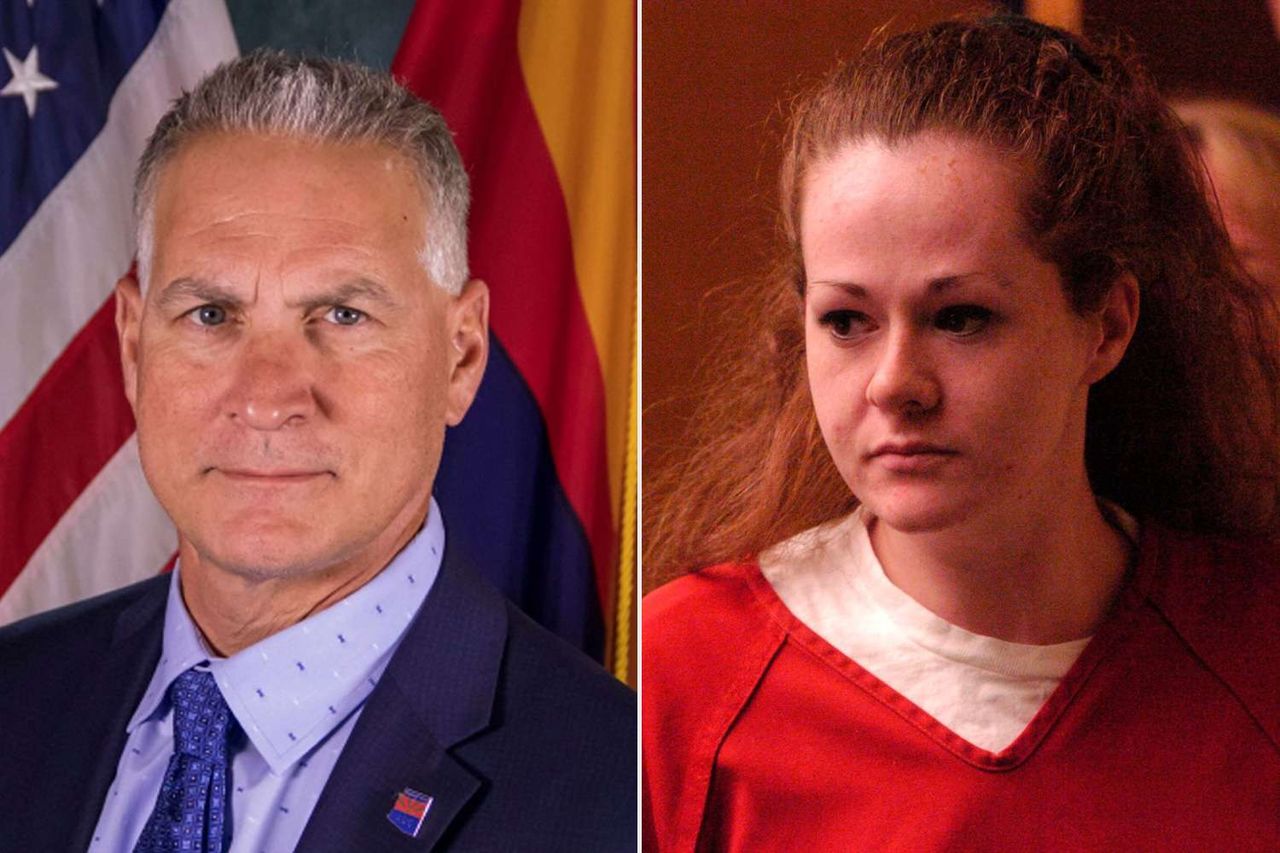
Tennessee prison chief resigns after inmate survives botched execution
The head of the state's prison system resigned as the inmate remained on a ventilator four days after a lethal injection attempt failed.
Explainer
The commissioner of Tennessee's prison system resigned following a failed execution that left inmate Christa Pike unconscious in hospital. Governor Bill Lee announced Frank Strada's departure from the Department of Correction on Saturday. Pike has been on a ventilator since prison staff administered two doses of the lethal drug pentobarbital on Wednesday night. Her lawyer said Sunday she has not regained consciousness and her prognosis remains unknown for several more days.
Strada stated his resignation was in the state's best interests as an independent review proceeds. Governor Lee ordered that investigation to determine why the execution failed. The incident marks the second time this year Tennessee has halted an execution after staff encountered problems establishing intravenous lines. Prison officials and the state attorney general have released few details since Pike was transported to a medical facility.
READ MORE: Edmonton councillor resigns from police commission to focus on Chinatown safety
READ MORE: Brad Bradford narrowly leads Olivia Chow in new polls days before Toronto vote
"Not that I am aware of,"
Assistant Federal Defender Stephen Ferrell, who is Christa Pike's lawyer, said on CNN's "State of the Union" that she had not regained consciousness after the execution attempt. Her attorneys filed a court document on Friday stating hospital staff were working to save Pike's life and clear the two doses of pentobarbital from her system. In that filing, they wrote that they believed problems with IV lines caused the pentobarbital to flow into Pike's body tissue instead of her bloodstream. This resulted in her arms being burned and blistered from the caustic drugs, according to her legal team.
What caused the execution to fail?
Prison officials administered two doses of pentobarbital during the attempted lethal injection. Her attorneys wrote in a filing that execution team members failed to notice the IV lines were misplaced or that veins had ruptured. "Apparently at no point did any member of the execution team realize that the IV lines were not correctly placed or that the veins had blown and that the pentobarbital was, in whole or in part, entering Ms. Pike's body," they stated. The Supreme Court had earlier overturned an appeals court ruling that would have delayed the execution to review her sentencing jury. Tennessee halted another execution in May after staff could not establish a secondary IV line for inmate Tony Carruthers. The state keeps many details about its execution protocols secret, including drug sourcing and quality testing. Ferrell argued Tennessee must provide more transparency so its citizens can decide if the process reflects their values.
What is known about Pike's medical condition?
Christa Pike remains hospitalized under guard as doctors work to remove the large dose of barbiturate from her system. Her lawyers said it could be days before they know if she will recover. Pike has designated someone to hold medical power of attorney, and that person is safeguarding her privacy according to Ferrell. The defense team has not publicly identified who is making her medical decisions.
"We don’t know right now, and we may never know what sort of torture she endured during that process, where her consciousness was, what physical pain there was, what mental torture she went through,"
Ferrell said Pike had given someone her medical power of attorney and that person was protecting her privacy. A spokeswoman for Pike's defense team issued a statement early Sunday saying, "we appreciate all respect for Christa's rightful privacy." Her attorneys have asked Tennessee Governor Bill Lee to commute her death sentence to a life sentence. Ferrell noted that if she recovers, she may not fully recover and there could be issues about her competence.
What investigations are underway?
Governor Lee appointed former U.S. Attorney Ed Stanton to conduct an independent investigation into the state's capital punishment system. Stanton previously reviewed execution procedures after a different cancellation in 2022 and found the state did not follow its own protocol. Pike's lawyers have asked a court to order prison officials to preserve all records and materials related to the failed execution. The legal team believes problems with IV placement caused the drugs to infiltrate her tissue rather than enter her bloodstream. Ferrell told CNN that "the state of Tennessee has got to start telling its people exactly what it is doing so that in the democratic process, the people of Tennessee can decide if that’s what they want to be done in their name." The governor has halted all executions pending the outcome of the review ordered after Wednesday's events.
Who is Christa Pike?
Christa Pike was sentenced to death for the 1995 murder of her classmate Colleen Slemmer. She was 18 at the time of the crime, making her one of the youngest women on death row. Pike and her boyfriend lured Slemmer to a secluded area, attacked her with a box cutter and a chunk of asphalt, and carved a satanic symbol into her body. Pike did not deny killing the 19-year-old victim, whom she perceived as a romantic rival. The brutality of the crime and the ages of those involved drew national attention.
With files from CityNews, CBC News and Audacy