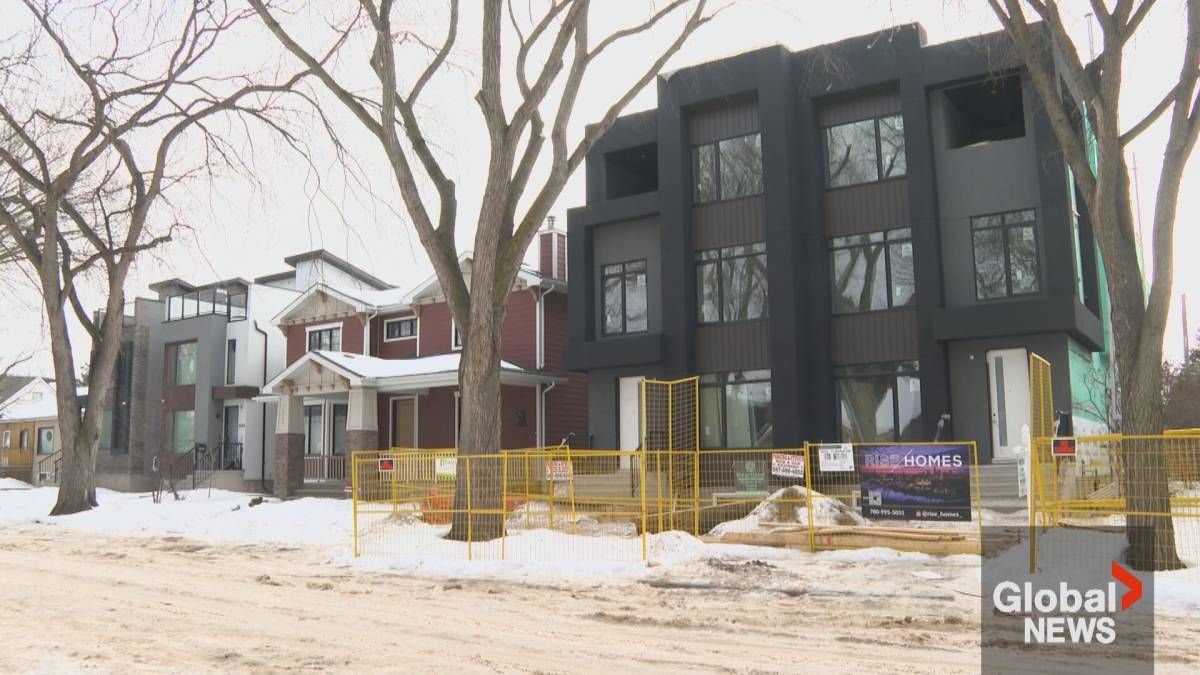
Edmonton infill debate escalates as residents, developers clash over zoning changes
Growing tensions over Edmonton's infill development policies have prompted residents to take legal action and even buy neighboring properties to block multi-unit projects as the provincial government considers intervention.
Neighborhood tensions rise over infill developments
Edmonton's residential neighborhoods have become battlegrounds over the city's infill development policies, with some homeowners taking extraordinary measures to block multi-unit projects. The controversy centers on zoning changes implemented in 2023 that allow denser housing in established communities, particularly the allowance of buildings up to three storeys in all residential areas. This policy shift has sparked intense opposition from residents who fear losing the character of their neighborhoods and facing decreased property values.
Real estate agent and developer Terry Paranych, who has been involved in single-family residential infill for 20 years, describes the current situation:
"There's just no consultation, and they just put them up, and that's why the communities are clearly upset."Paranych has personally intervened in about half a dozen cases in less than a year, purchasing properties slated for multi-unit development to instead build single-family homes that he argues better fit the existing community character. In one instance in the west-central McQueen neighborhood, he converted a controversial eightplex site into what he describes as the "perfect family home", a 2,500-square foot, two-story urban craftsman-style home with four bedrooms.
Residents deploy legal tools to block development
Frustrated Edmonton homeowners are turning to century-old legal instruments to protect their neighborhoods from what they see as unwanted density. Restrictive covenants, which limit how properties can be developed even after being sold, have seen renewed popularity in communities like Duggan and Rideau Park. Earlier this summer, hundreds of homeowners in these south Edmonton neighborhoods signed 20-year covenants that set constraints on future redevelopment.
READ MORE: Alberta to seek private proposals for Calgary-Edmonton high-speed rail
These covenants don't ban infill outright but impose specific limitations including a maximum height of two storeys or eight meters, caps on the number of units, and requirements for on-site parking. The practice has historical precedent in Edmonton, the prestigious Glenora neighborhood has used restrictive covenants since the 1910s through what's known as the Carruthers Caveat, maintaining its character through requirements for only single-family homes on wide, expansive lots.
City policies aim to address housing crunch
Edmonton's 2023 zoning bylaw changes were implemented with specific goals to increase housing supply and affordability. The city's approach aligns with broader federal housing initiatives, including a $175 million commitment from the Housing Accelerator Fund in early 2024 aimed at creating over 5,200 new housing units in three years. Proponents argue this densification helps accommodate population growth without expanding urban sprawl into agricultural land, while also increasing housing choices for residents.
Councilor Andrew Knack has defended the policy by suggesting that older neighborhoods naturally lose population as residents age, creating opportunities for denser housing. However, critics counter that these homes typically get sold to new families rather than remaining vacant. The policy has become particularly contentious regarding how property taxes are applied, with some noting that duplexes with four suites on a single-family lot now pay significantly higher taxes than the original single-family homes they replace.
Political backlash and provincial intervention
The infill debate has become a flashpoint in municipal politics, with critics accusing city leadership of ignoring resident concerns. During the 2025 fall municipal election, the issue emerged as a contentious topic after residents of established communities expressed concerns about property values, parking shortages, and what they describe as predatory development practices. Some opponents have gone so far as to call for lawsuits against current and former mayors and councilors who supported the zoning changes.
The controversy has now reached provincial levels, with Premier Danielle Smith revealing on her radio program Your Province, Your Premier that Municipal Affairs Minister Dan Williams is reviewing concerns about Edmonton's citywide rezoning approach. Smith highlighted resident complaints about the scale of new developments, noting how single-house lots are being converted to accommodate multiple townhouse-style units, sometimes on several side-by-side lots. This potential provincial involvement adds another layer to an already complex policy debate that pits housing needs against neighborhood preservation.
Developer advocates for balanced approach
Paranych represents a middle position in the debate. While he supports infill development in principle, he strongly criticizes the current lack of consultation with existing residents.
"We care about the community,"he said, describing his approach of working with neighbors to design projects that respect neighborhood character. His philosophy emphasizes collaboration:
"We talk to the neighbours, we talk to the community, we get involved and we want their input on what we're going to be, ultimately, building on their streets. That collaboration process is really important."
Paranych argues that the current situation reflects broader frustration with Edmonton's infill policies, citing cases where homeowners have seen $400,000-$500,000 decreases in their property values due to nearby high-density developments. He suggests this could be avoided with better community engagement in the planning process, rather than forcing residents to take extreme measures like buying neighboring properties or implementing restrictive covenants.
The broader implications of Edmonton's infill debate
The Edmonton infill controversy reflects broader tensions in Canadian cities grappling with housing shortages, affordability crises, and competing visions of urban development. At its core, the debate questions how cities can grow sustainably while respecting existing communities' character and residents' substantial financial investments in their homes. The situation also tests the limits of municipal authority, as provincial leaders consider intervening in local zoning matters traditionally under city jurisdiction.
How Edmonton resolves these tensions may set precedents for other Canadian cities facing similar challenges. The outcome could reshape urban development patterns and the balance between individual property rights and collective housing needs for years to come, making this more than just a local planning dispute. As cities across Canada confront similar pressures between densification and neighborhood preservation, Edmonton's experience offers important lessons about the need for careful policy design and meaningful community engagement in housing strategies.