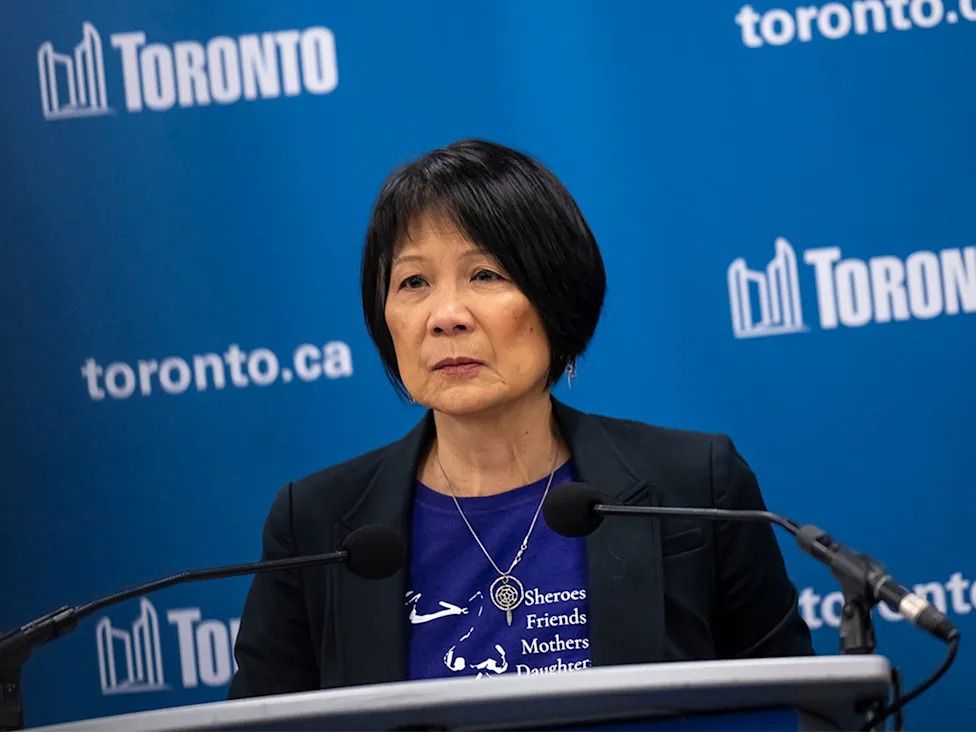
Olivia Chow faces growing criticism from Toronto's Jewish community over antisemitism debate absence and rhetoric
Toronto Mayor Olivia Chow's refusal to attend a critical antisemitism debate and her inflammatory rhetoric about Israel have deepened tensions with the city's Jewish community amid record hate crimes and safety concerns.
Toronto Mayor Olivia Chow finds herself at the center of a growing political storm as the city's Jewish community expresses deepening frustration over her refusal to attend a mayoral debate on antisemitism and what many view as a pattern of inflammatory rhetoric about Israel. The controversy comes at a time when Toronto's Jewish residents face unprecedented levels of violence, harassment and fear in their daily lives.
The debate that wasn't
The September 8 debate would have provided Chow with a platform to address direct questions from Jewish community representatives about rising antisemitism and public safety concerns. Organizers had extended invitations weeks in advance and maintained communication with Chow's campaign team throughout the planning process. When Chow declined to participate, citing a policy against attending candidate events before her official campaign launch on September 9, organizers offered to adjust the date - an accommodation she still refused. The narrow one-day gap between the debate and her campaign launch struck many observers as an unconvincing technicality given the gravity of the subject matter.
The mayor's absence became more glaring when her political opponents confirmed their attendance. Jewish leaders interpreted the refusal as particularly troubling given the current climate of fear within their community, where many now avoid displaying religious identifiers in public and institutions maintain constant security measures against ongoing threats.
A community under siege
Toronto Police statistics reveal the alarming reality facing Jewish residents, who were targeted in 82% of religiously motivated hate crimes in 2025 despite comprising only about 3% of the city's population. The data documents a pattern of attacks ranging from vandalism and harassment to violent assaults and threats against synagogues, schools and Jewish-owned businesses. These incidents have created what community leaders describe as a public safety crisis requiring urgent municipal attention and leadership.
Against this backdrop, the antisemitism debate represented more than a standard campaign event - it offered the mayor a chance to demonstrate tangible commitment to one of her most vulnerable constituencies. Community advocates note the stark contrast between Chow's absence and how they believe she would respond to similar threats against other minority groups, raising difficult questions about equitable representation.
Language that divides
The debate controversy follows earlier criticism of Chow's November 2023 speech at a National Council of Canadian Muslims fundraiser, where she received applause for declaring "The genocide in Gaza impacts us all." Jewish organizations swiftly condemned her use of the term "genocide," which carries specific legal and historical weight as the deliberate attempt to annihilate a people. Many viewed this rhetoric as crossing from legitimate criticism of Israeli policy into dangerous demonization of the Jewish state.
While Chow has periodically condemned antisemitism and supported security measures for Jewish institutions, critics argue these gestures ring hollow when weighed against her broader pattern of behavior. They point to her willingness to use maximally charged language before audiences deeply engaged in the Palestinian cause while avoiding direct engagement with Jewish community concerns when such engagement might prove politically inconvenient.
The politics of avoidance
Political observers suggest Chow's decisions reflect careful constituency management rather than overt prejudice. By steering clear of events that might require her to challenge anti-Israel narratives within certain progressive circles, she maintains important political alliances. However, this calculated approach has left Jewish leaders questioning whether their community's safety receives equal consideration in the mayor's priorities.
The situation reveals the tightrope municipal leaders must walk when global conflicts generate local tensions. Chow's defenders might argue she seeks balanced representation of diverse viewpoints, but critics counter that true leadership requires confronting difficult issues head-on, especially when a vulnerable minority faces disproportionate threats.
A crisis of confidence
Within Toronto's Jewish community, frustration with Chow extends beyond any single incident to encompass what many perceive as a pattern of disregard. The debate absence has become symbolic of broader concerns about the mayor's engagement with Jewish Torontonians at their time of greatest need since the 1930s. While Chow has made supportive statements, community members increasingly view these as performative gestures lacking substantive follow-through.
The anxiety stems not only from external threats but from the growing sense that City Hall fails to fully grasp the severity of their situation. This perception gap undermines trust in municipal leadership precisely when Jewish residents report feeling most vulnerable in public spaces and institutions.
The stakes for urban governance
This controversy transcends local politics to touch on fundamental questions about how cities maintain social cohesion amid global conflicts that resonate locally. Municipal leaders increasingly find themselves handling international tensions that manifest in neighborhood disputes, school board meetings and public safety concerns.
Chow's predicament illustrates how language choices and symbolic appearances carry profound weight for communities feeling under threat. The situation tests whether Toronto's leadership can address community-specific crises without appearing to establish hierarchies of concern among different minority groups. How Chow responds moving forward may set important precedents for handling similar challenges that other diverse Canadian cities will likely confront.
Accountability and next steps
Community leaders emphasize that repairing the relationship will require more than another statement condemning antisemitism or announcing new security initiatives. They seek substantive explanations for why Chow employs such extreme language about Israel while avoiding direct engagement with Jewish concerns when doing so carries political costs. Most pressingly, they demand an accounting for why the mayor declined to stand before her Jewish constituents when explicitly invited to address their safety concerns.
As Howard Levitt, senior partner of Levitt LLP, argues in his analysis, politicians must ultimately be judged by their actions rather than their stated intentions. The burden now rests with Chow to demonstrate through concrete steps that her commitment to Toronto's Jewish community extends beyond convenient rhetoric to meaningful engagement and protection. With hate crimes persisting and community anxiety growing, the need for decisive leadership has never been more urgent.