Alberta's Referendum Campaign Reveals Deep Divisions as Vote Nears
With one month until Alberta's pivotal referendum on its future in Canada, campaigns report vandalism, threats, and emotional rallies as separatist and federalist forces clash in a province grappling with its identity.
As Alberta enters the final stretch before its October 19 referendum on potential separation from Canada, the province has become a landscape of political tension and raw emotion. The campaign has exposed deep societal fractures through vandalism, anonymous donations, and highly visible demonstrations of allegiance. Both separatist and federalist camps report escalating tensions that go beyond typical political disagreement, revealing fundamental questions about Alberta's identity and future.
The Physical Manifestation of Division
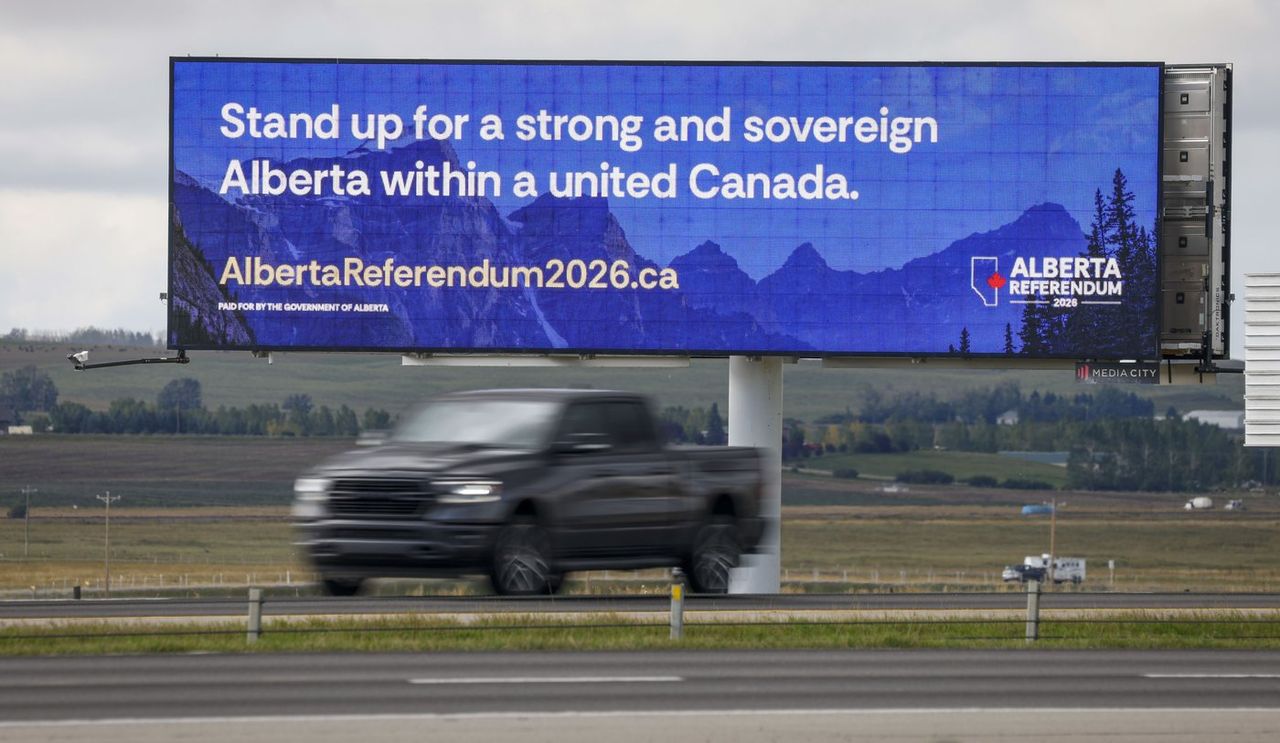
Neighbourhoods across Alberta have transformed into ideological battlegrounds where lawn signs serve as declarations of political identity. The red-and-white "Forever Canada" signs face off against blue separatist signage in what has become a symbolic proxy war. Keith Wilson, co-leader of the Let Alberta Decide campaign, explained the reluctance of many separatist supporters to publicly display their views. "We've had people who are supportive but don't want to put a lawn sign on their home out of fear that their car will get keyed in the driveway." This climate of intimidation has forced separatist groups to adapt their strategy, focusing on large roadside signs on public property rather than targeting individual households.
The federalist campaign has faced similar challenges. Thomas Lukaszuk, former deputy premier, has been touring Alberta in a distinctive red-and-pink "Unity Bus" that recently suffered a shattered window. Lukaszuk described encountering profound emotional responses during his travels. "I've never seen as much crying, both from women and men, because they're worried about what's happening." These incidents highlight how what began as a political debate has become deeply personal for many Albertans.
READ MORE: Albertans vote on separation referendum question Oct. 19
READ MORE: Defence minister touts $8B military spending in Alberta ahead of referendum
The Evolution of Separatist Sentiment
The current separatist movement represents the culmination of decades of simmering discontent that traces back to the 1980s National Energy Program under Pierre Trudeau. That policy, which artificially depressed oil prices, created lasting economic and psychological scars in Alberta. While separatism remained a marginal political position for years, it gained unprecedented legitimacy under Premier Danielle Smith's United Conservative Party government.
The movement's transformation from fringe to mainstream accelerated after the April 2025 federal election resulted in a Liberal minority government under Prime Minister Mark Carney. Smith's administration responded by establishing grievance panels across the province and making it easier for citizens to launch petitions. When separatist group Stay Free Alberta gathered sufficient signatures earlier this year, Smith committed to calling the referendum despite a court ruling that paused the process over inadequate First Nations consultation.
Symbols and Spaces in Conflict
The referendum campaign has seen ordinary objects and public spaces become contested territory. Cory Morgan of Pathway to Independence noted how the gradual appearance of separatist signs emboldens others. "When they see a neighbour or two put one of those signs out, they feel more comfortable doing it as well." This domino effect has extended to the appropriation of provincial symbols, with the Alberta flag being repurposed as a marker of discontent at rallies and events.
The tension over symbols reached a peak in the town of Sundre, where a summer parade was cancelled after organizers faced harassment for excluding a wagon featuring Alberta flags that might have become a separatist flashpoint. Similarly, Morgan's separatist billboard in Taber sparked a legal confrontation with town council. These incidents demonstrate how the referendum debate has spilled beyond formal political channels into community spaces and daily life.
The Federalist Countermovement
Opposition to separation has united an ideologically diverse coalition of political figures. Former Conservative elder statesman Preston Manning, ex-premiers Jason Kenney and Rachel Notley, and current Prime Minister Carney have all lent their support to the pro-Canada campaign. Carney's personal endorsement included posing with Lukaszuk's Unity Bus during a cabinet retreat in Banff.
Monte Solberg, former cabinet minister under Stephen Harper, leads the Vote to Stay campaign's radio ads, which highlight separatist connections to U.S. political figures. "Separatists are kidding themselves if they think Alberta would remain independent for more than five minutes," Solberg told CityNews. His warning about complacency reflects the federalist strategy of motivating turnout. "The real enemy, besides the separatist camp, is apathy," Solberg emphasized.
The Mechanics of Decision
The referendum ballot presents Albertans with a two-stage question: whether to remain in Canada or initiate a binding vote on formal separation. This structure has drawn criticism from those who argue Smith is gambling with national unity to satisfy her party's base. Meanwhile, election officials are managing unprecedented demand for mail-in ballots, with over 500,000 requested already. The vote will also address nine additional questions about immigration and constitutional matters, reflecting broader concerns about Alberta's place in Confederation.
Lukaszuk's observation that "the vote is already baked in, and it's all about voter turnout" suggests both campaigns now focus less on persuasion than mobilization. The record-breaking requests for mail-in ballots indicate high engagement, though whether this translates to actual participation remains to be seen.
Historical Echoes and Contemporary Fears
The emotional intensity of the campaign becomes understandable when viewed through Alberta's historical relationship with the federal government. The 1980s National Energy Program remains a touchstone for many Albertans, symbolizing what they see as federal overreach at provincial expense. Premier Smith's 2022 statement that "the concerns of those who wished to quit Canada were valid and needed to be addressed" gave official voice to sentiments that had long circulated on the margins.
Cory Morgan's description of unprecedented personal vitriol, "I've never been on the receiving end of the kind of threats, obscenity and vitriol as I am now", speaks to how these historical grievances have become personalized in the current debate. The climate Wilson described as "such a divisive issue, and it's so emotional" suggests that whatever the referendum's outcome, healing these divisions will prove challenging.
The Broader Implications
Alberta's referendum represents the most significant challenge to Canadian unity since Quebec's sovereignty movements. The campaign has demonstrated how quickly constitutional debates can become personal when connected to identity and livelihood concerns. Beyond the immediate question of separation, the referendum tests whether Canada's federal system can accommodate profound regional discontent without fracturing.
The emotional and sometimes violent manifestations of this debate, from vandalized signs to shattered bus windows, suggest lasting impacts on Alberta's social fabric. Whether the province votes to remain in Canada or pursue separation, the referendum has already revealed deep fissures that will require attention long after October 19.