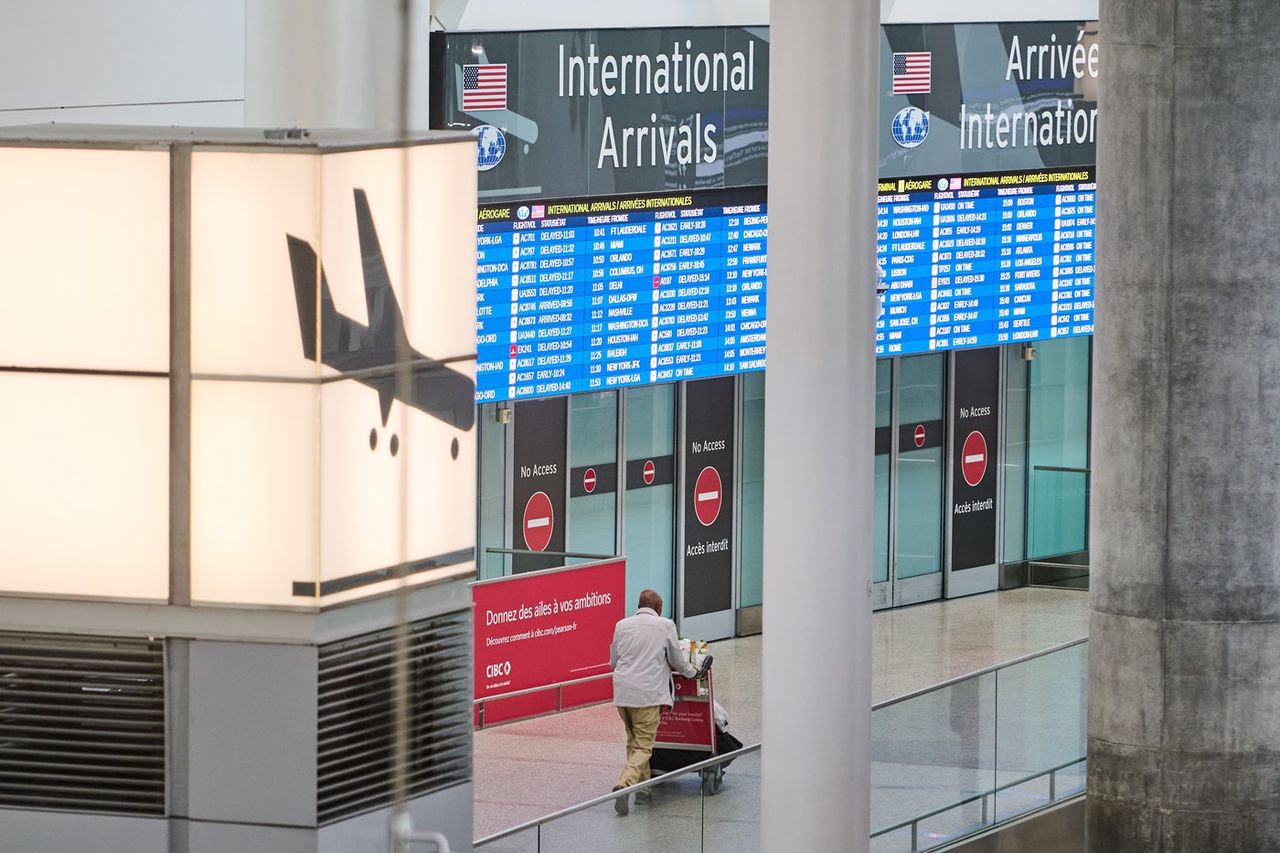
Carney proposes private investment in Canada’s major airports amid debate over costs and control
Prime Minister Mark Carney pitches private sector operations at Canada’s four largest airports while Ottawa retains ownership, sparking debate over traveller costs, regulatory oversight and the future of aviation infrastructure.
Prime Minister Mark Carney has unveiled a significant shift in Canada's airport management strategy that could reshape how the country's busiest aviation hubs operate. The proposal calls for private sector investment in the operations of Toronto Pearson, Montreal-Trudeau, Calgary International, and Vancouver International airports - facilities that collectively handle over 70% of Canada's air passenger traffic. Speaking at a government-led investment summit in Toronto, Carney emphasized this would not be a full privatization, as the federal government would retain ownership of airport lands and core assets. Instead, private investors would take over day-to-day operations through concession agreements, a model that has transformed major airports in Europe and Asia but remains rare in North America.
The mechanics of the proposed model
Under Canada's current system, established in the 1990s, airports are operated by private, not-for-profit authorities that lease facilities from the federal government under 60-year agreements. These authorities handle all operational aspects from runway maintenance to terminal services while setting their own fees to recover costs without taxpayer subsidies. Carney's proposal would replace this structure with concession agreements where private investors, potentially including pension funds and infrastructure specialists, would manage operations for set lease periods likely ranging from 30-50 years. Transport Canada would maintain regulatory oversight of safety and security standards, while the government would continue collecting ground rent payments. Karen Hennessey, a business law partner at Gowling WLG, explained this arrangement would require amendments to the federal Airport Transfer Act and potentially the Canada Transportation Act to establish clear parameters for private operators.
Industry responses and political opposition
Reactions from airport operators have been measured but reveal underlying tensions about changing a system that has financed over $30 billion in infrastructure improvements since the 1990s. Deborah Flint, CEO of the Greater Toronto Airports Authority, acknowledged the potential benefits of private sector involvement while defending the current model's success in managing Pearson's growth into North America's second-busiest international hub. The Canadian Airports Council expressed cautious openness to investment discussions, but CEO Monette Pasher emphasized any changes must prioritize affordability, noting Canadian airports already face criticism over some of the world's highest airport improvement fees. Political opposition has been more pronounced, with NDP Leader Avi Lewis framing the plan as 'turning critical public assets into decades-long money printing machines for CEOs.' The Bloc Québécois warned of inevitable cost increases for travellers, pointing to Australia's experience with privatized airports where prices rose significantly. Conservative Leader Pierre Poilievre took a wait-and-see approach but cautioned against preferential deals for corporate interests, reflecting broader skepticism about privatization among Canadian voters.
Global context and research findings
While privatized airports remain uncommon in North America, where only about 10% of major facilities have private operators, they represent significant portions of major airports elsewhere. A Journal of Air Traffic Management study found 51% of the world's 100 busiest airports in 2018 had some private sector participation, with Europe leading at 43% through models ranging from partial privatization to full concessions. Research on privatized airports presents mixed outcomes that help explain both the government's interest and critics' concerns. Australia's Competition and Consumer Commission documented price increases of 5-10% annually when airports became privatized local monopolies, though service satisfaction remained stable due to infrastructure investments. A 2023 University of Alberta study comparing 200 global airports found private facilities generally operated with 15% fewer flight cancellations and higher passenger satisfaction with amenities, but with passenger fees averaging $20 higher than public counterparts - a tradeoff that could prove politically sensitive in Canada's current cost-of-living climate.
Historical attempts and lessons learned
This isn't Canada's first consideration of airport privatization, and past attempts reveal why the current proposal approaches the issue differently. A 2016 federal review under Justin Trudeau's government, led by former cabinet minister David Emerson, suggested selling long-term leases for major airports to raise capital for infrastructure projects. The review highlighted how Canada's airport operating costs, partly due to the ground rent system, contribute to airfares being 15-30% higher than U.S. counterparts. However, the initiative stalled after industry pushback, with then-National Airlines Council CEO Massimo Bergamini arguing privatization would simply 'substitute one set of fees for another' without addressing underlying cost drivers. By 2018, the federal government had abandoned privatization plans, instead focusing on regulatory tweaks to the existing model. Carney's current proposal appears designed to avoid past pitfalls by retaining federal ownership of assets and structuring concessions as management contracts rather than outright sales.
Implementation challenges and timelines
Hennessey outlined several critical hurdles in transitioning to private operations that suggest the government faces a complex balancing act. Concession agreements would need to specify hundreds of service level metrics while providing investors with regulatory certainty over decades-long contracts. Labour provisions may prove particularly contentious, with unions already expressing concerns about job security under private operators. The government must also determine how to value concession rights - whether through upfront payments, revenue-sharing models, or infrastructure commitments - without triggering drastic fee increases. Hennessey noted that while simple concessions can be structured within months, complex airport deals typically require 18-24 months of negotiations in other jurisdictions. The government has simultaneously indicated ongoing discussions about extending existing airport leases, creating potential competition between the current authorities and prospective private operators for long-term control.
Broader implications for Canadian infrastructure
Carney's proposal reflects larger questions about private capital's role in public infrastructure that extend beyond aviation. Proponents argue investor expertise could accelerate modernization of aging terminals and stimulate economic growth through more commercial development around airport lands. The model could set precedents for other transportation assets like ports and rail stations currently operated by Crown corporations. However, critics fear reduced public control over critical infrastructure and the potential for 'value extraction' that benefits investors over travellers. The debate also touches on regional equity concerns, as redirecting federal resources from major hubs to smaller airports may not guarantee lower fees if regional facilities lack the passenger volume to achieve economies of scale. These tensions mirror global debates about infrastructure privatization where the promise of efficiency gains often clashes with public interest protections.
The path forward
As discussions progress through 2026, several factors will determine whether this proposal succeeds where past attempts failed. The government must demonstrate how concession agreements would maintain service quality while delivering tangible benefits like reduced delays or expanded routes. Fee control mechanisms, potentially including regulatory caps or efficiency requirements, may be needed to address cost concerns. The treatment of existing airport authority staff and their pension plans could become a flashpoint in negotiations. Perhaps most crucially, the government must articulate a clear vision for how redirected federal funds would actually improve regional aviation infrastructure rather than simply offsetting other budget priorities. With airlines, opposition parties, and travellers all weighing in, the coming months will reveal whether Canada's major airports join the global trend toward private operation or preserve their unique public-private hybrid model that has evolved over three decades.