Transcona councillor Russ Wyatt runs for re-election amid unresolved sexual assault charges
Winnipeg's Transcona ward incumbent Russ Wyatt appears on municipal ballots despite facing two separate sexual assault allegations, sparking debate about leadership during legal proceedings.
Winnipeg city councillor Russ Wyatt has officially registered as a candidate for re-election in Transcona despite facing two separate sets of sexual assault charges this year. The incumbent's name appeared on municipal ballots Tuesday after he submitted nomination papers Monday, setting the stage for a campaign that has already drawn sharp criticism from labour leaders and raised fundamental questions about civic governance during legal proceedings. The situation presents voters with a complex decision about whether to re-elect a representative whose attention may be divided between legal defense and constituent service.
The charges and candidacy
Wyatt faces sexual assault allegations from two separate incidents, with charges first laid in March 2024 followed by additional charges in August that remain unresolved. Neither case has been tested in court, and the councillor maintains his innocence throughout the legal process. Under Winnipeg's city charter, individuals charged with crimes are permitted to run for office provided they haven't been convicted, as Canadian law strictly maintains the presumption of innocence until proven guilty. This legal framework creates a situation where voters must make their own judgments about a candidate's fitness for office while court proceedings are ongoing.
The nomination process requires candidates to disclose any guilty pleas or findings under specific federal acts, including the Criminal Code, but does not require disclosure of pending charges. Wyatt reportedly collected the necessary signatures without voters raising concerns about his legal situation during the nomination period.
"That did not come up," Wyatt told 680 CJOB radio regarding the charges during his nomination efforts. "It was the issues that are concerning folks, whether it be in South Transcona; they want to make sure that the secondary plan gets defeated."This response suggests Wyatt is attempting to focus his campaign on local policy matters rather than his legal challenges.
READ MORE: Nova Scotia law firm files notice of class action over alleged teacher abuse
READ MORE: Winnipeg advocacy groups push for independent oversight of water and sewer rates
Committee status and council role
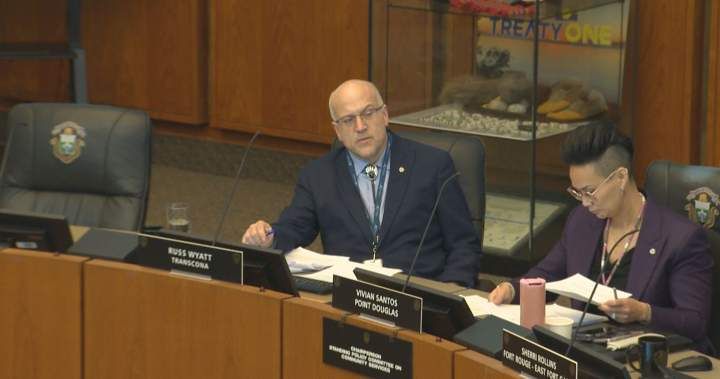
Following the initial charges in spring 2024, Wyatt was removed from several city committees where membership is discretionary, indicating the council's response to the serious nature of the allegations. He retains positions only on committees where his role as councillor mandates participation, creating a hybrid situation where he maintains some but not all of his previous responsibilities. Records show he attended at least one committee meeting in August shortly after his second arrest, demonstrating his continued participation in certain municipal functions despite the ongoing legal proceedings.
This partial committee participation has created an unusual governance scenario where Wyatt continues voting on some municipal matters while avoiding others where his presence is not required. The situation leaves Transcona residents with reduced representation on key civic bodies during a period when major decisions about local development are underway, potentially impacting the ward's ability to advocate for its interests at the committee level. The practical effect is that while Wyatt maintains his elected position, his capacity to fully represent his constituents on all city matters has been diminished by the council's own actions in removing him from discretionary committees.
Union leader sounds alarm
Patrick Troughton, president of CUPE 500 representing Winnipeg municipal workers, expressed strong disapproval at Wyatt's decision to seek re-election while facing serious criminal charges. The union leader framed the situation as a fundamental conflict between the demands of legal defense and effective public service.
"Every hour that Wyatt spends on his legal defence is an hour that he's taking away from being able to represent and serve the members of his ward and the citizens," Troughton told Global News.
Troughton's comments highlight concerns about whether a councillor facing multiple serious charges can adequately fulfill their duties to constituents while simultaneously preparing a legal defense. The union leader painted a stark picture of the potential consequences for the ward if Wyatt were re-elected.
"Basically, Transcona would spend the next four years as a legal drama instead of the ward getting things done," Troughton said.CUPE 500 has taken the unusual step of calling for Wyatt to withdraw from the race, reflecting the union's assessment that his continued candidacy does not serve the public interest.
Candidate's public response
Wyatt has characterized the allegations as another challenge in a political career that has seen its share of controversy, suggesting he views the situation as a test of personal resilience. In his public statements, he has projected confidence about the eventual outcome of the legal proceedings while attempting to redirect attention to local policy issues.
"I've been through many storms in my life," he told 680 CJOB. "I know I've done nothing wrong, and I know I'm going to be okay."
His comments to media suggest he views the campaign as an opportunity to continue work on local priorities like opposing the South Transcona secondary plan, which some residents oppose. This framing represents a strategic attempt to shift public discussion from legal matters to constituent concerns about development and infrastructure, though it remains unclear whether voters will accept this reframing given the seriousness of the charges. The approach indicates Wyatt believes he can separate his legal challenges from his ability to serve constituents, though critics argue the two cannot be so easily disentangled.
Legal parameters for officeholders
Winnipeg's municipal regulations contain no provisions barring charged individuals from holding office, reflecting Canada's fundamental legal principle that accusations alone don't constitute guilt. The system places trust in voters to assess candidates' fitness for office through the electoral process, even during ongoing legal proceedings. This approach preserves the rights of individuals facing charges while potentially creating governance challenges when serious allegations are involved.
This contrasts sharply with many professional organizations that may suspend members facing serious charges pending resolution of their cases. The difference highlights how elected offices operate under distinct ethical and legal frameworks compared to regulated professions, with recall mechanisms generally absent in Canadian municipal politics. The situation raises questions about whether municipal governance structures adequately account for scenarios where elected officials face serious criminal charges that could impact their ability to serve, yet fall short of actual convictions that would trigger automatic removal.
Voter considerations
Transcona residents face a complex decision in evaluating Wyatt's candidacy. On one hand, Canadian law rightly protects the presumption of innocence and allows individuals to participate fully in civic life unless convicted. On the other, municipal leadership requires undivided attention to complex policy issues and constituent needs - attention that may be significantly compromised during protracted legal battles. Voters must weigh these competing considerations against their assessment of Wyatt's past performance and the seriousness of the allegations.
The situation also forces constituents to consider whether they can realistically expect full representation from someone who may be preoccupied with serious legal matters for an extended period. Even if ultimately acquitted, the time and energy required to mount a defense against multiple charges could substantially diminish any councillor's capacity to serve effectively during their term. This creates uncertainty for voters about whether they would be electing the same level of representation they've come to expect from their councillor.
Broader implications
The controversy surrounding Wyatt's candidacy reveals potential gaps in municipal accountability systems that may warrant examination. Without mechanisms for temporary replacement or clearer standards about suspended duties during serious allegations, wards risk diminished representation when their elected officials face personal legal challenges. The current framework places the entire burden of assessment on voters during election periods, with few options for addressing concerns that arise between elections.
Whatever the election's outcome, this case may prompt Winnipeg and other municipalities to examine whether their governance structures adequately protect constituents' interests during officials' personal legal challenges while still respecting the presumption of innocence. The situation presents difficult questions about balancing individual rights with collective needs that extend beyond this specific case to the fundamentals of democratic representation and accountability. As Canadian society continues to grapple with issues of accountability and representation, cases like Wyatt's may serve as catalysts for re-examining how municipalities handle similar situations in the future.