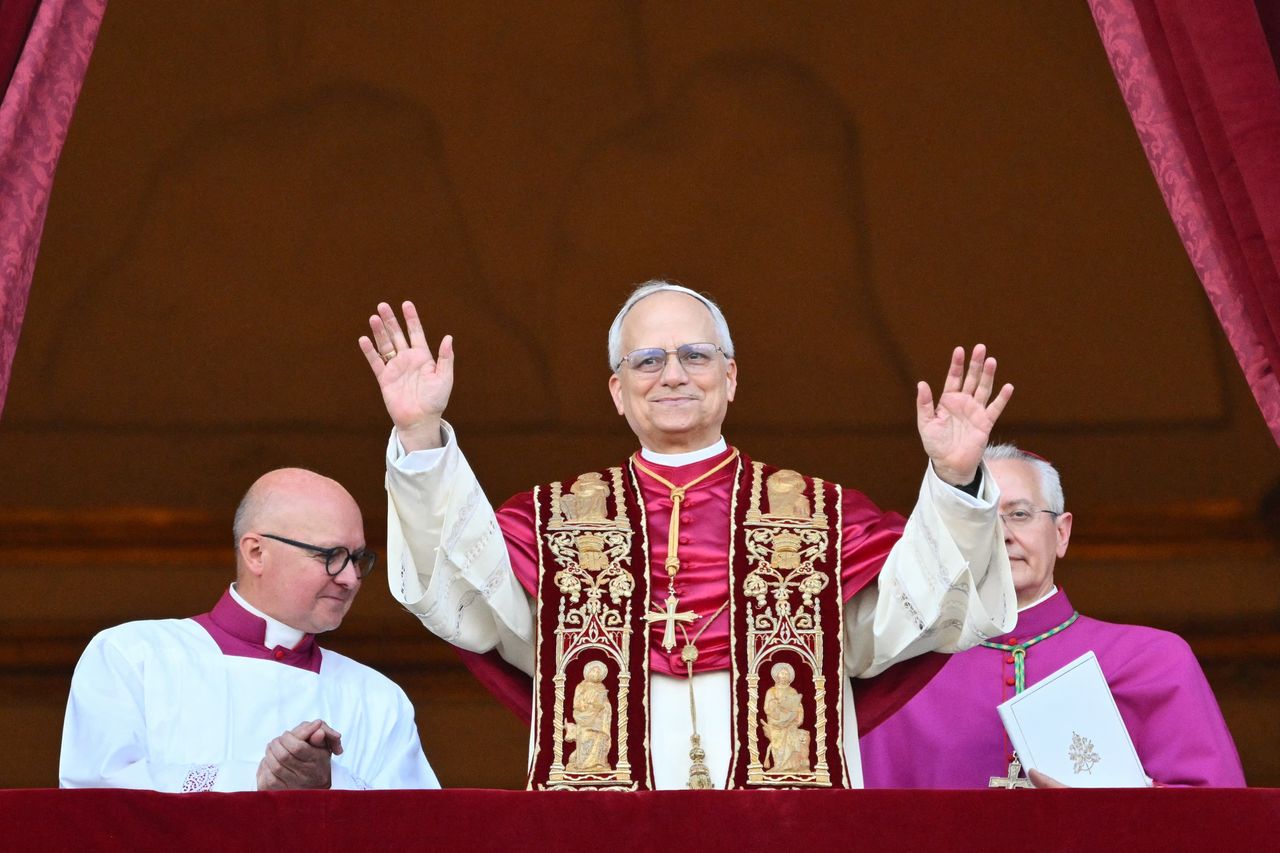
Pope Leo XIV's Transformative Leadership: How the First American Pontiff is Reshaping the Catholic Church
Pope Leo XIV, the first American pope, has emerged as a distinctive leader blending conciliatory diplomacy with bold interventions on global conflicts, technology ethics, and political tensions while redefining the papacy's public engagement in the digital age.
When Cardinal Robert Francis Prevost of Chicago was elected as Pope Leo XIV on May 8, 2025, he brought an unprecedented combination of experiences to the papacy. Now, nearly eighteen months into his leadership of the world's 1.4 billion Catholics, the contours of his distinctive pontificate have become clear. The 71-year-old pontiff has gradually revealed himself as a leader equally comfortable addressing artificial intelligence ethics as mediating bloody conflicts, while maintaining a personal style that bridges traditional Vatican solemnity with modern communication methods.
From Missionary Roots to Global Leadership
Leo XIV's formative years as a missionary in Peru for over two decades provided the foundation for his current approach to global issues. His deep immersion in Latin American culture was so profound that he eventually adopted Peruvian nationality. This extended grassroots experience, combined with his later administrative roles including leadership of the Order of Saint Augustine from 2001 to 2013 and heading the Vatican's Dicastery for Bishops, forged a leader with both pastoral sensitivity and institutional acumen. His multicultural heritage - with Spanish, Italian, Quebecois, Monegasque and Creole ancestry - informs his global perspective, particularly relevant as he prepares for a late September visit to France, the homeland of his paternal grandmother who emigrated from Le Havre to America in the early 1900s.
The Evolution of a Papal Style
Early observers noted Leo XIV's reserved demeanor, but his leadership style has steadily revealed more dimensions. Martin Dumont, secretary-general of the Research Institute for the Study of Religions at the Sorbonne University, observed that "At first he seemed almost withdrawn, and eventually we saw the character reveal himself." Dumont credits the pope's American background with giving him an instinctive grasp of modern communication that eluded his predecessor Francis. This manifests in both substance and style - from his willingness to engage with viral social media trends during youth encounters to the smartwatch discreetly worn beneath his cassock. Yet these contemporary touches coexist with traditional pastoral priorities, creating what Dumont describes as a leader who "wins people over."
READ MORE: Carney to attend UN General Assembly amid global tensions and Trump's trade threats
READ MORE: Peel Police Union Endorses Alvin Tedjo in Historic First for Mississauga Mayoral Race
Confronting Global Conflicts and Crises
Leo XIV has demonstrated particular vigor in addressing international conflicts and humanitarian crises. He has continued Francis's peacemaking efforts in Ukraine while adopting notably stronger rhetoric against Russian aggression. His April 2026 visit to Africa saw him deliver pointed condemnations of corruption to leaders who had held power for decades, while his June trip to Spain included challenges to European nations regarding migrant protection and integration. These interventions reflect his consistent focus on marginalized populations, a priority forged during his missionary years. The pope has also shown willingness to engage in political controversies, notably defending himself against personal attacks from former U.S. President Donald Trump. Charles Mercier of Paris's Ecole Pratique des Hautes Etudes observes that this opposition has paradoxically increased his popularity, making him "a figure of resistance to the danger of authoritarian populism."
Technology and Human Dignity
Perhaps the most distinctive intellectual contribution of Leo XIV's young papacy is his focus on the ethical dimensions of emerging technologies. His May 2026 encyclical Magnifica Humanitas articulated a Catholic framework for artificial intelligence development centered on preserving human dignity. Drawing on his personal background in mathematics and computer repair, the document has resonated beyond ecclesiastical circles. As Veronique Lecaros, author of a biographical portrait of the pope, notes: "He's a scientist, a mathematician, someone who used to repair cars and computers. With the encyclical 'Magnifica Humanitas', he truly engages with the problems of our era, especially those linked to technology." This focus positions the Church as a moral voice in global debates about technological governance.
Balancing American Identity and Universal Mission
As the first American pope, Leo XIV has handled questions about national identity with nuance. In a July interview with NBC, he stated: "I have great love for America...but I think of myself more as the pope who happens to be American." This distinction reflects his broader approach to leadership - maintaining his personal history and interests (including fandom of the Chicago White Sox) while subsuming national identity into his universal pastoral role. Those who know him describe him as "the least American of Americans," a characterization that has likely facilitated his diplomatic engagements worldwide.
The Mediator's Vocation
The throughline of Leo XIV's biography is his consistent role as a bridge-builder. From his childhood games of "priest" distributing candy communion wafers to neighborhood children, through his leadership of the Augustinian order's global communities, to his later work mediating between progressive and conservative factions in the Roman Curia, he has cultivated a style of leadership that seeks common ground without sacrificing principle. This skill now informs his approach to global conflicts and Church governance alike. His tenure as apostolic administrator of Peru's Chiclayo diocese and subsequent Vatican administrative roles provided practical experience in balancing diverse perspectives - a capacity that continues to define his papacy.
Redefining Papal Influence in a Fractured World
Pope Leo XIV's leadership emerges at a critical juncture for both the Catholic Church and global governance. His unique combination of multicultural background, technological literacy, missionary experience, and administrative expertise positions him unusually well to address contemporary challenges. By engaging substantively with artificial intelligence ethics, he fills a moral leadership vacuum in technological development. Through his nuanced interventions in geopolitical conflicts, he maintains the Vatican's traditional peacemaking role while adapting to new global power dynamics. And by modeling a papacy that embraces both traditional Catholic identity and thoughtful engagement with modernity, he offers a vision of religious leadership relevant to contemporary believers. As his pontificate continues to develop, these distinctive qualities suggest a papacy that may leave a lasting imprint on both the Church and its relationship with an increasingly complex world.