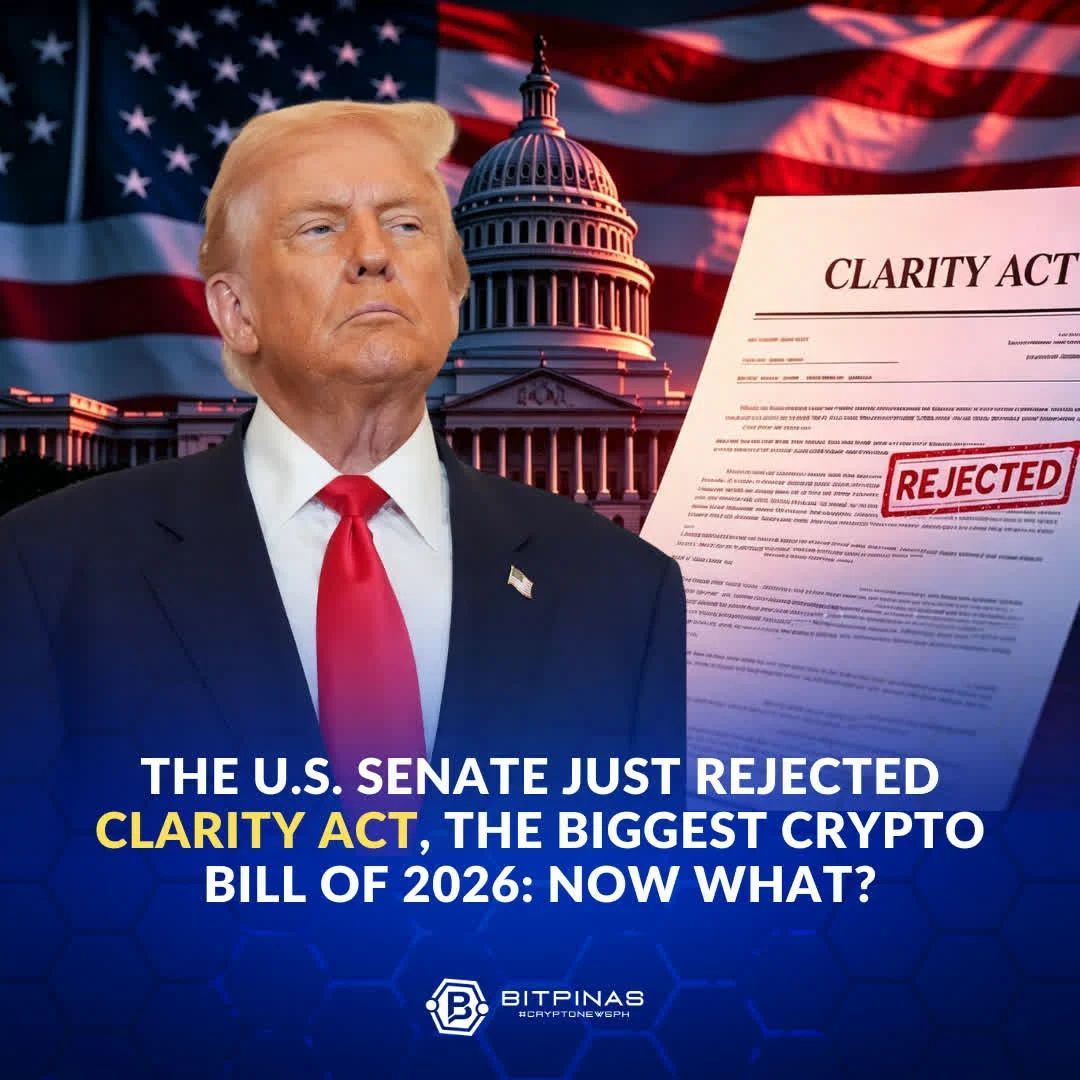
US Senate Rejects Digital Asset Market Clarity Act, Dealing Blow to Crypto Prediction Markets
The failure of the Digital Asset Market Clarity Act in the US Senate has significant implications for crypto-linked prediction markets and the gaming industry, with ethics concerns and partisan divisions contributing to its defeat.
The US Senate delivered a decisive blow to cryptocurrency regulation efforts this week by rejecting the Digital Asset Market Clarity Act, a long-anticipated bill that sought to establish a comprehensive federal framework for digital assets. The legislation's failure marks a significant setback for cryptocurrency stakeholders and has particularly strong ramifications for prediction markets with ties to the gaming industry. The bill needed at least 60 votes to advance but fell dramatically short with a final tally of 49-50, failing to even achieve a simple majority after four Republican lawmakers unexpectedly opposed the market structure legislation.
Ethical Concerns and Political Divisions Derail Legislation
The bill's collapse appears rooted in persistent ethical concerns and deepening partisan divisions. Lawmakers from both parties expressed dissatisfaction with revised text released on Sunday, arguing it didn't sufficiently address concerns about senior officials maintaining cryptocurrency business ties. While Republican negotiators claimed to have made significant concessions, including stronger ethics measures reportedly agreed to by former President Donald Trump, these last-minute changes failed to win over skeptical Senate Democrats.
Arizona Senator Ruben Gallego sharply criticized the Republican approach, stating
"This legislation failed squarely because Republicans refuse to say no to the president. It takes 60 votes to pass a bill, and instead of spending their time twisting themselves into knots to appease President Trump, Republicans should have worked more closely with Senate Democrats to craft a bill that could pass with strong ethics provisions."The partisan rancor was further inflamed by Wyoming Senator Cynthia Lummis, the lead Republican negotiator, who accused Democrats of not being serious about consumer protection and even declared
"The Democrats are now anti-American, sad!"With critical midterm elections approaching in November, the acrimonious debate leaves virtually no chance for revisiting the legislation in the current Congressional session.
READ MORE: Texas Prediction Markets Face Scrutiny as Legislative and Election Outcomes Shape Future
READ MORE: UK Machine Gaming Duty hike could hit Rank Group hardest, Deutsche Bank warns
Gaming Industry Mobilizes Against Prediction Market Expansion
The bill's failure represents a significant victory for gaming industry stakeholders who had mobilized against its potential to legitimize and expand prediction markets. On June 16, a coalition of gaming lobby groups, state associations, and labor unions sent a letter to Senate leaders urging inclusion of language specifically banning sports and casino-related contracts. This influential coalition included the American Gaming Association, Indian Gaming Association, Association of Gaming Equipment Manufacturers, and UNITE HERE unions.
The letter argued forcefully that Congress should act decisively to prevent what they viewed as an inappropriate expansion of gambling through prediction markets, stating
"Litigation may eventually clarify the law, but this is ultimately a question of congressional intent. Congress should not wait while this nationwide expansion of gambling continues. It should use crypto legislation to reaffirm a simple principle: sports betting falls outside the CFTC's remit and cannot be offered through prediction market platforms."Following the vote, IGA Chairman David Bean praised the Senate's decision, warning that the Clarity Act
"could have expanded CFTC commodities authority"without adequate safeguards, though he cautioned that regulatory battles over cryptocurrency's role in gaming would continue.
CFTC Faces Setback in Push for Crypto Authority
The legislation's failure delivers a stinging defeat to the Commodity Futures Trading Commission and its chairman, Michael Selig, who had been a vocal advocate for establishing clear federal oversight of digital assets. Selig had used statements, opinion pieces, and media interviews since his appointment to argue forcefully for comprehensive cryptocurrency regulation. The agency currently operates with just one sitting commissioner, Selig himself, raising questions about its capacity to handle expanded responsibilities even if the legislation had passed.
Selig had recently hosted a meeting of the CFTC's Innovation Advisory Committee that featured extensive discussion about cryptocurrency with leading industry CEOs. The chairman had expressed optimism about the U.S. becoming the "crypto capital of the world" under Trump's leadership in a May social media post. However, without Congressional action, any rules or advisories issued by the CFTC or Securities and Exchange Commission regarding digital assets remain vulnerable to legal challenges, creating ongoing regulatory uncertainty.
Regulated Operators Face Competitive Disadvantage
The absence of federal cryptocurrency regulation may create operational challenges and competitive disadvantages for licensed gaming operators. A June report from payment provider Paysafe revealed striking statistics: 64% of online sports bettors use cryptocurrency, more than double the 30% average among U.S. consumers generally. The same study found that 85% of respondents would welcome cryptocurrency withdrawal options, which remain prohibited everywhere despite deposit legality in Wyoming and Colorado.
Industry executives have grown increasingly frustrated by regulatory asymmetries that prevent licensed operators from offering cryptocurrency payment options while unlicensed offshore platforms face no such restrictions. This dynamic was highlighted at the ICE Barcelona conference earlier this year, where panelists noted how regulatory barriers push younger, crypto-savvy consumers toward unregulated operators. The Paysafe report predicted that
"When permitted, crypto would become a top-three payment option for funding deposits (after digital wallets and debit cards), and a top-two payment preference in New York and Illinois."
Long-Term Implications and Next Steps
The legislative failure creates continued uncertainty for all stakeholders in the cryptocurrency and gaming sectors. With the path to federal legislation now blocked until at least 2027, regulatory agencies will likely continue operating under existing frameworks that many view as inadequate for digital assets. The gaming industry's victory may prove temporary as cryptocurrency continues intersecting with prediction markets and digital payments in gambling contexts.
Looking ahead, the debate highlights fundamental tensions between innovation and regulation that show no signs of resolution. Key questions remain about payment processing, market competition, consumer protection, and the appropriate boundaries between gambling and financial markets. As the 2026 midterm elections approach, the political dynamics surrounding cryptocurrency regulation may shift further, potentially reopening legislative opportunities, or creating new obstacles, for comprehensive federal action.