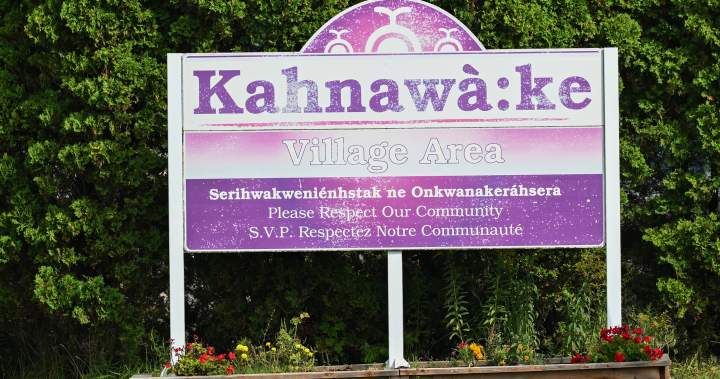
Kahnawake community reports raised lead levels near high school, calls for further testing
Preliminary air quality tests near Kahnawake's high school show lead concentrations exceeding provincial standards when winds blow from nearby industrial areas.
The Mohawk Council of Kahnawake has released preliminary air quality data showing raised lead concentrations near the community's high school when winds blow from adjacent industrial areas. The findings have prompted calls for expanded monitoring while officials emphasize current levels don't pose immediate health risks.
Detailed test results and environmental thresholds
Air samples collected near Kahnawake Survival School showed lead concentrations averaging 150 nanograms per cubic metre when winds blew westward from industrial zones. This exceeds Quebec's annual threshold of 100 ng/m³ by 50 percent. The seven three-hour sampling sessions conducted earlier this year represent preliminary snapshots rather than definitive annual averages required for regulatory compliance. Readings fell below detectable levels during easterly winds, which prevailed 80 percent of testing periods.
Soil analysis revealed contamination along the eastern community boundary near waste management facilities, though school grounds showed safe levels. Environmental scientist Mylène Ratelle noted the intermittent high readings represent concentrations approximately 100 times greater than non-industrial areas.
"It's a yellow flag. It piques our interest and tells us it would be worth looking into further,"said Ratelle, who stressed current data doesn't justify alarm.
READ MORE: Hurricane Simon threatens Mexico's coast with catastrophic winds and flooding
READ MORE: Halifax high school lockdown triggered by swatting call from outside Canada
Geographic context and industrial proximity
The testing occurred in eastern Kahnawake, a Mohawk territory on Montreal's South Shore bordering Ste-Catherine and multiple industrial operations. The high school sits less than one kilometre from waste processing facilities that have long raised environmental concerns. Grand Chief Cody Diabo noted the community's boundaries are
"surrounded by industrial activities"that merit cumulative impact assessments.
Concerns resurged in January when media reported allegations that Terrapure Environmental, a neighboring waste management operator, discharged contaminated water into the St. Lawrence Seaway. Company general manager Denis Beaulieu stated Terrapure employs air-quality control systems and complies with provincial emissions reporting. Quebec's environment ministry confirmed the facility's 2023-24 atmospheric emissions stayed within permitted limits.
Health risks and scientific perspective
While emphasizing no safe lead exposure threshold exists, Ratelle clarified the recorded spikes wouldn't create acute health effects. Chronic exposure risks include neurological and cognitive impacts, particularly for developing children. She explained that younger populations face greater vulnerability to lead's neurotoxic effects, which can influence neurological system development and cognitive functions like memory, learning capacity, and information processing. Some studies have also associated lead exposure with mood disorders.
Kahnawake education officials plan additional tests of school ventilation systems but maintain current conditions don't endanger students. Jason Calvert, operations manager for Kahnawake's board of education, confirmed the high school is planning more tests to verify its air filtration system's effectiveness.
Ongoing monitoring and data collection
The Mohawk Council is collaborating with Environment Canada on expanded monitoring to establish annual exposure averages. Ratelle stressed the importance of longitudinal data:
"It would be important to look deeper if the concentration over a longer period stays similar, is lower or could even be a lot higher."
Current provincial lead concentration thresholds are calculated as annual averages, making the preliminary three-hour samples insufficient for definitive conclusions. More extensive testing will help determine whether the observed levels represent temporary spikes or persistent contamination patterns.
Policy concerns and industrial regulation
Grand Chief Diabo highlighted longstanding worries about industrial contamination in the area, criticizing environmental assessments that evaluate projects in isolation rather than accounting for combined emissions. He urged reforms to ensure sustainable development that protects both public health and ecosystems. Diabo specifically called for changes to environmental evaluations and emissions limits to better reflect the cumulative impact of areas with multiple industrial projects.
Potential lead sources include waste facilities, nearby roadways, gasoline emissions, and historical pollution. Ratelle noted waste management operations are known emitters of heavy metals, though the current data doesn't pinpoint specific origins. She also suggested the nearby road and gas station could contribute to lead emissions and that historical contamination might persist in the area.
Community and institutional responses
School operations manager Jason Calvert confirmed precautionary air filtration checks while maintaining student safety isn't currently compromised. Terrapure committed to monitoring further test results, stating
"environmental protection and community well-being"remain priorities.
Quebec officials face calls to reassess industrial zoning and emissions frameworks near Indigenous communities. The provincial environment ministry maintains existing regulations adequately protect air quality, though acknowledges the need for ongoing monitoring. The ministry cited Terrapure's compliance with emissions reports for 2023 and 2024 as evidence of proper oversight.
Broader implications for environmental justice
These findings spotlight the environmental pressures facing Indigenous communities situated near industrial corridors. While the lead levels don't present immediate dangers, the data reveals gaps in assessing cumulative industrial impacts and protecting vulnerable populations. The situation underscores how zoning decisions historically made without Indigenous consultation continue affecting community health decades later.
The case demonstrates the importance of community-led environmental monitoring, particularly when official oversight may not account for localized conditions. Kahnawake's proactive testing and calls for policy reforms could establish important precedents for how industrial emissions are evaluated near residential areas. As environmental concerns grow, this monitoring effort may inform broader conversations about sustainable development and the rights of Indigenous communities to clean air and water.
Scientific context of lead exposure
Ratelle's analysis provides crucial context about lead exposure risks. While the measured levels when winds blew west were raised compared to provincial standards, she noted they remain below concentrations that would cause immediate health effects. The greater concern lies in long-term, chronic exposure, especially for children whose developing neurological systems are more susceptible to lead's toxic effects.
The professor emphasized that lead has no safe exposure threshold, meaning any reduction in exposure provides health benefits. This scientific perspective informs the community's cautious approach to the preliminary findings and their decision to pursue additional monitoring rather than implement emergency measures.