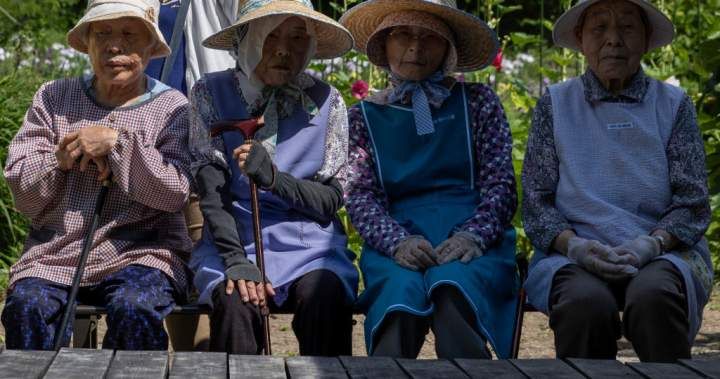
Japan surpasses 100,000 centenarians for first time as population ages rapidly
Japan reaches a historic milestone with over 100,000 residents aged 100 or older amid demographic challenges of declining birth rates and an aging society.
Japan has surpassed 100,000 centenarians for the first time in its history, according to newly released government statistics that highlight both the country's longevity achievements and its looming demographic challenges. The Health and Welfare Ministry reported 107,677 residents aged 100 or older as of this year, marking an increase of 7,914 from the previous year. Women accounted for 88% of the total, with 94,298 female centenarians compared to 13,379 men.
A milestone in longevity
The figures, released on September 15, Japan's Respect the Aged Day, reflect a steady rise in centenarians since records began in 1963, when only 153 people reached 100 years. This annual tradition coincides with ceremonial recognition where centenarians receive a letter from Prime Minister Sanae Takaichi and a silver sake cup. By 1981, the number exceeded 1,000, and it surpassed 10,000 in 1998 before hitting 50,000 in 2012. Health Minister Kenichiro Ueno attributed the trend to advancements in medical technology, accessible healthcare, and healthy lifestyles.
"I'm very pleased that many people are living a long, healthy and active lives,"Ueno told reporters, while emphasizing the need to strengthen social safety nets for the aging population. The consistent growth demonstrates Japan's success in creating conditions for extreme longevity through public health infrastructure and cultural practices.
The gender gap in longevity
Experts note that women's dominance among centenarians stems from historical and social factors. Stuart Gietel-Basten, a professor at the Hong Kong University of Science and Technology, explained that many men from this generation died in World War II, creating a lasting demographic imbalance. Male survivors often faced compounded health risks from smoking, drinking, or industrial jobs that exposed them to occupational hazards. Women, on the other hand, tended to maintain stronger community ties through social networks and family caregiving roles, which supported mental health throughout their lives.
"Men often experience isolation after the death of a spouse,"Gietel-Basten added, underscoring how traditional gender roles continue to influence longevity outcomes decades later. This pattern aligns with global data showing women typically outlive men, though Japan's 88% female representation among centenarians exceeds the international average.
READ MORE: Quebec First-Time Homebuyers Face Steep Challenges in 2026's Competitive Market
READ MORE: Peel Police Union Endorses Alvin Tedjo in Historic First for Mississauga Mayoral Race
Japan's demographic crisis
While the centenarian milestone reflects progress in healthcare, it also underscores Japan's broader population challenges. The country's fertility rate hit a record low of 1.14 in 2025, far below the 2.1 needed to sustain the current population. With nearly 30% of Japan's 126 million residents already aged 65 or older, projections from the National Institute of Population and Social Security Research suggest the population could shrink to 87 million by 2070, with 40% over 65. Young people are increasingly reluctant to marry, with over 20% of singles aged 18 to 34 stating they see no benefit in marriage, according to a recent government survey. This shift in social attitudes compounds the demographic pressures, as fewer young adults form families to produce the next generation.
Economic and social pressures
Health Minister Ueno acknowledged that rising costs of child-rearing and the strain on working parents have deterred family formation. In urban areas especially, high housing prices and education expenses make childbearing financially daunting, while corporate cultures that demand long work hours leave little room for parenting. The government faces mounting pressure to address labor shortages and elder care needs as the workforce shrinks. Current policies aim to keep seniors employed longer and attract foreign workers, though cultural resistance to immigration persists. Meanwhile, centenarians like 114-year-old Fuyo Kishimoto and 112-year-old Hikaru Kato, Japan's oldest woman and man, respectively, receive ceremonial recognition that highlights both national pride in longevity and the realities of an aging society.
Historical context of aging trends
Japan's current demographic situation results from intersecting historical developments. The post-war economic boom created conditions for longevity through improved nutrition and healthcare access, while subsequent economic stagnation in the 1990s led younger generations to delay marriage and children. The country's strict immigration policies have limited population replenishment from abroad, unlike other developed nations facing similar aging trends. These factors have created a perfect storm where longevity gains coincide with plummeting birth rates, producing unprecedented population aging that will test social systems.
Global implications of Japan's demographic shift
Japan's experience serves as an important case study for other developed nations facing similar demographic transitions. The country's combination of extreme longevity and low birth rates presents challenges that many European and East Asian countries will likely encounter in coming decades. Japan's approach to maintaining social cohesion and economic stability despite these pressures offers valuable lessons, though its reluctance to embrace large-scale immigration as a solution may limit applicability for more diverse societies.
Why it matters
Japan's record-breaking centenarian population demonstrates the potential of sustained public health investment and cultural practices like the traditional Japanese diet. However, it also signals urgent challenges for one of the world's most aged societies. The rapid aging of the population, coupled with declining birth rates, threatens economic stability as fewer workers support more retirees through pension and healthcare systems. Without significant policy interventions to support families, integrate older workers, and reconsider immigration, Japan's demographic trends could strain public resources and reshape its societal fabric in decades to come. The country's experience offers a cautionary case study for other nations facing similar aging populations, showing both the successes and challenges of extreme longevity at a societal scale.