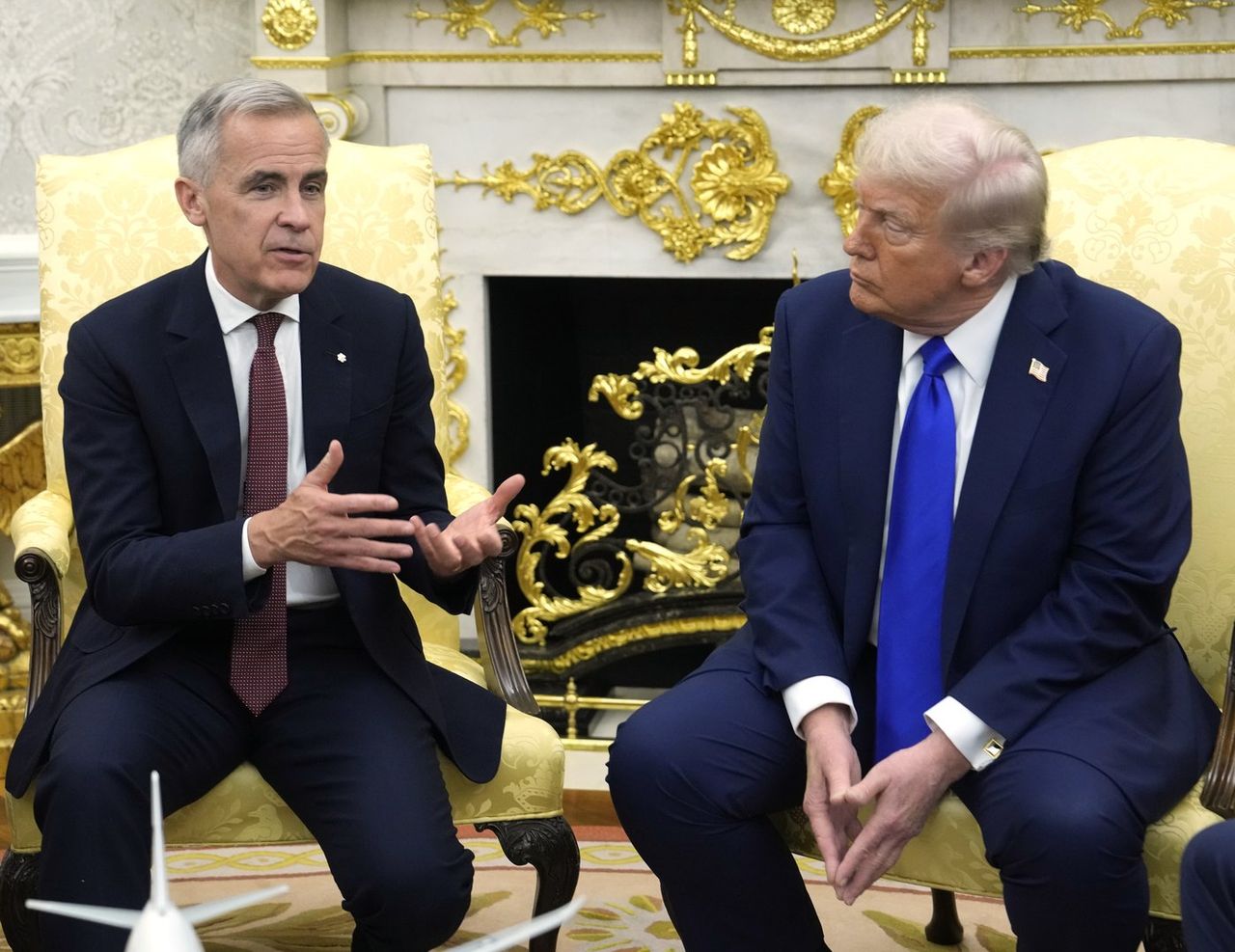
Defence minister downplays PM's remarks on potential U.S. military action against Canada
Defence Minister David McGuinty characterized military assessments of U.S. intervention scenarios as routine, following Prime Minister Mark Carney's comments about studying extreme risks.
Defence Minister David McGuinty has characterized military assessments of potential U.S. intervention in Canada as standard procedure, following Prime Minister Mark Carney's revelation that Ottawa has studied such scenarios. The minister's comments come a day after Carney told the New York Times his government had examined what he called "extreme tail risk" possibilities, including American military action. This rare public disclosure of military contingency planning has sparked political debate about the appropriateness of discussing such sensitive assessments.
Government maintains routine military planning
McGuinty told reporters in Ottawa that analyzing risk scenarios is routine for all militaries worldwide.
"It is normal. All militaries in the world spend time analyzing risk scenarios,"he said, according to CityNews Toronto. The defence minister declined to provide specifics about what such assessments entail or how Canadians should interpret the prime minister's remarks beyond taking them
"as described by the prime minister, a tail risk."His carefully worded responses suggest an attempt to normalize the concept of military planning while avoiding details that could cause diplomatic friction.
The minister emphasized the strength of Canada-U.S. military relations, noting decades of cooperation in continental security through institutions like NORAD. His comments appear designed to reassure the public while neither confirming nor denying the substance of Carney's disclosure about military planning assessments. This balancing act reflects the sensitivity surrounding public discussions of military contingencies involving Canada's closest ally.
READ MORE: David Suzuki Expresses Disillusionment with Prime Minister Mark Carney's Climate Policy Reversals
READ MORE: Vladimir Guerrero Jr. apologizes for comments about $500M Blue Jays contract
Prime minister's remarks spark debate
In his New York Times interview, Carney acknowledged examining the possibility of U.S.-led military action against Canada but refused to discuss details. The prime minister framed such contingency planning as responsible governance, suggesting it would be negligent not to prepare for extreme scenarios, however unlikely. His use of the financial term "tail risk" - referring to low-probability, high-impact events - indicates this analysis falls under comprehensive risk management rather than expectation of conflict.
These comments follow years of provocative statements from U.S. President Donald Trump about making Canada the 51st state, though Trump has consistently claimed he would pursue this through economic pressure rather than military means. The Globe and Mail reported in January that Canadian Armed Forces had modelled a hypothetical U.S. invasion as part of theoretical frameworks, not operational plans. This revelation came during heightened tensions following Trump's public interest in acquiring Greenland.
Conservative criticism grows
Conservative MP Ellis Ross criticized Carney's remarks as irresponsible fearmongering.
"That's stoking fear and division, and that's uncalled for, given what we're going through right now,"Ross told reporters. He argued Canadians face pressing domestic issues like affordability and crime without needing to worry about improbable military threats from their closest ally.
Ross called it
"very irresponsible for a leader of a first world country to come out and say that about another first world country,"suggesting the comments could unnecessarily strain Canada-U.S. relations. The criticism reflects growing political tensions over how the government communicates national security matters to the public, with opposition members accusing the prime minister of diverting attention from domestic challenges.
Military leaders dismiss invasion scenario
Senior U.S. military officials have previously rejected the plausibility of American military action against Canada. In September, Admiral Samuel Paparo, head of U.S. Pacific Command, called the scenario
"absolutely and utterly preposterous"when questioned by reporters in Victoria.
Paparo acknowledged his duty to follow presidential orders but dismissed the hypothetical as emotionally charged and unrealistic. His comments align with longstanding military cooperation between the two nations, including joint continental defence through NORAD and extensive interoperability between armed forces. Military experts note that actual conflict between the two countries would require overcoming decades of institutional integration and shared security frameworks.
Trump's expansionist rhetoric as context
The discussion occurs against a backdrop of President Trump's repeated expansionist comments about Canada and other North American territories. In recent weeks, Trump has shared AI-generated images showing the U.S. flag covering all of North America, including Canada, Mexico, Greenland, and parts of the Caribbean. These visuals align with his frequent rhetorical themes of American dominance and territorial ambition.
This follows Trump's well-publicized interest in acquiring Greenland in 2025 and his persistent rhetoric about absorbing Canada through economic means. While experts dismiss such scenarios as political posturing, they have prompted quiet contingency planning within Canadian security circles. The prime minister's comments suggest these internal assessments have extended beyond economic concerns to include military possibilities, however remote.
Broader implications for Canada-U.S. relations
The public airing of military assessments regarding U.S. intervention represents a delicate balancing act for Canadian officials. While defence planners routinely examine worst-case scenarios, discussing them publicly risks damaging the critical Canada-U.S. relationship or causing unnecessary public alarm. The episode reveals how Trump's unconventional presidency has altered traditional diplomatic norms between the two nations.
Carney's decision to acknowledge such planning reflects either calculated transparency about national security preparations or potential miscalculation in public messaging. The political backlash suggests opposition parties view this as an unnecessary provocation during already strained bilateral relations. Meanwhile, defence officials continue emphasizing the strength and normality of continental security cooperation, attempting to reassure both the public and international partners.
Historical context of military planning
While contemporary discussions of U.S. military action against Canada may seem extraordinary, military historians note that both countries have maintained various contingency plans throughout their shared history. During World War II, the two nations jointly developed defense plans for North America through the Permanent Joint Board on Defense. The Cold War era saw extensive cooperation through NORAD, established in 1958.
What makes current discussions unusual is not the existence of military assessments - which defense experts confirm are standard practice - but their public acknowledgement by senior leadership. This transparency may reflect changing government communication strategies or specific concerns about recent political rhetoric from Washington. The episode underscores how Trump's unconventional approach has forced allied governments to publicly address scenarios previously considered undiscussable.