Toronto mayoral candidates clash over property taxes, transit in first debate
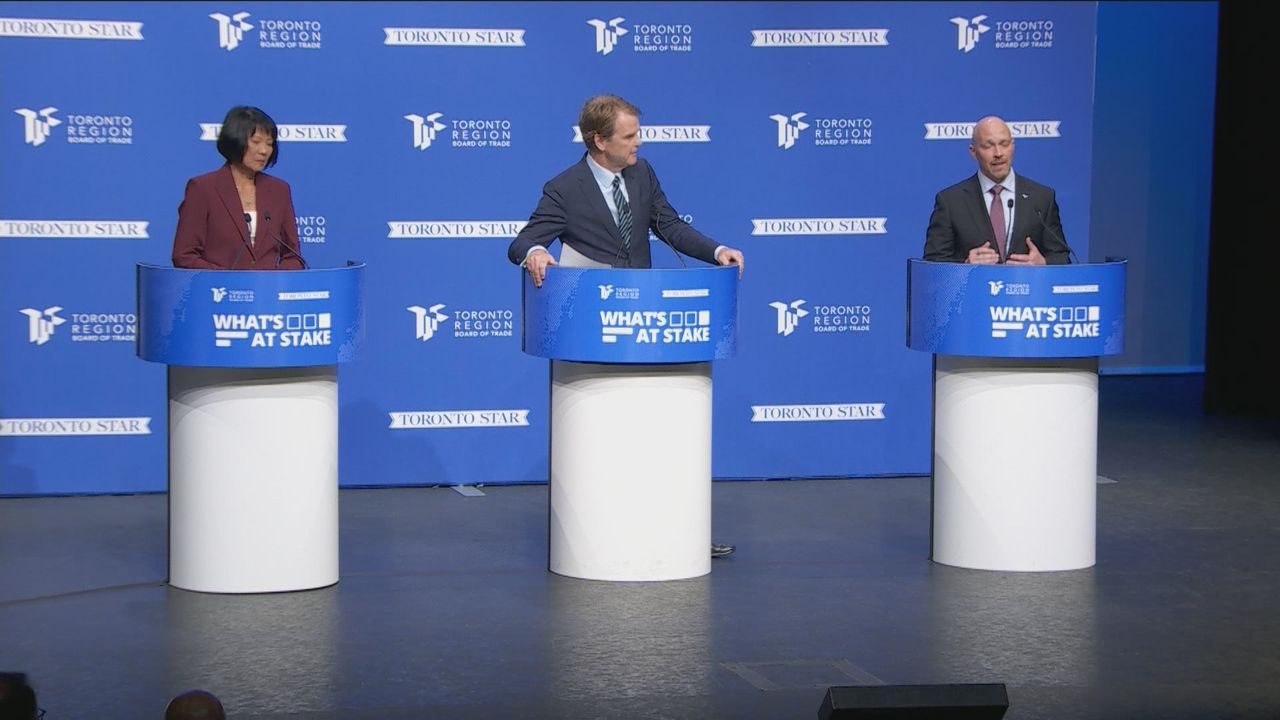
Incumbent Olivia Chow defended her record on taxes and transit while challengers Brad Bradford and Chris Alexander proposed contrasting visions during a heated Toronto mayoral debate hosted by the Toronto Board of Trade.
The first major debate in Toronto's mayoral election revealed sharp policy divisions among the leading candidates as they sparred over property taxes, transit funding and affordable housing solutions. The Toronto Board of Trade event, streamed live on CityNews 24/7, featured incumbent Olivia Chow squaring off against challengers Brad Bradford and Chris Alexander in a wide-ranging discussion of the city's most pressing issues.
Property tax freeze sparks heated exchange
Bradford made one of the most striking pledges of the evening by promising to freeze property taxes for his first year in office if elected. His proposal came in response to questions about funding his campaign promises to add 1,000 police officers and install platform edge doors on TTC subway stations.
"Families need relief. They can't afford more of Olivia Chow's tax increases,"Bradford asserted, positioning himself as the candidate offering financial reprieve to homeowners. He vowed to conduct a comprehensive line-by-line review of Toronto's budget during the proposed freeze period.
Chow delivered a swift rebuttal by highlighting Bradford's previous role as vice-chair of the Budget Committee before her mayoral tenure.
"You left us with a close to $2 billion deficit in our budget so we can't run away from your record,"she countered, framing the current fiscal challenges as partly inherited from previous leadership. The incumbent mayor has overseen significant property tax increases during her term, including a record 9.5% hike in 2024 followed by a 2.2% increase this year. Chow has previously stated she plans to keep future property tax increases "at or around" the rate of inflation if reelected.
READ MORE: Chris Alexander drops out of Toronto mayoral race, setting up Chow-Bradford showdown
READ MORE: Olivia Chow leads Brad Bradford by six points in Toronto mayoral race poll
Transit funding and safety concerns
The debate revealed fundamentally different approaches to addressing Toronto's transit challenges. Chow emphasized her administration's work implementing more TTC signal priorities and better coordination of road closures, along with her proposal to cap transit fares at 10 rides per week. She also pledged to expand the number of traffic agents working to alleviate gridlock across the city.
Alexander strongly opposed Chow's fare cap initiative, warning it would worsen the TTC's existing $390 million budget shortfall.
"We will never get people to come back if the service is impaired ... if we are not putting revenue in it,"he argued, positioning himself as the fiscally responsible candidate on transit matters. Bradford focused his transit critique on safety and reliability concerns rather than costs, stating:
"No one's saying they're not taking transit because it costs $3.30. They're saying they aren't taking transit because they can't rely on it, because it's not safe."His comments reflected growing public concern about security on Toronto's transit system.
Affordable housing solutions
When addressing Toronto's affordability crisis, all three candidates presented housing solutions as a central component of their platforms. Alexander proposed an ambitious partnership with the federal government to construct tens of thousands of co-op affordable housing units while simultaneously working to attract business investment to boost local incomes.
"We need to see incomes rebound in the city,"he said, highlighting stagnant economic growth as a root cause of affordability challenges. He pointed out that Canadians have gone over a decade without per capita GDP growth in Toronto.
Bradford connected his housing strategy directly to his property tax freeze promise, vowing to
"create conditions to build housing"through regulatory changes rather than new spending. Chow pointed to her existing policies that strengthened renter protections and offered development charge exemptions for projects incorporating 20% affordable units as evidence of her commitment to addressing the housing crisis.
Infrastructure and congestion management
The candidates offered distinct visions for improving Toronto's transportation infrastructure. Bradford pledged to avoid major road closures during special events and implement around-the-clock construction schedules supported by new technologies to synchronize traffic lights and improve intersection efficiency. Chow emphasized her administration's ongoing efforts to better coordinate road work and optimize traffic flow through existing systems.
Alexander positioned himself as the candidate who would address infrastructure needs through economic growth rather than tax increases or service cuts. His comments reflected a broader campaign theme of restoring Toronto's economic vitality after what he characterized as years of economic stagnation affecting the city's ability to fund improvements.
Road to election day
With voting cards scheduled to arrive in mailboxes imminently, the latest Liaison Strategies poll shows Chow maintaining a seven-point lead over Bradford among decided and leaning voters, though her advantage has narrowed in recent weeks. Early voting runs from October 6-11, with election day set for October 26 when polls will be open from 10 a.m. to 8 p.m.
The debate crystallized the policy choices facing Toronto voters as they prepare to select their next mayor. Chow presented herself as the experienced leader addressing long-standing challenges, while Bradford and Alexander each offered alternative approaches to fiscal management and city building. The narrowing polls suggest a potentially competitive race where debates like this one could influence undecided voters.
Strategic campaign differences
The candidates' debate performances revealed their distinct campaign strategies with just weeks remaining before the election. Chow sought to defend her record while framing current challenges as inherited problems requiring steady leadership. Her emphasis on incremental improvements to transit and housing contrasted with Bradford's dramatic tax freeze proposal and focus on immediate relief for taxpayers.
Alexander attempted to carve out a middle ground by emphasizing economic growth as the solution to Toronto's fiscal and infrastructure needs. His criticism of both Chow's tax increases and Bradford's proposed freeze reflected his campaign's focus on long-term economic revitalization rather than short-term measures.
Transit and housing emerged as the defining issues where candidates' proposed solutions revealed fundamentally different visions for Toronto's future. With affordability concerns weighing heavily on voters' minds, the debate demonstrated how each candidate would balance fiscal responsibility with needed investments in city services and infrastructure.