Canadian Doctors Advocate Fallopian Tube Removal to Reduce Ovarian Cancer Risk
A growing body of evidence suggests removing fallopian tubes during abdominal surgeries could prevent up to 80% of ovarian cancers, prompting calls for broader awareness and government support for this preventative approach.
Canadian physicians are making a compelling case for a preventative surgical procedure that could dramatically alter the landscape of ovarian cancer treatment. The operation, known as opportunistic salpingectomy, involves removing fallopian tubes during unrelated abdominal surgeries and has emerged as a potentially transformative approach to combating one of the deadliest gynecological cancers.
The Medical Rationale Behind Preventative Surgery
The statistics surrounding ovarian cancer paint a grim picture that underscores the urgency for preventative measures. Dr. Elyse Lackie, an OB/GYN who spoke with Global News, revealed that approximately 3,000 Canadian women receive ovarian cancer diagnoses each year, with about 2,000 succumbing to the disease. These numbers become even more striking when considering that this represents only 0.015% of the female population annually, yet carries devastating consequences for those affected.
The cancer's high mortality rate stems from its insidious nature - it tends to remain asymptomatic until reaching advanced stages when treatment options become severely limited.
"Essentially you're not gonna see it at all, you're not going to feel it at all, until it's really advanced and that's often too late,"Lackie explained, highlighting the critical need for prevention rather than treatment after detection.
READ MORE: Synagogue attacker Sean Ward was among Canadian soldiers suing over COVID vaccine mandate
READ MORE: Canadian Soccer Defender Derek Cornelius Hospitalized with Injury Ahead of Key Friendlies
Groundbreaking Research Supporting the Procedure
A pivotal University of British Columbia study published earlier this year provided robust evidence supporting the efficacy of fallopian tube removal. The research found that excising the fallopian tubes - now believed to be the origin site for most ovarian cancers - while preserving the ovaries reduces cancer risk by approximately 80% without significantly disrupting essential hormone production.
Dr. Gillian Hanley, the study's co-senior author and an associate professor of obstetrics and gynaecology at UBC, emphasized the profound implications of these findings:
"This relatively simple change in surgical practice can have a profound and life-saving impact."The study's results have galvanized the medical community to reconsider standard approaches to abdominal surgeries in women.
Practical Implementation and Patient Experience
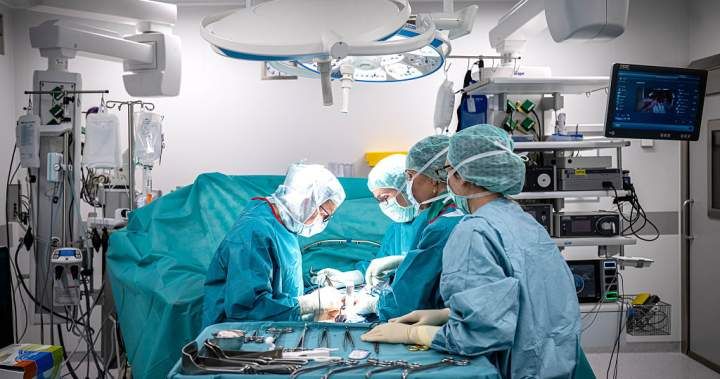
The opportunistic salpingectomy procedure adds minimal time - typically less than five minutes - to existing abdominal surgeries such as hysterectomies or cesarean sections. This approach specifically targets patients who have completed childbearing or have decided against having children, making it a practical addition to planned procedures.
North York General Hospital's Chief of Surgery Dr. Peter Stotland highlighted the dual benefits of this approach:
"We've really put a concerted effort into getting this out there so people are aware of the option."The procedure not only prevents potential future cancers but also spares patients from undergoing intensive chemotherapy, radiation, and more complex surgeries down the line.
Patient Shaheen Mawani, who underwent the procedure during a hysterectomy, shared her positive experience:
"This seemed like a no-brainer for me."Her sentiment reflects the growing recognition among patients of this procedure's value when presented with the option during planned surgeries.
The Origins and Philosophy Behind the Approach
The opportunistic salpingectomy concept was developed and named by Dr. Dianne Miller, a gynaecologic oncologist with BC Cancer and Vancouver Coastal Health, who also serves as an associate professor emerita at UBC. Dr. Miller articulated the fundamental principle driving this preventative approach:
"If there is one thing better than curing cancer, it's never getting the cancer in the first place."
This philosophy represents a paradigm shift in cancer management - moving from treatment-focused to prevention-focused strategies, particularly for cancers that prove challenging to detect early. The medical community's growing acceptance of this approach signals an important evolution in surgical best practices.
Understanding Ovarian Cancer's Unique Challenges
Ovarian cancer presents distinct diagnostic and treatment challenges that make preventative measures particularly valuable. The disease's symptoms - including bloating, constipation, early satiety after eating, and back pain - often mimic less serious conditions, leading to delayed diagnosis. Compounding this issue is the current lack of reliable screening tests for early detection.
The disease primarily affects postmenopausal women aged 54-62, though genetic mutations like BRCA can raise risk at younger ages. While chemotherapy and radiation often prove initially effective, the cancer's high recurrence rate contributes to a five-year survival rate of just 44%, significantly lower than many other cancers.
Approximately 20% of cases stem from inherited genetic mutations that also increase breast cancer risk. For the general female population, the lifetime risk stands at 1.4%, but for those with specific genetic predispositions or family histories, the risk can be substantially higher.
Economic and Systemic Considerations
The widespread adoption of opportunistic salpingectomy could yield substantial benefits for healthcare systems facing increasing financial pressures. Dr. Lackie highlighted the procedure's cost-effectiveness:
"A really simple operation, with small financial costs that will save the system so much money in the long run."
By preventing ovarian cancer cases before they develop, the approach avoids the significant expenses associated with advanced cancer treatment - including costly chemotherapy regimens, radiation treatments, and complex surgical interventions. This preventative model could serve as a template for addressing other challenging cancers where early detection proves difficult.
Implementation Challenges and Future Directions
Medical professionals are calling for government investment in public education initiatives and surgical training programs to standardize the practice nationwide. The procedure's minimal additional time requirement and low risk profile during existing operations make it particularly viable for healthcare systems grappling with capacity constraints.
However, broader implementation faces several challenges. These include ensuring consistent surgical training across institutions, developing standardized patient education materials, and establishing clear guidelines for when the procedure should be offered. Addressing these challenges systematically could significantly enhance the procedure's accessibility and impact.
Broader Societal Implications and Ethical Considerations
The discussion surrounding opportunistic salpingectomy has revealed complex societal attitudes toward women's reproductive health and bodily autonomy. Some women reported facing significant barriers when seeking permanent contraception, with comments noting experiences like:
"As a woman in Canada that has not ever wanted children... More than 10 doctors I've asked to 'tie my tubes' said no because I'm too young."
These accounts highlight persistent systemic barriers to elective sterilization procedures, even as new preventative options emerge. The contrast between the medical community's enthusiasm for cancer-preventing surgeries and its historical reluctance regarding elective sterilization raises important questions about patient autonomy and medical gatekeeping.
Comparative Perspectives on Preventative Medicine
The conversation has also sparked discussions about why similar preventative measures aren't more commonly promoted for male-specific cancers. This disparity in preventive approaches underscores broader questions about how medical research priorities are set and how prevention strategies are developed for different patient populations.
These discussions reveal deeper societal tensions around reproductive rights, medical authority, and gender equity in healthcare that extend far beyond the specific context of ovarian cancer prevention.
The Future of Cancer Prevention
The push for opportunistic salpingectomy represents a significant advancement in cancer prevention strategy - focusing on eliminating disease origins rather than treating advanced cases. For a cancer with such poor detection rates and treatment outcomes, preventative surgery offers a rare opportunity to significantly reduce mortality through relatively simple procedural modifications.
This approach exemplifies how minor, carefully considered changes to routine medical practice can yield disproportionate public health benefits. As healthcare systems worldwide grapple with rising costs and increasing demand, low-intervention, high-impact strategies like this may become increasingly vital components of comprehensive cancer prevention programs.
The polarized reactions to this proposal, as evidenced by the range of public comments, serve as a reminder that medical advances often intersect with complex social and ethical considerations. Handling these intersections thoughtfully will be crucial as similar preventative approaches are developed for other challenging diseases.