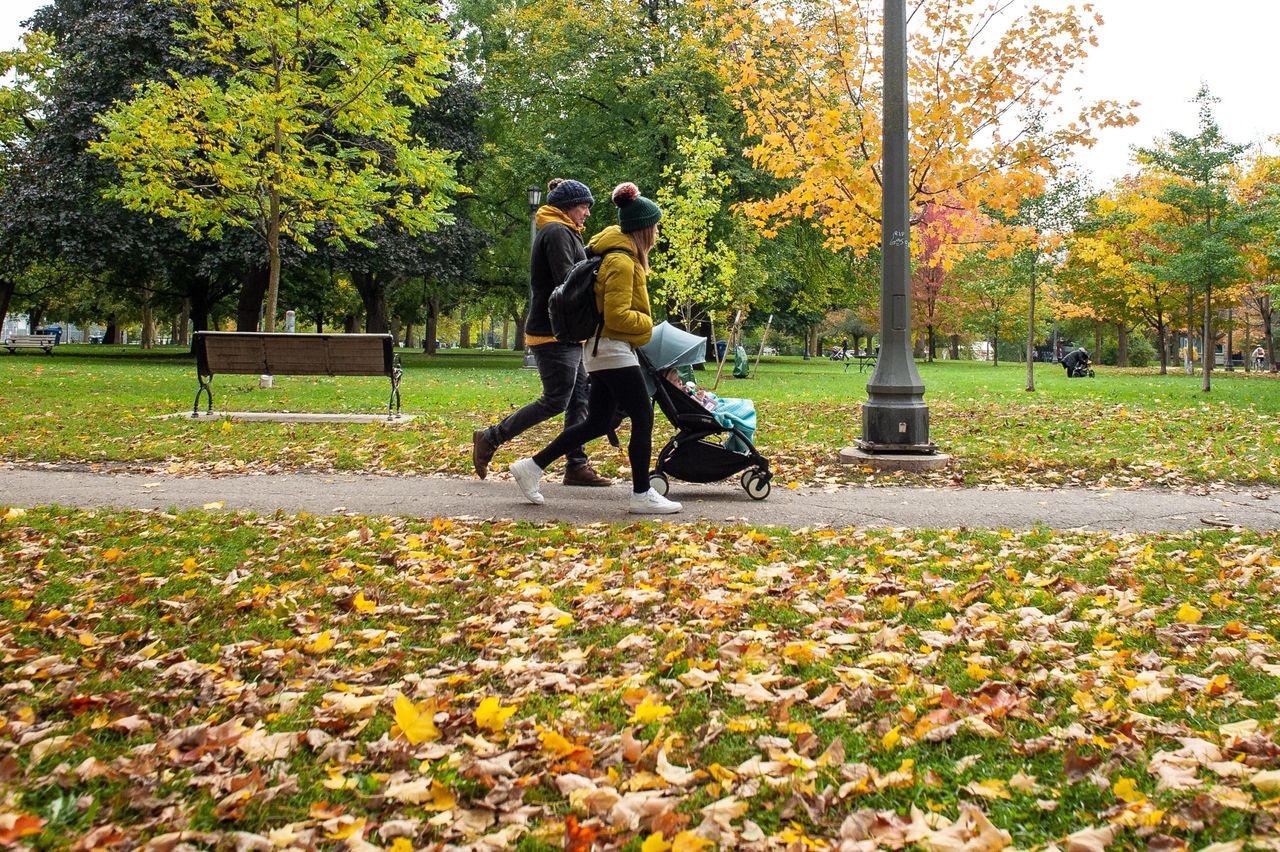
Warmer, drier fall expected across Canada with potential long-term impacts, meteorologists warn
Most of Canada will experience warmer-than-average temperatures and drier conditions this fall, with Northern Canada seeing the most significant temperature increases. These weather patterns could have cascading effects on winter precipitation, spring water supplies, and next year's wildfire season, according to meteorological analysis.
As autumn officially begins this week, weather experts are forecasting a season of above-average temperatures and reduced precipitation across most of Canada that could reshape environmental conditions well into 2024. CityNews Chief Meteorologist Natasha Ramsahai's analysis reveals these conditions stem from complex climate interactions that may produce consequences extending far beyond typical seasonal variations.
National temperature and precipitation trends
The seasonal outlook shows a clear warming pattern across Canada, with Northern Canada expected to experience the most dramatic temperature increases compared to historical averages. This northern warming anomaly suggests accelerated climate impacts in Arctic and subarctic regions. While coastal areas including Atlantic Canada, the lower Great Lakes region, and British Columbia's coastline will see temperatures closer to seasonal norms, the continental interior shows consistent above-average projections.
Precipitation patterns reveal equally significant deviations from normal conditions. Southern Ontario may receive some moisture, but Ramsahai's analysis indicates most substantial rainfall systems will track south into the United States. The meteorologist's assessment that a "good chunk" of Canada will experience drier than average conditions applies to both rainfall and snowfall accumulation, creating concerns about water supply replenishment during the winter months.
READ MORE: UK Machine Gaming Duty hike could hit Rank Group hardest, Deutsche Bank warns
READ MORE: 5 Canadian-made scents to bring the essence of autumn into your home
Ecological and economic ripple effects
The forecasted dry conditions present multi-seasonal challenges that could fundamentally alter environmental management strategies. "This is going to be a big problem as we go into the next few months," Ramsahai warned, highlighting how current weather patterns may establish conditions that persist through winter. Her analysis suggests these patterns could create a dangerous cycle where insufficient snowpack fails to replenish groundwater supplies and provide critical insulation for soil ecosystems.
The potential consequences for wildfire preparedness are particularly concerning. Ramsahai explained the compounding risks: "If there's not a lot of snow melt, if there's no snow for insulation and we've got very dry soil and dry ground we'll be possibly talking about these implications for wildfire season next year." This scenario mirrors conditions observed before severe wildfire outbreaks, where winter drought conditions precede explosive spring and summer fire activity.
Southern Ontario's specific challenges
Regional analysis shows Southern Ontario following the national warming trend with reduced precipitation, though areas near Lake Erie and southwestern Ontario may experience slightly wetter conditions due to localized lake-effect moisture. The region will be particularly influenced by the developing super El Niño, which meteorologists confirm has already surpassed the threshold for this classification with Pacific Ocean temperatures 3.05°C above average in the Niño 3.4 region.
These conditions may produce unexpected sector-specific impacts across Ontario. Agricultural specialists are monitoring potential effects on ice wine and maple syrup production, which rely on specific temperature thresholds. Winter tourism operators, especially ski resorts north of Toronto, face uncertainty about snowfall reliability. Urban infrastructure managers anticipate increased freeze-thaw cycles that typically accelerate road deterioration and pothole formation.
Great Lakes ecosystem vulnerabilities
The forecasted reduction in Great Lakes ice coverage presents complex tradeoffs. While extended ice-free periods could benefit commercial shipping through a lengthened navigation season, Ramsahai emphasized the ecological importance of winter ice formation: "Less ice on the Great Lakes as a whole is bad news for recreational activities and for the lakes themselves. We need that ice on there for fish ecosystems to thrive underneath the ice in the winter." This highlights how seasonal weather changes can disrupt delicate aquatic habitats that have evolved with predictable ice cover patterns.
Additional weather risks for Southern Ontario include increased potential for freezing rain events and flood scenarios where heavy rainfall encounters frozen ground incapable of proper water absorption. These conditions could test municipal preparedness for extreme weather events that combine multiple hazardous elements.
Global climate connections
The seasonal forecast reflects the influence of several major climate patterns interacting in complex ways. The developing super El Niño represents the most significant driver, with Ramsahai noting its continuing intensification through November and December. This event's exceptional strength places it in record-breaking territory that may produce weather phenomena beyond historical precedents.
Other climate factors include the North Atlantic Oscillation's current neutral phase, which may allow warmer air masses to distribute more evenly across Canada rather than concentrating in western regions. The Pacific Decadal Oscillation could potentially moderate some El Niño effects, though its capacity to counteract such an extreme event remains uncertain. These interconnected systems demonstrate how regional weather emerges from global-scale atmospheric processes.
Changing seasonal expectations
Long-term climate data reveals fundamental shifts in Canadian winter characteristics. Ramsahai's comparison of white Christmas probabilities between 1960-1984 and 1997-2023 shows consistent declines across major cities, with Toronto experiencing a 30% reduction and Montreal 16%. These statistics quantify how climate change has altered traditional winter experiences in urban centers, with implications for cultural traditions and seasonal industries.
The meteorologist emphasized that seasonal outlooks provide probabilistic guidance rather than definitive predictions, noting that "every year is unique and contains an inherent degree of uncertainty." This caution reflects the inherent challenges in modeling complex atmospheric systems weeks or months in advance, especially during periods of exceptional climate activity like the current super El Niño event.
Preparing for climate uncertainty
The forecast underscores the growing importance of adaptive planning for both short-term weather events and long-term climate trends. Municipal governments may need to revise winter maintenance budgets, water conservation strategies, and emergency preparedness plans to account for these changing patterns. Agricultural producers face decisions about crop selection and irrigation investments, while environmental managers must consider ecosystem protections under shifting hydrological conditions.
Ramsahai's concluding observation about potential surprises serves as a reminder that climate systems can produce unexpected behaviors when pushed beyond historical boundaries. As Canada enters this unusual fall season, the meteorological community will be closely monitoring how these predictions unfold and what they may reveal about our changing climate's future trajectory.